At nineteen, Sophia walked into a real estate office looking for a receptionist position.
The hiring manager glanced at her application, noted her academic record, and offered her something lesser — filing, phones, nothing requiring real responsibility. Sophia took it. Smiled. Said thank you.
Then she watched everything.
Within eight months she understood the business better than agents who had been there for years. She couldn’t process paperwork at their speed, so she built systems — color-coded, visual, tactile — that made her faster than anyone realized. She recorded every client meeting on her phone and listened back three times until every detail locked in.
She closed her first independent sale at twenty-two.
By twenty-six she had her own small agency.
By thirty she had thirteen agents working under her, a client list that included commercial developers, and a reputation for reading people and markets with uncanny accuracy.
The processing disorder never disappeared. She still used audiobooks, still color-coded everything, still needed twice the time with written contracts. She built every system around what she actually was — not what the world had wanted her to be.
The fourth-grade teacher who recommended she be removed from standard curriculum attended a chamber of commerce dinner three years ago. Sophia was the keynote speaker.
They made eye contact once.
Neither said anything. Nothing needed to be said.
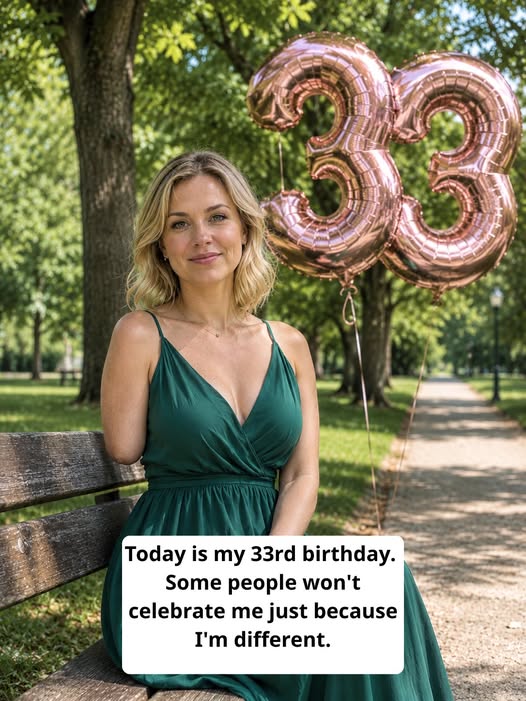
On her thirty-third birthday, Sophia chose the park deliberately. The bench where she used to sit alone at lunch during a school field trip in fifth grade, while classmates ran ahead without her.
She bought herself balloons. Rose gold because she’d always loved them and never needed permission.
She sat exactly where they’d left her behind.
And she smiled — not for a photo, not for anyone watching.
Just because she had made it.
And that was enough.