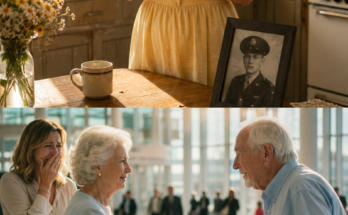
Eleanor Marsh died on a Thursday in March, at her desk, during fourth period.
She had just written “Beautiful work — you have a real voice” in the margin of a junior’s essay. The red pen was still in her hand. The paramedics said she likely felt nothing. The classroom was quiet for exactly four seconds before someone realized she wasn’t simply resting.
The school grieved loudly. Flowers filled the hallway. A substitute cried openly on the first day.
But it was Marcus, a former student from her 2011 class, who cracked everything open. Now a journalist at 28, he wrote a piece about Eleanor for the local paper — a piece that was supposed to be a simple obituary. Instead, after speaking with her landlord, her bank, and three colleagues who finally broke their silence, he published the truth.
The pension. The oatmeal dinners. The thermostat set to 60.
The story went national overnight.
Donations poured into a fund set up in her name — over $400,000 in eleven days. It was too late for Eleanor, so the fund became a teacher emergency relief foundation, helping educators across the state who were quietly surviving the same impossible math she had never been able to solve.
In her desk drawer, they found 47 years of student letters. Every single one she had ever received, kept in rubber-banded bundles, organized by year.
On top of the pile was a handwritten note in her own handwriting, clearly written for no one but herself:
“This was always enough. They were always enough.”
The woman who couldn’t afford to retire died knowing she was exactly where she wanted to be — even if the world had made it so she had no other choice. 🕊️
📚 The Teacher Who Worked Until the Day She Died