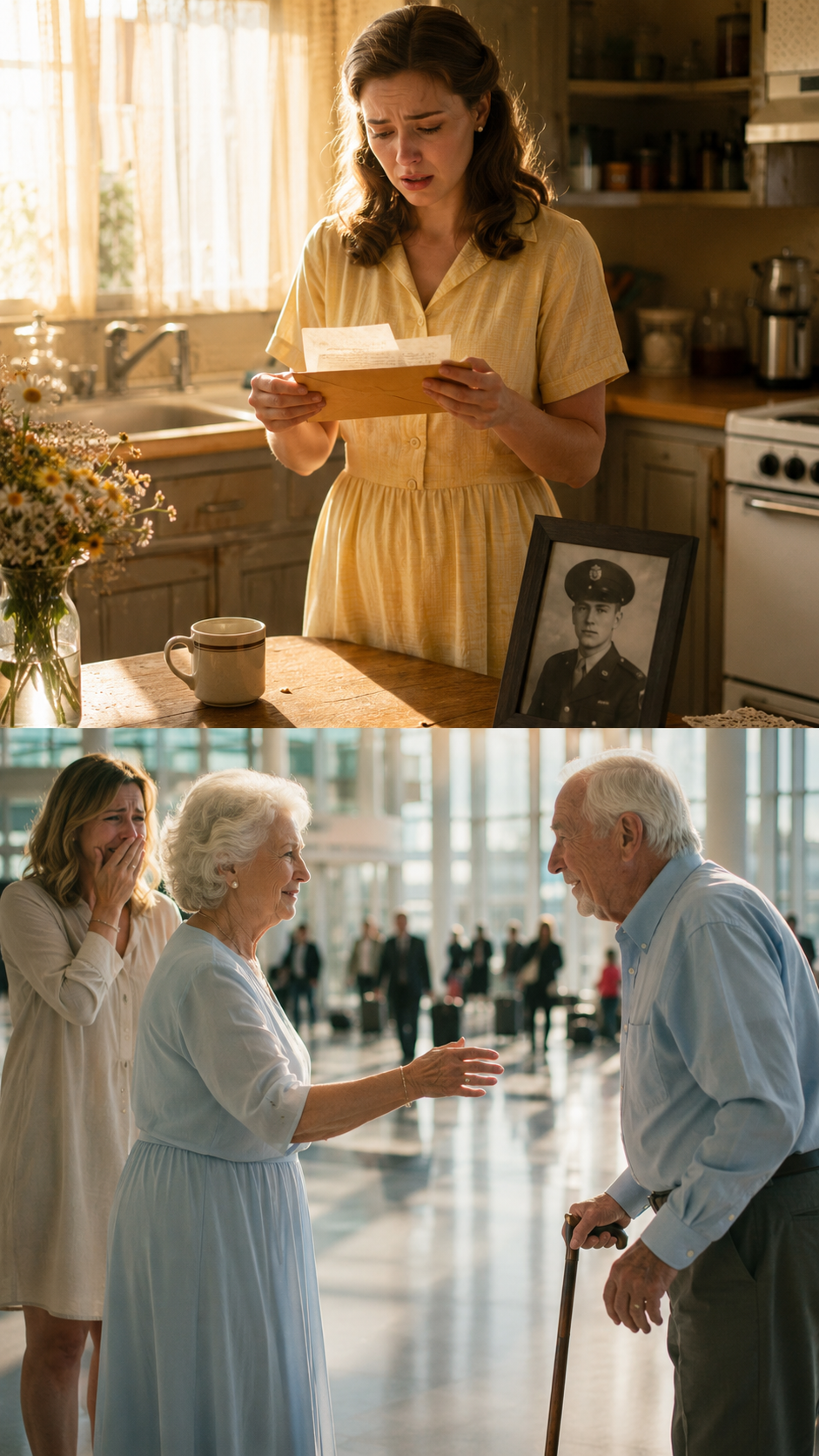
The voice on the phone waited — patient in the way of someone who has rehearsed this moment ten thousand times and has accepted that no version of it is easy.
James Calloway had not died in 1971. He had been captured, held, and eventually released through back channels that the military had quietly mishandled. By the time the bureaucratic error surfaced internally, James had been hospitalized overseas with injuries and a identity documentation situation that took years to formally resolve.
He had written letters. They never arrived. He had made inquiries. They went nowhere. By the time he had a clear path home, he had been told Ruth had moved forward — a miscommunication from an intermediary who had seen her briefly with a male colleague and assumed.
He had spent fifty years believing she had rebuilt her life without him. She had spent fifty years believing he was buried somewhere in Vietnam.
They had both been waiting. For different reasons. For the same person.
Ruth flew to meet him in Portland, where James had been living quietly, in October. Carol drove her to the airport, asking questions Ruth couldn’t fully answer yet.
He was standing near the arrivals gate — older, slower, leaning on a cane, hair entirely white. But the way he stood. The specific angle of his shoulders.
She knew him before she could see his face clearly.
They married the following spring. Small. Simple. Carol stood beside her mother. James’s nephew stood beside him. The officiant cried before either of them did.
Ruth wore pale blue.
She left the notice in the drawer — not from grief anymore, but because it was part of the story that brought her back to him.
Every love story has its own timeline.
Theirs just took fifty-one years to finish the sentence.
— For everyone still waiting. Sometimes the notice is wrong.