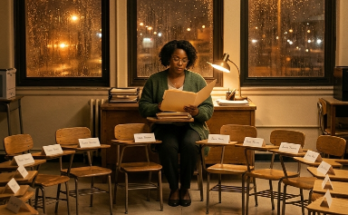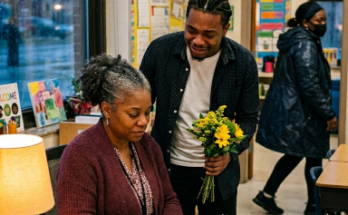
Twenty-three years passed.
Elaine Hargrove was sixty-one now, retired, tending a small garden in the same town she had taught in her whole life. Third grade was far behind her — replaced by grandchildren, quiet mornings, and the occasional ache of wondering about the ones she couldn’t save.
Then a letter arrived. No return address. Texas postmark.
Her hands trembled before she even opened it.
Dear Mrs. Hargrove,
You probably don’t remember me. I was in your class in 1999. My name was Marcus Webb. I sat in the back.
She remembered.
I want you to know that I thought about you every single day for years. When things were really bad at home — and they were bad — I would close my eyes and picture your classroom. The way it smelled like crayons and something warm. The notes you left on my desk.
I kept every single one.
I don’t know how to tell you what those mornings meant to a kid who had nothing. But I’m a man now. I’m a social worker in Houston. I have a wife. Two daughters. I named my oldest Elaine.
I became who I am because one teacher refused to let me disappear.
Thank you for seeing me when I was invisible.
— Marcus
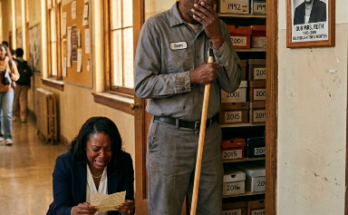
Elaine read it four times. Then she walked out to her garden, sat down in the dirt, and cried — not from grief this time, but from the kind of relief that takes two decades to arrive.
She hadn’t saved him the way she hoped. The system had failed them both.
But she had planted something in him that no one could take away.
And it grew.