Frank didn’t sleep that night. He drove three hours to the National Archives records office the next morning, badge and rank meaning nothing to the clerk until he explained why.
It took two weeks. Freedom of Information requests. Old after-action reports. A grainy black-and-white photo of a squad outside Hue, 1968.
The truth, when it surfaced, was worse than Walter had said — and sadder than Frank could have imagined.
Hal hadn’t lied out of cruelty. During the ambush, Hal had frozen — panic, not cowardice, a diagnosis no one used back then. Walter, wounded, had gone back for him, dragging him to cover. But in the chaos, command needed someone to blame for the two men who didn’t make it out. Hal, terrified of losing everything — his career, his family’s respect, the only identity he had — let the blame fall on the man who’d actually saved him.
Frank found Walter living alone in a one-bedroom apartment, forgotten by the country he’d served.
“I’m sorry,” Frank said, and meant it more than he’d meant anything in years. “I’m going to fix this. However long it takes.”
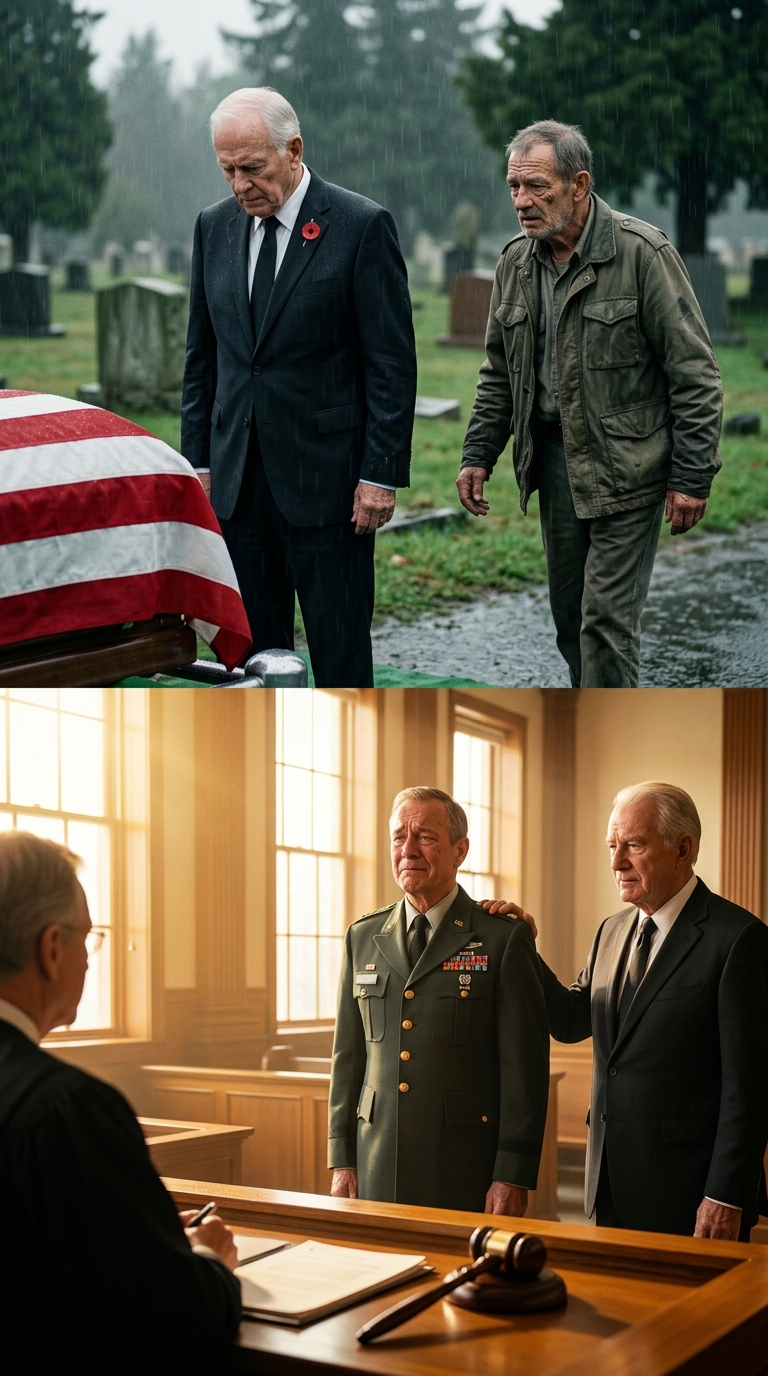
It took eighteen months, a lawyer, and a review board. But Walter Combs received his honorable discharge, his back pension, and a formal military apology, three months before he passed away peacefully, finally at rest.
At Walter’s funeral, Frank gave the eulogy he never gave Hal.
“Honor,” he said, “isn’t never breaking. It’s what you do for the man who broke for you.”
He saluted the casket, and for the first time in his life, meant every part of it.
THE END