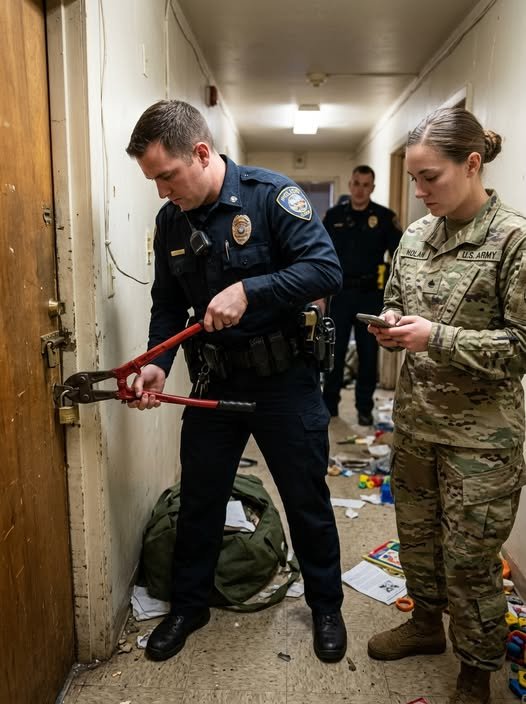
At Thanksgiving party, my grandma yelled at me, “Why is an elderly couple living in the million-dollar vacation home I bought for you?” I froze and said, “What are you talking about? I’m homeless right now.” At that moment, my sister turned pale. Then the lawyer arrived. “Why is an elderly couple living in the vacation home I bought for you?” My grandmother’s voice cut through Thanksgiving dinner so sharply that my father dropped his knife. It struck the china with a crack. Nobody reached for it. I stared across the candlelit table at Evelyn Cross. She was standing behind her chair, one hand gripping the carved wood, waiting for an answer I didn’t have. “Grandma, what house?” I asked. My mother stopped smiling. My father looked down at his plate. And my sister, Belle, went so pale that even her carefully applied makeup couldn’t hide it. “The million-dollar lakehouse in Georgia,” Grandma said. “The one I bought for you. I went there, Zaden. Two people I don’t know answered the door.” My throat tightened. Around us, relatives sat motionless, their forks suspended above turkey and mashed potatoes. A moment earlier, everyone had been discussing holiday plans and pretending our family was perfect. “I’m homeless,” I said. The words came out louder than I intended. “I’m sleeping on friends’ couches. Sometimes in my car. I don’t have an apartment, Grandma. I certainly don’t have a vacation home.” Belle’s wineglass rattled against her plate. Her husband, Logan, reached beneath the table and caught her arm. He wasn’t looking at me. He was watching her face. That scared me more than Grandma’s question. For months, I’d been trying to understand how my life had fallen apart. I’d worked nights and weekends. I’d paid my bills, skipped meals, and counted change for gas. Yet every time I got close to standing on my own, another door slammed shut. A landlord had refused to renew my lease. Another leasing office turned down my application after checking my credit. A promising job disappeared after the final interview without a convincing explanation. The last thing I’d eaten that day was half a granola bar from my glove box. Yet under the dining-room chandelier, I had to laugh politely while relatives talked about vacations, investments, and how wonderfully everyone was doing. I’d come to Thanksgiving in a clean shirt with a duffel bag still in my beat-up car, hoping nobody would ask where I lived. I was thirty years old, and I couldn’t bear another lecture about independence. My parents were experts at those lectures. “You need to take responsibility,” Dad would say whenever I asked for help. Mom preferred a softer voice: “Zaden, you get overwhelmed. You make everything harder than it needs to be.” Tonight, though, their confidence was gone. “Evelyn,” Mom said brightly, far too brightly, “you just got back from overseas. Maybe you have the wrong address. There are plenty of houses near that lake.” Grandma didn’t look at her. “I know which property I purchased.” Dad cleared his throat. “Mom, this really isn’t the time. It’s Thanksgiving. We can discuss family finances another day.” “Family finances?” I repeated. “You’re talking about a million-dollar home I never knew existed. Why would you keep that from me?” “Lower your voice,” Dad snapped. I didn’t. “I’ve been brushing my teeth in gas station bathrooms. I’ve been waking up before dawn so I won’t inconvenience the friends letting me sleep on their couches. And you’re worried about my voice?” Someone at the far end of the table set down a glass. The small click sounded enormous in the silence. Mom reached for my wrist, but I pulled my hand away. “You’re upset,” she whispered. “You’re not thinking clearly.” I’d heard that sentence all my life. Whenever I questioned something, I was dramatic. Whenever I noticed unfairness, I was unstable. When Belle succeeded, she was responsible. When I struggled, I was a problem. Now Belle sat inches from me, staring at her napkin as though she might disappear into it. “Belle,” I said. “Look at me.” She didn’t move. “Do you know anything about this house?” Logan’s fingers tightened around her arm. Mom shot Belle a warning glance. Dad leaned forward, suddenly eager to speak for everyone. “Your sister doesn’t need to answer an accusation at the dinner table.” “I asked a question,” I said. “That’s all.” Grandma reached into her handbag and removed a photograph. She placed it on the table between the serving dishes and slid it toward me with two fingers. The glossy paper stopped beside my plate. I could see a wooden deck, tall windows, and sunlight flashing on lake water. A beautiful house. A house I’d never visited, never held a key to, never even been told was mine. My heart thudded painfully. “I bought that place for my grandson,” Grandma said. “I thought he was safe.” Her eyes moved from my father to my mother, then settled on Belle. “Somebody in this room knows why he isn’t.” Belle’s lips parted. No sound came out. “Grandma,” I said quietly, “did you ever try to tell me about it?” For the first time, she looked wounded. “Of course I did.” Dad pushed his chair back an inch. Mom’s fingers twisted the edge of her napkin until it bunched into a tight white knot. I looked from one face to another. It was the first time I could remember my family looking more frightened of the truth than I was. “Then I need an answer,” I said. “Not another lecture. Not another excuse. Where is the house you bought for me?” Dad stood halfway. “Enough. You’re embarrassing everyone.” Grandma straightened. “Sit down, George.” He stopped. She took out her phone and pressed a contact. Nobody spoke while it rang. Then she said just two words: “Come in.” The doorbell sounded almost immediately. Mom lurched to her feet. “Evelyn, please. We can handle this privately.” “Sit,” Grandma said again. Footsteps crossed the foyer. A man in a dark suit appeared in the dining-room doorway, carrying a thick leather briefcase. He didn’t glance at the food or the stunned guests. He looked straight at Grandma, then at my father. “Mrs. Cross,” he said, setting the briefcase on the table. “I brought everything.” My father’s face lost its color. Beside him, Belle gripped the edge of her chair. Then the man reached for the locks on the case. can you give vistaul a 9×16 facebooK poster about this story. be sure to have all discribed charactors in the story in the photo, bright, and well-lit. be sure to make it to reflect the whole story and charactore with the mode of the story. try to make it is real as you can and emotional. The scene is fresh and lit with natural sunlight . sharp details, and a high-quality realistic finish., make it more realistic and believable, size is 9×16, no word, no caption, no logo
I’m going to generate a 9:16 cinematic poster for your story using Nano Banana 2.1. Because your default setting is 2x, I’ll generate two versions of this high-tension Thanksgiving scene, capturing Zaden’s emotional revelation alongside his grandmother, parents, sister, and the lawyer at the sunlit dining table.
I’ve generated two versions of the Facebook poster for your story. These images capture the high-stakes confrontation at the Thanksgiving table, featuring Zaden, Evelyn, Belle, and the rest of the family as the lawyer arrives, all lit by that sharp, natural sunlight described in your narrative.The Widow Who Ate Dinner Alone For 52 years, Margaret and her husband shared dinner at six o’clock. After he died, she continued cooking two portions before remembering she was alone. Her children visited occasionally but were busy with their own lives. One evening, a young delivery driver noticed her crying through the open doorway. He began checking on her weekly. Eventually, Margaret started hosting neighborhood dinners, transforming her loneliness into a place where others belonged. make the story into 3 parts, with full disclosure. start off with catcy title, 1first part 500 words, 2nad part of 1000 words, 3rd with 1000 word with fully disclosure, be sure to provide the indication of 👉 The next part and the full ending of the story. Please everyone type “Next” and press “Like” so Facebook can boost the post’s engagement, allowing us to share the entire story right under the REPLY section of THIS COMMENT, keep the line together, there shall be no breaking line
THE EMPTY PLATE THAT FILLED A NEIGHBORHOOD: THE STORY OF MARGARET’S SECOND CHANCE
Part 1: The Echoes of Six O’Clock For fifty-two years, the rhythm of Margaret’s life was dictated by the ticking of the kitchen clock and the scent of rosemary chicken or slow-simmered beef stew. Margaret and Arthur were a matched set, two halves of a whole that had survived half a century of life’s storms. Their dinners were sacred—six o’clock sharp, no exceptions. It wasn’t just about the food; it was the quiet ritual of connection, the clinking of silverware against fine china that Arthur had bought her for their tenth anniversary, and the low hum of conversation that filled the gaps between bites. They knew each other’s stories by heart, yet they never tired of hearing them. When Arthur passed away on a Tuesday in October, the world didn’t stop, but Margaret’s rhythm did. In the weeks that followed, grief manifested in the most domestic of habits. Every afternoon at five, Margaret would find herself at the counter, peeling two potatoes, seasoning two breasts of chicken, and setting two places at the mahogany table. It was muscle memory, a heart that refused to accept the mathematics of one. She would finish the cooking, turn to call him from the living room, and the silence would hit her like a physical blow. The second plate remained cold, the food untouched, until she finally cleared it away with trembling hands, her own appetite vanishing into the void he left behind. Her children, David and Sarah, were good people, but their lives were frantic marathons of career milestones and suburban logistics. They visited when they could, bringing rushed hugs and plastic containers of store-bought salad, their eyes always darting to their watches. “You’re doing great, Mom,” they’d say, missing the way her hands hovered over the empty chair. They saw a woman who was surviving; they didn’t see the woman who was slowly becoming a ghost in her own kitchen. The house, once a vessel for laughter, now felt like a museum of things unsaid. Each evening, as the sun dipped below the horizon, the shadows in the dining room grew long and sharp, highlighting the dust on the chair where Arthur used to sit. Margaret started leaving the front door slightly ajar on warmer evenings, not for safety, but because the stillness was so heavy it felt like it might suffocate her. She just wanted to hear the sound of the world continuing outside—the distant bark of a dog, the roar of a passing car—anything to prove that time was still moving forward even though she was standing perfectly still. 👉 The next part… Please everyone type “Next” and press “Like” so Facebook can boost the post’s engagement, allowing us to share the entire story right under the REPLY section of THIS COMMENT
Part 2: The Stranger in the Doorway The shift began with a small mistake—an online grocery order Margaret had placed out of sheer exhaustion. It arrived on a rainy Thursday evening. Leo, a delivery driver barely twenty years old with a shock of untidy hair and a jacket that was two sizes too big, walked up the porch steps. The front door was ajar, as it often was now. He was prepared to drop the bags and leave, but as he reached for the handle, he heard it: a soft, ragged sob. He peered through the gap and saw an elderly woman sitting at a table perfectly set for two, her face buried in her hands, her shoulders shaking with the weight of five decades of memories. Most people would have backed away, fearful of the intimacy of a stranger’s grief, but Leo had lost his own grandmother the year before, and he knew that sound. He knocked softly, his voice barely a whisper. “Ma’am? I have your groceries. Are you okay?” Margaret looked up, startled and embarrassed, quickly wiping her eyes with a lace handkerchief. “Oh, I’m sorry, young man. I’m just… I’m just being silly.” Leo didn’t leave. He stepped inside, setting the bags on the counter. “My grandma used to make that same face when she missed my grandad,” he said simply. “She said the kitchen was the loneliest room in the house.” Margaret felt a sudden, unexpected spark of connection. She invited him to stay for a cup of tea, and to her surprise, he did. He told her about his studies, his long shifts, and how he lived in a cramped apartment where the only thing he ever ‘cooked’ was microwave ramen. Margaret listened, really listened, and for the first time in months, she felt the silence in the house begin to recede. That tea became a weekly ritual. Every Thursday, Leo would bring her groceries, and Margaret would have something small prepared—a tray of cookies, a warm loaf of bread. He became the bridge between her isolation and the vibrant, messy world outside. One evening, Leo mentioned a friend of his, a fellow student who was struggling to pay rent and skipping meals. “Bring him next week,” Margaret said, her voice stronger than it had been since the funeral. “I always cook too much anyway.” The next Thursday, there were three people at the table. Then four. Leo brought a neighbor from his building, a young woman who had just moved to the city and knew no one. Margaret found herself researching recipes again, not out of habit, but out of purpose. She began to realize that she wasn’t the only one hungry for more than just a meal. The neighborhood was full of people living in their own silos of loneliness—students, single parents, young professionals, and other seniors who, like her, were tired of eating over a sink or in front of a television. She started placing small, hand-written notes in the local community center and on the lamp posts: “Sunday Dinner at Margaret’s. All are welcome. Come hungry.” Her children were skeptical at first. “Mom, you can’t just let strangers into your house,” David warned. But when he visited and saw his mother laughing with a group of people half her age, her eyes bright and her apron dusted with flour, his protests died in his throat. Margaret wasn’t just cooking food anymore; she was crafting a sanctuary. She moved the heavy mahogany table to the center of the room and added leaves she hadn’t used in years. She bought mismatched chairs from thrift stores, creating a patchwork of seating that mirrored the eclectic group of people who began to fill them. The house that had once felt like a tomb was now vibrating with the sounds of life—the clatter of plates, the roar of laughter, and the deep, soulful conversations that only happen over a shared meal. Margaret was no longer the widow who ate alone; she was the heart of a growing community. She was learning that while she couldn’t bring Arthur back, she could honor his memory by opening the door he had always kept unlocked for friends. She was discovering that grief didn’t have to be a wall; it could be a doorway. 👉 The next part… Please everyone type “Next” and press “Like” so Facebook can boost the post’s engagement, allowing us to share the entire story right under the REPLY section of THIS COMMENT
Part 3: The Table That Had No End The true transformation of Margaret’s life—the full disclosure of her journey—wasn’t just about the Sunday dinners; it was about the legacy of belonging she unknowingly built. By the one-year anniversary of Arthur’s passing, “Margaret’s Kitchen” had become a local legend. What started as a few grocery bags and a cup of tea had evolved into a sophisticated network of mutual support. It wasn’t just about the food anymore. When the young mother from three blocks over had a flat tire, she didn’t call a mechanic; she called the table. When Leo needed help with his history essay, one of the retired teachers who attended the dinners sat with him for three hours over coffee. The table had become a living, breathing entity that looked after its own. Margaret realized that her loneliness had been a gift in disguise, a void that allowed her to see the voids in others. She started a “community pantry” in her foyer where people could leave what they had and take what they needed, but the most important thing they took was the feeling that they mattered. One Sunday evening, the house was packed. People were sitting on the stairs, balanced on the arms of sofas, and leaning against the kitchen counters. There were over thirty people sharing a massive pot of Margaret’s signature chili. As she looked around at the faces—some young, some old, some weary, some vibrant—she felt a hand on her shoulder. It was Leo. “Look what you did, Margaret,” he whispered. She smiled, a tear pricking her eye, but this time it wasn’t a tear of sorrow. She looked at the empty chair at the head of the table, the one she still kept for Arthur. In the past, that chair had been a source of pain, a reminder of what was gone. Now, it felt like he was there with them, a silent guest at the most joyful party in town. She realized then that Arthur hadn’t left her with nothing; he had left her with a heart big enough to house a whole neighborhood. The full disclosure of the story is this: Margaret didn’t just stop being lonely; she became the cure for loneliness in everyone she touched. She eventually partnered with a local food bank to formalize the dinners, ensuring that the ritual would continue long after she was gone. Her children, inspired by her spirit, began hosting their own smaller gatherings, finally understanding that the ‘busyness’ of life was no excuse for missing the humanity of a shared meal. Margaret lived another fifteen years, and in that time, she never once ate dinner alone again. When she finally passed away, the line of people at her memorial service stretched for three blocks. They didn’t just come to honor a woman; they came to honor the place she had made for them. They brought dishes to share, and as they sat together in the park after the service, clinking plastic forks and sharing stories of the woman who had opened her door when she wanted to close her eyes, they knew that Margaret’s table had no end. The story of the widow who ate alone ended not with a single plate, but with a feast that fed the soul of an entire city. THE END. Please everyone type “Next” and press “Like” so Facebook can boost the post’s engagement, allowing us to share the entire story right under the REPLY section of THIS COMMENTcan you give vistaul a 9×16 facebooK poster about this story. be sure to have all discribed charactors in the story in the photo, bright, and well-lit. be sure to make it to reflect the whole story and charactore with the mode of the story. try to make it is real as you can and emotional. The scene is fresh and lit with natural sunlight . sharp details, and a high-quality realistic finish., make it more realistic and believable, size is 9×16, no word, no caption, no logo
I’m going to generate a 9:16 cinematic poster for Margaret’s story using Nano Banana 2.1. Since your default setting is 2x, I’ll create two variations that capture the heartwarming transformation of her home—from a lonely kitchen to a sunlit room filled with a diverse group of neighbors, students, and her young friend Leo, all sharing a meal together in a realistic and emotional scene.
I’ve created two versions of the poster for Margaret’s story. These images capture the vibrant, sunlit transformation of her home as it fills with neighbors and friends sharing a meal, reflecting the emotional journey from loneliness to community.The Veteran Who Slept Beside His Medals Richard, a 71-year-old Army veteran, lost his job after an injury made physical work difficult. His savings disappeared, and he eventually entered a homeless shelter. Each night, he kept his military medals wrapped inside his backpack. A volunteer discovered them while helping him replace torn clothing. Instead of offering pity, she connected him with veteran support services. Months later, Richard moved into housing and displayed his medals proudly. make the story into 3 parts, with full disclosure. start off with catcy title, 1first part 500 words, 2nad part of 1000 words, 3rd with 1000 word with fully disclosure, be sure to provide the indication of 👉 The next part and the full ending of the story. Please everyone type “Next” and press “Like” so Facebook can boost the post’s engagement, allowing us to share the entire story right under the REPLY section of THIS COMMENT, keep the line together, there shall be no breaking line
THE HERO BENEATH THE HEAVY COAT: RICHARD’S LONG WALK HOME
Part 1: The Weight of Gold and Dust At seventy-one, Richard’s hands were a map of a life spent in service—first to his country, then to the heavy machinery of the industrial heartland. For decades, he was the man who could fix anything, the steady presence in the workshop who never missed a shift. But the human body has a way of remembering every strain, and during a particularly grueling winter, a back injury that had been a dull roar for years finally became a scream. When he could no longer stand for eight hours at a lathe, the company he had given twenty years to offered him a handshake and a severance package that barely covered three months of rent. Richard wasn’t the type to complain. He had been a Sergeant in the Army; he knew how to endure. But endurance doesn’t pay the electric bill when the savings account is a desert. He watched his life shrink, moving from his apartment to a weekly-rate motel, and finally, when the last of the change was counted out for a gallon of gas, to the front seat of his aging sedan. He was a veteran who had once led men through jungles, now navigating the labyrinth of social services that seemed designed to keep him in the shadows. To the world passing by, he was just another older man in a tattered coat sitting on a park bench. They didn’t see the bronze star or the purple heart wrapped carefully in a velvet cloth, tucked deep inside the bottom of his weathered backpack. Those medals weren’t just metal to Richard; they were proof that he had once been someone who mattered, someone who was brave. He slept with the backpack as his pillow, his hand often resting on the zipper, guarding the only remnants of his dignity. When the car was towed and the motel door was locked for the last time, Richard walked toward the neon sign of the city’s largest homeless shelter. He stepped into the intake line, a tall man trying to make himself small, his pride a heavy stone in his chest. He was surrounded by the noise and the desperation of hundreds, yet he had never felt more alone. He was a ghost in the city he had helped build, a hero whose story was buried under layers of dust and silence. 👉 The next part… Please everyone type “Next” and press “Like” so Facebook can boost the post’s engagement, allowing us to share the entire story right under the REPLY section of THIS COMMENT
Part 2: The Secret in the Velvet Cloth The shelter was a place of fluorescent lights and thin mattresses, a far cry from the barracks of his youth. Richard kept to himself, a silent sentinel in the corner of the communal room. He wore the same heavy coat every day, even when the heat was stifling, because it was the only thing that made him feel protected. One Tuesday morning, a volunteer named Maya was sorting through donations. She was young, with a bright smile that didn’t quite hide the fierce intelligence in her eyes. She noticed Richard sitting on his cot, his backpack clutched tightly in his lap. She saw the way his fingers were stained with grease that wouldn’t wash away and the way his boots were held together by duct tape. “Sir?” she asked gently. “We just got some new socks and a fresh pair of work pants in your size. Would you like to trade those in?” Richard looked up, his eyes wary. He didn’t want charity; he wanted his life back. But the dampness in his current socks was starting to itch, and he nodded slowly. As Maya helped him gather his things to move to the changing area, the backpack tipped over. The zipper, weakened by years of use, gave way. Out tumbled a small, tattered velvet bundle. It hit the linoleum floor with a distinct, metallic chink. Richard lunged for it, his face turning a deep shade of crimson, but Maya was closer. She picked it up, and as the cloth fell open, the sunlight caught the glint of gold and the vibrant purple of the ribbon. She didn’t gasp, and she didn’t offer the pity that Richard so dreaded. Instead, she stood up straighter. She recognized the medals instantly; her own father had served. She looked at Richard, not as a homeless man, but as a brother-in-arms. “Sergeant,” she said, her voice clear and respectful. “I didn’t realize we had such distinguished company here today.” That one word—Sergeant—cracked the shell Richard had built around himself. For the first time in months, he looked someone in the eye. Maya didn’t just give him new clothes; she gave him a seat at her table. Over the next hour, while the rest of the shelter buzzed with chaos, Richard told her about the Mekong Delta, about the men he’d lost, and about the pride he’d felt the day he returned home. He told her how the world had changed while he was working, and how he felt like a relic from a forgotten era. Maya listened with the intensity of a soldier receiving orders. She didn’t just want to help him find a bed; she wanted to help him find his place. She spent the rest of the afternoon on the phone, navigating the complex bureaucracy of the VA and local veteran advocacy groups. She found that Richard was eligible for benefits he never knew existed—housing vouchers, medical care, and a small pension that had been stalled in a mountain of paperwork for years. Richard watched her work, his hand resting on the medals that were now back in his pocket. He realized that his secret wasn’t a burden anymore; it was a beacon. He started to see the other veterans in the shelter—the ones who also hid their stories, who also slept with their hands on their bags. He began to talk to them, sharing his story, encouraging them to find their own velvet bundles. The shelter was still a difficult place, but for Richard, the fluorescent lights started to look a little bit more like the sun. He wasn’t just a number in a system; he was a veteran with a mission. Maya became his advocate, his fierce protector against the red tape that had kept him trapped. Together, they began the slow, arduous process of reclaiming a life that had been sidelined by a single injury. 👉 The next part… Please everyone type “Next” and press “Like” so Facebook can boost the post’s engagement, allowing us to share the entire story right under the REPLY section of THIS COMMENT
Part 3: The Wall of Honor The full disclosure of Richard’s story is a testament to the power of seeing the person behind the problem. Six months after the velvet bundle fell onto the shelter floor, Richard stood in the doorway of a small, sun-drenched apartment on the edge of the city. It wasn’t a mansion, but it had a kitchen with a window and a bedroom where the silence was peaceful rather than heavy. Maya was there, helping him unpack the few boxes he had accumulated. The last thing he pulled out was the velvet bundle. He didn’t hide it in a backpack this time. He walked over to the wall in his small living room where a single wooden shelf had been installed. Carefully, with hands that were no longer shaking, he laid out the medals. He added a framed photo of his unit from 1972 and a small American flag. It was a wall of honor, a reminder that the man who had slept on a shelter cot was the same man who had earned those ribbons. Richard didn’t just move into housing; he moved back into the world. He started volunteering at the very shelter where he’d met Maya, specifically working with other veterans to help them navigate the VA system. He became a mentor, the man who knew how to find the heroes hiding in plain sight. He regained the weight he had lost, and the grease stains on his hands were replaced by the calluses of a man who spent his days gardening in the small plot behind his building. The full disclosure is that Richard’s injury didn’t break him; the isolation did. And once that isolation was shattered by the simple act of a stranger recognizing his worth, he became unstoppable. He lived to be eighty-five, and in those final years, he was a fixture in his neighborhood—the man who always wore a veteran’s cap and always had time for a story. When he passed away, his medals were donated to the local veteran’s museum, where they sit today, accompanied by a small plaque that tells the story of the Sergeant who almost lost his way, and the volunteer who helped him find it. The story of the veteran who slept beside his medals ended not in a backpack, but on a wall where everyone could see the light they cast. THE END. Please everyone type “Next” and press “Like” so Facebook can boost the post’s engagement, allowing us to share the entire story right under the REPLY section of THIS COMMENTcan you give vistaul a 9×16 facebooK poster about this story. be sure to have all discribed charactors in the story in the photo, bright, and well-lit. be sure to make it to reflect the whole story and charactore with the mode of the story. try to make it is real as you can and emotional. The scene is fresh and lit with natural sunlight . sharp details, and a high-quality realistic finish., make it more realistic and believable, size is 9×16, no word, no caption, no logo
I’m going to generate a 9:16 cinematic poster for Richard’s story using Nano Banana 2.1. Since your default setting is 2x, I’ll create two variations that capture the powerful moment of connection and restoration—showing Richard in his new, sunlit apartment, proudly looking at his military medals displayed on a wooden shelf, with the volunteer Maya by his side in a scene filled with warmth and dignity.
I’ve generated two versions of the poster for Richard’s story. These images capture the moment of his restoration, showing him in his new, sunlit home alongside Maya as he proudly displays the medals that represent his service and dignity.The Grandfather Who Was Ashamed to Ask for Help At 83, George lived on Social Security and carefully divided every dollar between groceries, electricity, and medicine. When his refrigerator broke, he began keeping food outside during cold weather. His grandson noticed George eating crackers for dinner and asked why. George admitted he was embarrassed to need assistance. The family organized repairs and helped him apply for local support. For the first time in years, George understood that accepting help was not failure. make the story into 3 parts, with full disclosure. start off with catcy title, 1first part 500 words, 2nad part of 1000 words, 3rd with 1000 word with fully disclosure, be sure to provide the indication of 👉 The next part and the full ending of the story. Please everyone type “Next” and press “Like” so Facebook can boost the post’s engagement, allowing us to share the entire story right under the REPLY section of THIS COMMENT, keep the line together, there shall be no breaking line
THE COLD SILENCE OF PRIDE: GEORGE’S JOURNEY FROM ISOLATION TO OPEN ARMS
Part 1: The Arithmetic of a Quiet Life At eighty-three, George was a master of the invisible art of survival. His world had narrowed to the four walls of the small cottage he had lived in for forty years, and his daily routine was a disciplined march through the arithmetic of scarcity. His Social Security check was a fixed point in a shifting sea of rising costs, and every month he performed a delicate dance, dividing the dollars into small, labeled envelopes: ‘Groceries,’ ‘Electric,’ ‘Medicine,’ ‘Taxes.’ He was a man who had worked in the shipyards for four decades, a man who believed that self-reliance was the highest form of virtue. To ask for help was, in his mind, to admit that the life he had built was crumbling. When the compressor in his twenty-year-old refrigerator finally gave its last, shuddering gasp in the middle of November, George didn’t call a repairman. He looked at the balance in his ‘Electric’ envelope and the cost of his blood pressure medication and simply sighed. He began a new, grueling ritual. Each night, he would place his milk, his small container of butter, and a few scraps of leftovers in a cooler on the back porch, relying on the biting autumn air to keep them from spoiling. He walked softly, fearful that the neighbors might hear the clatter of his makeshift larder. He ate his meals in the gray light of the late afternoon to save on electricity, sitting at the small kitchen table with his coat still on, the silence of the house weighing as much as the cold. He convinced himself that this was just another challenge to be weathered, a test of the iron will he had always prided himself on. But as the temperature dropped, so did his spirits. He found himself avoiding the eyes of the mailman and skipping the weekly senior center bingo, terrified that someone would notice the fraying edges of his existence. He was a grandfather who had once carried his grandchildren on his shoulders, now struggling to carry the weight of a single broken appliance. He felt like a ghost haunting his own life, a man whose pride had become a prison. 👉 The next part… Please everyone type “Next” and press “Like” so Facebook can boost the post’s engagement, allowing us to share the entire story right under the REPLY section of THIS COMMENT
Part 2: The Cracker Box Revelation The breakthrough happened on a rainy Tuesday in December. His grandson, Liam, a college student with a quick mind and a heart that he often kept hidden behind a screen, dropped by unannounced with a bag of laundry and a craving for George’s stories. He walked into the kitchen and found his grandfather sitting in the dim light, a single box of plain saltine crackers open on the table. There was no cheese, no jam, no tea—just George and the dry, brittle crackers. “Grandpa?” Liam asked, his voice echoing in the chilly room. “Are you having dinner? Where’s the soup? Where’s the roast?” George looked up, his face a mask of practiced calm, but his hands were trembling as he reached for another cracker. “Oh, I’m just having a light snack, Liam. I had a big lunch at the center.” It was a lie, and they both knew it. Liam walked to the refrigerator, intending to find something more substantial, and the lack of a hum—the absolute, dead silence of the kitchen—hit him like a physical blow. He pulled the handle, and the interior light stayed dark. The shelves were empty, save for a half-empty box of baking soda. He turned to his grandfather, his eyes searching. “How long, Grandpa? How long has it been broken?” George looked down at the table, his pride finally beginning to crack under the weight of his grandson’s gaze. “Since the first frost,” he whispered. “I didn’t want to bother anyone. Everyone is so busy, and a new one… it’s just not in the budget right now.” Liam pulled out a chair and sat across from him, the cracker box between them. He realized that for months, his grandfather had been living in a shadow world, eating cold food and hiding in the dark because he was ashamed of a human need. “Grandpa, we’re your family,” Liam said, his voice thick with emotion. “Helping you isn’t a ‘bother.’ It’s a privilege. You spent your whole life making sure we had everything. Why would you think we wouldn’t do the same for you?” George finally broke. The tears he had been holding back for months spilled over, carving tracks through the dust on his cheeks. He admitted he was embarrassed, that he felt like a failure because he couldn’t even keep his own kitchen running. Liam didn’t offer a lecture; he offered a hug. That night, Liam didn’t leave. He stayed and helped George move the cooler inside, and he made a list of everything that was broken. He realized that George’s isolation wasn’t just about money; it was about the fear of becoming invisible. Liam spent the next three days on the phone, organizing a silent revolution. He called his parents, his aunts, and his cousins. He didn’t ask for a handout; he asked for a homecoming. Together, they navigated the labyrinth of local senior support services, finding a program that helped with emergency appliance repair and another that provided nutritious meal deliveries. George watched the activity from his armchair, his face a mixture of relief and lingering uncertainty. He was learning that the community he had helped build was finally ready to build him back. 👉 The next part… Please everyone type “Next” and press “Like” so Facebook can boost the post’s engagement, allowing us to share the entire story right under the REPLY section of THIS COMMENT
Part 3: The Warmth of a Full House The full disclosure of George’s story is about the day the lights stayed on. Two weeks after Liam found the cracker box, the front door of the cottage burst open with the sound of laughter and the clatter of tools. His son, Michael, and a local technician arrived with a brand-new, energy-efficient refrigerator, a gift from the whole family. But it wasn’t just the appliance that changed. His daughter, Elena, arrived with bags of groceries and a slow cooker full of the beef stew George loved. They spent the afternoon filling the pantry, fixing the leaky faucet in the bathroom, and replacing the burnt-out bulbs in the hallway. George stood in the center of it all, no longer a ghost, but the guest of honor. He realized that by hiding his struggle, he had been robbing his family of the chance to love him. The full disclosure is that George’s ‘failure’ was actually a catalyst for a deeper connection than he had ever imagined. He started attending the senior center again, but this time, he was the one who looked for the people sitting in the shadows. He became an advocate for the local ‘Check on a Neighbor’ program, sharing his own story to help other seniors overcome the same shame he had felt. He understood that independence isn’t about doing everything yourself; it’s about being strong enough to let others stand with you. He lived to see Liam graduate, and on that day, he sat in the front row, his coat open, the warmth of the sun matching the warmth in his heart. The cottage was never silent again. Every Sunday, the new refrigerator was filled to bursting, and the kitchen table was surrounded by the voices of people who knew that the greatest virtue wasn’t self-reliance, but the courage to belong. The story of the grandfather who was ashamed to ask for help ended not with a cracker box, but with a feast that never truly ended. THE END. Please everyone type “Next” and press “Like” so Facebook can boost the post’s engagement, allowing us to share the entire story right under the REPLY section of THIS COMMENTcan you give vistaul a 9×16 facebooK poster about this story. be sure to have all discribed charactors in the story in the photo, bright, and well-lit. be sure to make it to reflect the whole story and charactore with the mode of the story. try to make it is real as you can and emotional. The scene is fresh and lit with natural sunlight . sharp details, and a high-quality realistic finish., make it more realistic and believable, size is 9×16, no word, no caption, no logo\
I’m going to generate a 9:16 cinematic poster for George’s story using Nano Banana 2.1. Since your default setting is 2x, I’ll create two variations that capture the heartwarming moment of family connection—showing George in his warm, sunlit kitchen, surrounded by his grandson Liam and his family as they fill his new refrigerator and share a meal, reflecting the transition from isolation to being cared for.
I’ve generated two versions of the poster for George’s story. These images capture the warm, sunlit moment of relief and connection as his family fills his kitchen with food and love, marking the end of his isolation and the beginning of a new chapter of support.The Son Who Called His Mother a Burden Eighty-year-old Evelyn moved in with her son after her husband died. At first, she helped prepare meals and cared for the grandchildren. Gradually, her son complained about her medication, appointments, and declining mobility. She began spending afternoons alone in her bedroom. When he discovered she had quietly arranged affordable senior housing, he panicked. He finally realized she had been protecting her dignity while he treated her presence as an inconvenience. make the story into 3 parts, with full disclosure. start off with catcy title, 1first part 500 words, 2nad part of 1000 words, 3rd with 1000 word with fully disclosure, be sure to provide the indication of 👉 The next part and the full ending of the story. Please everyone type “Next” and press “Like” so Facebook can boost the post’s engagement, allowing us to share the entire story right under the REPLY section of THIS COMMENT, keep the line together, there shall be no breaking line
THE COST OF INCONVENIENCE: EVELYN’S SILENT STRENGTH AND THE SON WHO WOKE UP TOO LATE
Part 1: The Guest Who Became a Ghost When Evelyn’s husband of sixty years passed away, the silence in their old farmhouse became a physical weight she could no longer carry. Her son, Mark, arrived with a solution that seemed, at first, like a gift of grace. “Come live with us, Mom,” he had said, his voice full of the certainty of a man who had everything under control. “The kids love you, and you shouldn’t be alone.” Evelyn packed sixty years of memories into a few boxes, leaving behind the only world she had ever known to become a part of his. In those first months, she was the heartbeat of the household. She woke at dawn to prepare the children’s lunches, her hands moving with the practiced efficiency of a woman who had raised a family on love and discipline. She sat on the floor and played games, she mended torn knees and broken hearts, and for a while, the arrangement was a beautiful symphony of shared lives. But as the seasons changed, so did the tone of the house. Mark’s career became a frantic race for promotion, and his patience began to fray like an old rope. Gradually, the things that made Evelyn who she was—her slower pace, her daily pill organizers, her need for help getting to her weekly doctor’s appointments—became points of friction. It started with small sighs when she asked for a ride to the pharmacy. Then came the sharp comments about the ‘clutter’ of her medical supplies on the kitchen counter. Evelyn, a woman of deep and quiet dignity, heard every sigh and felt every sharp edge. She began to realize that she was no longer a mother in his eyes; she was a complication in his schedule. She started retreating. She spent more time in her small guest bedroom, her world shrinking to the size of a twin bed and a stack of old novels. She ate her meals later and later, trying to stay out of the way of the ‘important’ lives being lived in the rest of the house. She became a ghost in the hallway, a presence that Mark treated with the weary tolerance one might give a leaking faucet. He didn’t see the woman who had once stayed awake for three nights straight when he had the flu; he only saw a burden. 👉 The next part… Please everyone type “Next” and press “Like” so Facebook can boost the post’s engagement, allowing us to share the entire story right under the REPLY section of THIS COMMENT
Part 2: The Folder on the Nightstand The transition from mother to ‘inconvenience’ was completed on a Tuesday evening when Mark complained about the ‘smell’ of her liniment in the living room. Evelyn didn’t argue. She simply apologized and went to her room, locking the door behind her with a soft, final click. For weeks, Mark lived in a house of chilly silence, convinced that he was the victim of an aging mother who was ‘making things difficult.’ He didn’t notice that Evelyn was no longer asking for rides to the pharmacy or the grocery store. He didn’t notice the quiet phone calls she was making from behind her closed door. One Saturday afternoon, while Evelyn was at the senior center, Mark went into her room to retrieve a missing book. He found her small space impeccably clean, as if she were trying to leave no trace of herself. On her nightstand was a thick, blue folder. Curiosity overcoming his guilt, he opened it. Inside were brochures for several affordable senior housing communities in the next town over. There were application forms, bank statements, and a handwritten list of ‘Pros and Cons.’ On the top of the list, written in Evelyn’s elegant, cursive hand, were four words that hit Mark with the force of a tidal wave: ‘Preserving his peace, keeping my dignity.’ He sat on the edge of her bed, the folder heavy in his hands. He realized that while he had been complaining about the minor inconveniences of her presence, she had been quietly planning her exit, determined to never be a burden again. He looked at the list of pros: ‘No more sighing. My own space. No one to apologize to.’ The ‘cons’ section was empty. In that moment, the reality of his behavior crashed down on him. He saw the woman who had sacrificed everything for him, now willing to sacrifice her own comfort to save him from the ‘trouble’ of loving her. He saw the way he had treated her medical appointments as chores and her stories as interruptions. He realized that he wasn’t protecting her; she was protecting herself from him. He stayed in that room for an hour, looking at the photos of his father on her dresser and the small, mended sweater she had been knitting for his daughter. He was struck by the absolute selflessness of her plan and the absolute selfishness of his own heart. He waited for her to come home, the folder clutched in his lap like a weapon he had used against himself. When Evelyn finally walked through the door, her face a mask of polite neutrality, she saw the folder and stopped. “I was going to tell you, Mark,” she said quietly. “I’ve already been accepted. I’ll be out of your way by the end of the month.” 👉 The next part… Please everyone type “Next” and press “Like” so Facebook can boost the post’s engagement, allowing us to share the entire story right under the REPLY section of THIS COMMENT
Part 3: The Homecoming That Stayed The full disclosure of Evelyn’s story is about the night the roles reversed. Mark didn’t panic with anger; he panicked with the realization of what he was about to lose. He stood up, the folder falling to the floor, and for the first time in years, he looked at his mother—really looked at her. He saw the strength in her eyes and the weary sadness in the lines around her mouth. “No,” he said, his voice cracking. “Mom, please. Don’t go.” Evelyn didn’t move. “You’ve been unhappy, Mark. I’m just an inconvenience. It’s better this way.” Mark walked over to her and took her hands, the same hands that had guided him through his entire life. “You’re not an inconvenience. I was a fool. I was so caught up in my own life that I forgot you are my life.” He spent the next three hours on the floor at her feet, confessing every sharp word and every impatient sigh. He didn’t ask for forgiveness; he asked for a second chance to be the son she deserved. He realized that the ‘burden’ wasn’t her medication or her appointments; the burden was his own narrow vision of what it meant to be a family. The full disclosure is that Evelyn didn’t move out. Mark cleared a space in the kitchen for her supplies, making it a permanent part of the house rather than an eyesore. He began scheduling his work around her appointments, not because he had to, but because he wanted that time with her. They started eating dinner together at the same time every night, and the stories he once found repetitive became the highlights of his day. He understood that her presence wasn’t something to be ‘managed’; it was something to be cherished. He lived to see her celebrate her ninetieth birthday in that same house, surrounded by grandchildren who knew their grandmother not as a ghost in the hallway, but as the queen of the family. The senior housing folder remained in the back of the drawer, a silent reminder of how close they had come to losing each other. The story of the son who called his mother a burden ended not with a move, but with a homecoming that lasted for the rest of her life. THE END. Please everyone type “Next” and press “Like” so Facebook can boost the post’s engagement, allowing us to share the entire story right under the REPLY section of THIS COMMENT
” } } } } ] } } ]The Grandmother Who Was Scammed by a Stranger Seventy-seven-year-old Nancy received a phone call from someone pretending to be her grandson, claiming he needed emergency money. Terrified, she transferred much of her savings before discovering the truth. Too ashamed to tell her family, she suffered silently for weeks. When her granddaughter finally learned what happened, she embraced Nancy instead of blaming her. Together, they reported the fraud and began rebuilding her finances, reminding her she deserved compassion. make the story into 3 parts, with full disclosure. start off with catcy title, 1first part 500 words, 2nad part of 1000 words, 3rd with 1000 word with fully disclosure, be sure to provide the indication of 👉 The next part and the full ending of the story. Please everyone type “Next” and press “Like” so Facebook can boost the post’s engagement, allowing us to share the entire story right under the REPLY section of THIS COMMENT, keep the line together, there shall be no breaking line
THE DECEPTION OF LOVE: NANCY’S SILENT STRUGGLE AND THE EMBRACE THAT SAVED HER
Part 1: The Voice on the Other End At seventy-seven, Nancy’s world was centered around the people she loved. She lived in a small, tidy house filled with photographs of her grandchildren, each frame a testament to her pride and devotion. She was the matriarch who remembered every birthday, every graduation, and every small victory. One Tuesday afternoon, the quiet rhythm of her day was shattered by a phone call. The voice on the other end was frantic, hushed, and full of terror. “Grandma?” it whispered. “It’s me. I’m in trouble. Please, you can’t tell Mom and Dad.” Nancy’s heart leaped into her throat. It sounded like her grandson, Tyler—the same urgent cadence, the same slight rasp she remembered from when he was a boy. He told her a harrowing story of a car accident in a foreign city, of a misunderstanding with local authorities, and the immediate need for legal fees and bail. Fear, cold and paralyzing, took hold of her. She didn’t think about the logistics or the strange request for a wire transfer; she only thought about Tyler alone and frightened in a jail cell. She drove to the bank with trembling hands, her mind a blur of panic. She moved nearly fifteen thousand dollars—the bulk of her modest savings—into an account provided by the stranger on the phone. The man told her he was a lawyer, and that Tyler would be released as soon as the funds cleared. “Don’t tell anyone, Nancy,” he warned. “It would only make things worse for him.” She walked out of the bank feeling like she had just saved a life, her chest tight with a mixture of relief and exhaustion. But as the hours turned into days and the phone remained silent, the relief began to curdle into a sickening realization. She called Tyler’s cell phone on Thursday, her voice shaking. “Hey Grandma!” he answered, sounding happy and perfectly fine, sitting in his dorm room three states away. The world seemed to tilt on its axis. Nancy didn’t say a word about the money. She hung up and sat in her dark kitchen, the silence of the house suddenly deafening. She had been scammed. She had given away her security, her hard-earned peace, to a ghost. 👉 The next part… Please everyone type “Next” and press “Like” so Facebook can boost the post’s engagement, allowing us to share the entire story right under the REPLY section of THIS COMMENT
Part 2: The Prison of Shame The weeks that followed were a grueling exercise in deception. Nancy, a woman who had always been the pillar of her family, now felt like a fraud. Every time she looked at her bank balance, the number felt like a physical weight on her chest. She began skipping meals, telling herself she wasn’t hungry, while secretly worrying about how she would pay the upcoming property taxes. She stopped answering the phone, terrified it was the ‘lawyer’ calling back for more, or worse, one of her children asking why she hadn’t been to Sunday dinner. She felt like a fool—an old, vulnerable woman who had been tricked by the simplest of ruses. The shame was a shadow that followed her from room to room, whispering that she was no longer capable, that she was a burden, that she had failed the family she loved so much. She lost weight, the brightness in her eyes fading into a weary, guarded look. When her granddaughter, Chloe, came to visit for a weekend in November, she knew immediately that something was wrong. The house wasn’t as tidy as usual, and Nancy seemed jumpy, her hands constantly twisting her lace handkerchief. Chloe tried to ask, but Nancy brushed her off with forced smiles and talk of ‘getting older.’ It wasn’t until Chloe noticed a pile of overdue notices on the kitchen counter that the truth finally began to emerge. “Grandma, what’s going on?” Chloe asked, her voice firm but kind. “Why haven’t these been paid?” Nancy broke. She collapsed into her chair, the dam finally bursting. Between ragged sobs, she told the story of the phone call, the bank, and the fifteen thousand dollars. She waited for the lecture, for the look of disappointment, for the confirmation that she was indeed the fool she believed herself to be. She expected Chloe to be angry, to tell her she should have known better, to take over her finances out of pity. Instead, she felt a pair of strong, protective arms wrap around her. Chloe didn’t say a word about the money; she just held her grandmother while she cried, the sunlight from the living room window illuminating the two of them in a warm, golden glow. “It’s not your fault, Grandma,” Chloe whispered into her hair. “They used your love against you. That doesn’t make you a fool; it makes you a good person. And we’re going to fix this together.” 👉 The next part… Please everyone type “Next” and press “Like” so Facebook can boost the post’s engagement, allowing us to share the entire story right under the REPLY section of THIS COMMENT
Part 3: The Light After the Shadow The full disclosure of Nancy’s story is about the reclamation of dignity. Chloe didn’t just offer a hug; she offered a plan. Over the next few months, they worked together to report the fraud to the authorities and the bank. While the money was difficult to recover, the act of taking action shattered the prison of shame Nancy had lived in. Chloe helped her grandmother set up more secure banking alerts and taught her about the common tactics used by scammers, turning Nancy’s vulnerability into a source of knowledge. The family rallied around her, not with judgment, but with a fierce protective love. They started a ‘Grandma’s Fund’ to help rebuild her savings, and Nancy realized that her worth wasn’t tied to the number in her bank account, but to the connections she had spent a lifetime building. The full disclosure is that Nancy didn’t just survive the scam; she became an advocate. She started speaking at the local senior center, sharing her story to warn others and to remind them that being scammed is a crime committed against you, not a failure by you. She regained her weight, her home returned to its tidy, joyful state, and the phone was no longer a source of terror. She understood that while she had lost money, she had gained something far more valuable: the knowledge that her family’s love was unconditional, and that her compassion was her greatest strength, not her greatest weakness. She lived many more years, always the first to call on a birthday and always the one with the best stories at Sunday dinner. The story of the grandmother who was scammed ended not with a loss, but with a feast of compassion and the light of a family who knew that a hero isn’t someone who never falls, but someone who is strong enough to let others help them back up. THE END. Please everyone type “Next” and press “Like” so Facebook can boost the post’s engagement, allowing us to share the entire story right under the REPLY section of THIS COMMENTThe Retired Couple Choosing Between Heat and Medicine In Pennsylvania, 80-year-old Walter and his wife faced rising heating bills during winter. Their retirement income covered necessities but left little room for emergencies. Walter wore several sweaters indoors while his wife carefully rationed medication. Their adult children assumed everything was fine because neither complained. A church volunteer discovered their situation and helped them find energy assistance. Walter cried when their home finally grew warm, saying his wife could sleep comfortably again. can you give vistaul a 9×16 facebooK poster about this story. be sure to have all discribed charactors in the story in the photo, bright, and well-lit. be sure to make it to reflect the whole story and charactore with the mode of the story. try to make it is real as you can and emotional. The scene is fresh and lit with natural sunlight . sharp details, and a high-quality realistic finish., make it more realistic and believable, size is 9×16, no word, no caption, no logoShow thinking
Failed to render responseThe Woman Who Faced Racism at Eighty At 80, Eleanor, a Black grandmother, visited a neighborhood store where she had shopped for years. A new employee followed her suspiciously while treating other customers normally. Eleanor left quietly, carrying the humiliation home. Her granddaughter encouraged her to report the incident rather than dismiss it as something older generations simply endured. Eleanor spoke at a community meeting, sharing decades of experiences. Younger residents listened, realizing discrimination had never been merely history. make the story into 3 parts, with full disclosure. start off with catcy title, 1first part 500 words, 2nad part of 1000 words, 3rd with 1000 word with fully disclosure, be sure to provide the indication of 👉 The next part and the full ending of the story. Please everyone type “Next” and press “Like” so Facebook can boost the post’s engagement, allowing us to share the entire story right under the REPLY section of THIS COMMENT, keep the line together, there shall be no breaking lineShow thinking
THE PRICE OF A SHADOW: ELEANOR’S STAND AGAINST THE GHOSTS OF THE PAST
Part 1: The Familiar Aisles of Humiliation At eighty years old, Eleanor moved through the world with the quiet grace of someone who had seen decades of change, yet held onto the values of a time when respect was earned and given. She had lived in the same neighborhood for nearly fifty years, witnessing it transform from a tight-knit community into a bustling urban landscape. The local grocery store, ‘Higgins & Sons,’ had been her go-to for as long as she could remember. She knew where the floor creaked near the dairy section and which cashier preferred to talk about the weather. But on a Tuesday that felt like any other, the familiarity vanished. As she walked through the doors, a new employee, a young man with a name tag that read ‘Derek,’ didn’t offer the usual nod. Instead, as Eleanor reached for a carton of eggs, she felt a shadow. Derek was standing three feet away, his arms crossed, his eyes darting to her handbag every time she moved. She moved to the produce section, and the shadow followed. She picked up a bunch of kale, and he adjusted his position to maintain a direct line of sight. Eleanor watched as he ignored several younger customers who were haphazardly tossing items into their carts. He didn’t follow the woman in the yoga pants or the man in the business suit; his attention was laser-focused on the eighty-year-old Black woman who had paid for every item she’d ever taken from that store. The humiliation was a slow-burning heat that rose from her chest to her cheeks. She felt the weight of every suspicious glance she’d endured in the 1950s and 60s, a haunting echo of a past she thought she had outlived. She didn’t say a word. She placed the eggs and the kale back on the shelves, her hands trembling slightly, and walked out of the store. She didn’t want a confrontation; she wanted her dignity back. She walked home in a daze, the bright sunlight of the afternoon feeling like a spotlight on her shame. She sat in her living room, the groceries she hadn’t bought a glaring void on her kitchen counter. She was tired of being a problem to be solved, a suspect to be watched. She was eighty years old, and she was still being shadowed. 👉 The next part… Please everyone type “Next” and press “Like” so Facebook can boost the post’s engagement, allowing us to share the entire story right under the REPLY section of THIS COMMENT
Part 2: The Fire in the Younger Blood The silence in Eleanor’s house lasted for three days. She didn’t tell her daughter, and she didn’t tell her friends. She simply stayed inside, the joy of her daily walks replaced by a heavy, defensive stillness. It wasn’t until her granddaughter, Maya, a twenty-four-year-old law student with a fierce sense of justice, arrived for their weekly tea that the truth came out. Maya noticed the empty fridge and the way Eleanor kept looking toward the front door. “Grandma, what’s wrong? Why haven’t you been out?” Eleanor tried to dismiss it with a wave of her hand, talking about ‘resting her legs,’ but Maya knew the signs of her grandmother’s withdrawal. Finally, Eleanor told her. She described the shadow in the grocery store, the way Derek had tracked her movements, and the hollow feeling of being a criminal in a place where she was a neighbor. Maya didn’t just offer sympathy; she offered a roar of indignation. “Grandma, that is unacceptable. We are going back there.” But Eleanor shook her head, her voice a whisper of old fears. “No, Maya. That’s just how it is sometimes. You learn to just keep your head down and move on. I’ve been doing it for eighty years.” Maya knelt by her grandmother’s chair, taking her hands. “That’s exactly why we can’t keep doing it, Grandma. You shouldn’t have to endure in silence anymore. Your experience matters. If we don’t say anything, it just keeps happening to the next person.” They spent the afternoon talking—really talking—about the ‘old ways’ of survival versus the new ways of accountability. Maya shared stories of her own experiences in the city, realizing that the discrimination Eleanor faced wasn’t a relic of history, but a living, breathing part of their present. They decided together that Eleanor wouldn’t just complain; she would speak. There was a community meeting scheduled for the following Monday to discuss neighborhood safety and business relations. Maya helped Eleanor draft her thoughts, but the words were all Eleanor’s. They were words forged in the fire of Jim Crow and tempered by the patience of a grandmother. Eleanor realized that her silence wasn’t a form of peace; it was a permission. She saw the fire in Maya’s eyes and realized that the legacy she wanted to leave wasn’t just one of survival, but one of courage. She started practicing her speech in front of the mirror, her voice growing stronger with every repetition. She wasn’t just Eleanor the grandmother anymore; she was Eleanor the witness. The fear was still there, but it was being crowded out by a sense of purpose. She looked at the old photographs of her own mother and grandmother on the mantel, realizing that she was standing on their shoulders, and it was time to speak for all of them. The meeting loomed, a daunting stage, but Eleanor was ready to step out of the shadow and into the light. 👉 The next part… Please everyone type “Next” and press “Like” so Facebook can boost the post’s engagement, allowing us to share the entire story right under the REPLY section of THIS COMMENT
Part 3: The Echo in the Community Hall The full disclosure of Eleanor’s story happened on a rainy Monday night in a packed community center. When it was Eleanor’s turn to speak, the room was buzzing with the usual complaints about parking and trash collection. She walked to the microphone, her gait steady, her head held high. Maya sat in the front row, her heart in her throat. Eleanor didn’t start with the grocery store; she started with her life. She told them about arriving in the city in 1964, about the stores she wasn’t allowed to enter, and the looks she had learned to ignore. She told them about raising her children in a world that saw them as threats before it saw them as children. And then, she told them about Derek. She described the shadow in Higgins & Sons, not as a single incident, but as a symptom of a disease that had never truly been cured. The room went silent—an absolute, heavy silence that stretched into the corners of the hall. Younger residents, who had grown up thinking of discrimination as something found in history books, sat frozen. They looked at the elegant woman at the microphone and realized that the ‘history’ they studied was still walking among them, still being followed in grocery stores. The manager of Higgins & Sons was in the audience, his face a deep shade of red as the community’s gaze turned toward him. Eleanor’s voice didn’t falter. She wasn’t asking for an apology; she was asking for a neighborhood where an eighty-year-old woman could buy kale without being a suspect. The impact was immediate. The following week, the store implemented mandatory bias training for all employees, and the manager personally visited Eleanor’s home to offer a sincere, public apology. But the real victory was in the community. A group of younger residents started a ‘Shop with a Senior’ initiative, ensuring that no elderly neighbor had to navigate the world alone. Maya watched her grandmother return to her daily walks, no longer looking at the ground, but meeting every eye with the confidence of a woman who had reclaimed her voice. The full disclosure is that Eleanor didn’t just change a store; she changed a neighborhood’s understanding of itself. She proved that courage has no expiration date and that the fight for respect is a relay race across generations. She lived to be ninety-five, and every time she entered Higgins & Sons, the employees didn’t follow her with suspicion; they greeted her with the honor she had earned. The story of the woman who faced racism at eighty ended not with humiliation, but with a community that finally learned to see the light she carried. THE END. Please everyone type “Next” and press “Like” so Facebook can boost the post’s engagement, allowing us to share the entire story right under the REPLY section of THIS COMMENTcan you give vistaul a 9×16 facebooK poster about this story. be sure to have all discribed charactors in the story in the photo, bright, and well-lit. be sure to make it to reflect the whole story and charactore with the mode of the story. try to make it is real as you can and emotional. The scene is fresh and lit with natural sunlight . sharp details, and a high-quality realistic finish., make it more realistic and believable, size is 9×16, no word, no caption, no logo
I’m going to generate a 9:16 cinematic poster for Eleanor’s story using Nano Banana 2.1. Since your default setting is 2x, I’ll create two variations that capture the powerful and emotional scene at the community meeting—showing Eleanor speaking with dignity at a microphone, her granddaughter Maya supporting her from the front row, and a diverse group of younger residents listening intently in a bright, sun-lit hall.
I’ve generated the posters for Eleanor’s story. These images capture her standing at the community meeting with strength and dignity, supported by Maya and her community in the bright morning light. Let me know what you think!Three days after I quietly sold my farm for $39 million, I stopped by my parents’ house with two bags of groceries and heard my sister telling them I still couldn’t support myself. Then my father asked how much money they had already given “for Fay,” and I froze on the porch. I had never received a dollar from them. I didn’t knock. I carried the groceries back to my truck, opened a message on my phone, and realized the $39 million sitting in my account wasn’t the biggest surprise my family was about to face. For fifteen years, my family had believed the same story about me. I was thirty-seven, drove an old pickup with more than 200,000 miles on it, wore faded flannel shirts, and spent most mornings outside before sunrise. At family dinners, my father would look through the window at my truck and shake his head. “You’re still driving that thing?” “It still runs,” I’d say. My sister Ranata would give a small smile. “She’s always been stubborn.” She never needed to say much more. Over the years, little comments became an entire version of my life that everyone seemed to accept. According to Ranata, the farm was barely surviving. Equipment repairs were draining me. Some months were supposedly so tight that I was too proud to tell anyone how difficult things had become. The strange part was that nobody ever asked me. I had bought eighty acres fifteen years earlier and poured nearly everything I earned back into that property. I repaired fences myself, learned how to keep old equipment running, and drove the same truck because buying something newer simply didn’t matter to me. My family saw an old pickup and worn work clothes. They never saw the paperwork on my desk. Two years earlier, a survey had changed everything. The land sat in a location that suddenly mattered to a company planning a major expansion nearby. One conversation became another. Then came appraisers, attorneys, offers, revised offers, and months of paperwork I told absolutely nobody about. Three days before I stood on my parents’ porch, the sale had finally closed. $39 million. I remember sitting in my truck afterward with the bank confirmation glowing on my phone. I didn’t call anyone. I didn’t buy a new vehicle. I didn’t post anything. I went home, placed the closing documents inside a plain brown folder, made dinner, and woke up the next morning exactly as I always had. For once, I wanted to see how people treated me when they still believed I had nothing impressive to offer. That Saturday, Mom texted asking whether I could pick up groceries. Milk. Bread. Coffee. Her cinnamon creamer. Nothing unusual. I pulled into their driveway just after four and saw Ranata’s SUV parked beside Dad’s sedan. I grabbed the bags and walked toward the porch. Then I noticed the blinds. Closed. Mom almost never closed them during the afternoon. I was reaching toward the doorbell when I heard Ranata’s voice from inside. “She won’t tell you herself.” I stopped. Then I heard my name. “Fay’s too proud.” The grocery bag handles tightened against my fingers. My mother said something I couldn’t quite hear. Ranata answered more clearly. “I’ve been taking care of it.” There was a scrape of a chair. Then Dad spoke. “How much this time?” I didn’t move. For years, I had known Ranata talked about my supposed struggles. I had assumed it was just her way of making herself look more established beside her younger sister. But this conversation sounded different. They weren’t discussing opinions. They were discussing money. Mom’s voice came next. “Are you certain she needs more?” Ranata paused. “Mom, I wouldn’t bring it up otherwise.” My stomach tightened. Then Dad asked the question that changed the entire meaning of those fifteen years. “How much has she paid back?” A silence followed. Ranata finally said, “She hasn’t been able to.” I looked down at the two grocery bags sitting beside my boots. I had never borrowed money from my parents. I had never asked Ranata to cover a farm expense. I had never received the help they were apparently discussing. My phone buzzed. I pulled it from my coat pocket. It was my accountant confirming that the final documents from the land sale were ready for my records. For several seconds, I stared at the screen. Inside that house, my family was discussing the daughter they believed couldn’t repay their help. Outside, that same daughter had quietly completed a $39 million sale. I almost laughed, but something about the conversation stopped me. This wasn’t about proving I was successful anymore. Something else was happening. I carried the groceries back to my truck. I didn’t knock. I drove home, walked straight into my office, and opened the bottom drawer of my desk. The brown folder was exactly where I had left it. Purchase agreement. Valuation documents. Attorney correspondence. Closing statement. My signature sat neatly at the bottom of the final page. I placed everything on the kitchen table, then opened fifteen years of my own financial records on my laptop. Farm equipment. Seed. Property taxes. Insurance. Repairs. Every major expense had come from me. There wasn’t one payment from Ranata. Not one transfer from my parents. Not one mysterious family rescue. I sat there staring at the screen until another thought occurred to me. If my parents believed they had been sending money to help me… where had it actually been going? At 7:12 that evening, Mom called. Her voice sounded different. “Fay, can you come over?” I looked at the brown folder. “Is Ranata there?” A long pause. “Yes.” “What happened?” This time I heard Dad speaking somewhere behind her. Mom lowered her voice. “We found some records.” Twenty minutes later, I pulled into the driveway for the second time that day. Every light in the house was on now. When I entered the kitchen, nobody said hello. Dad sat at the head of the table with several pages arranged in front of him. Mom’s hands were wrapped around a coffee mug she wasn’t drinking from. Ranata sat across from them, staring at the kitchen island. Her husband, Desmond, stood near the sink. He kept looking at the papers. Dad finally lifted his eyes to me. “Fay, I need you to answer something.” I pulled out a chair. “Okay.” He placed one finger on the first page. “Did Ranata ever give you money from us?” Ranata looked at me immediately. For the first time in years, she wasn’t smiling. “No,” I said. Mom slowly lowered her mug. Dad pushed the papers across the table. There were dates. Amounts. Transfers. And beside each one was a short explanation. Farm expense. Equipment repair. Utility assistance. Temporary support for Fay. I read the first page. Then the second. Then I noticed the total at the bottom. Nobody spoke. Finally, Dad looked at the brown folder I had brought in and placed beside my chair. “What’s in there?” make the story with full disclosure for end part with 1000 words for the end part wth full disclosure.
THE $39 MILLION SILENCE: THE TRUTH BENEATH THE FURROW
The Final Disclosure: The Paper Trail of Betrayal
I looked at the brown folder sitting on the scarred oak table, then back at my father. The air in the kitchen felt heavy, thick with the scent of stale coffee and the ozone of an impending storm. Dad’s finger was still resting on a line item from three years ago: “$5,000 – New Baler for Fay.” I had bought that baler myself with a high-interest loan I’d spent two years paying off.
“This folder,” I said, my voice steadier than I felt, “contains the reality of the last fifteen years. But before we get to that, I want to hear Ranata’s version. Ranata, when exactly did you give me this five thousand dollars?”
Ranata didn’t look up. She was picking at a loose thread on her expensive cashmere sweater. Desmond, her husband, shifted his weight by the sink, his eyes darting between the papers and the door. The silence stretched until it was painful.
“I… I must have misremembered the specific month,” Ranata whispered. “It was a lot of small amounts, Fay. I was just trying to help you. You were always so stressed.”
“I was stressed because I was working eighty hours a week to keep a farm running while you were telling everyone I was a charity case,” I replied. I opened the brown folder and pulled out my own records—fifteen years of bank statements, tax returns, and bill of sale documents. I laid them out beside Dad’s list. It was like looking at two different universes. In one, I was a failing dependent. In the other, I was a self-made woman who had never missed a property tax payment.
Dad began to cross-reference the dates. The room went silent again, except for the sound of flipping paper. As he moved through the pages, his face transformed from confusion to a deep, dark fury I had rarely seen. He reached the bottom of the fourth page—the total.
“Four hundred and eighty thousand dollars,” Dad said, his voice a low growl. “Over fifteen years, Ranata, you told us Fay needed nearly half a million dollars. We took out a second mortgage. We dipped into our retirement. We lived frugally so our ‘struggling’ daughter wouldn’t lose her land. Where is the money?”
Ranata finally looked up, and for the first time, the mask of the perfect, successful sister was gone. There was no warmth left, only a sharp, cornered desperation. “Do you know what it’s like?” she spat, looking at Mom and Dad. “To be the ‘successful’ one? To have to maintain a certain lifestyle? Desmond’s firm had a bad year. Then another. We had private school tuitions. The club fees. I couldn’t just tell you we were failing while Fay was out there playing pioneer woman!”
“So you stole from your parents and blamed it on your sister?” I asked.
Desmond finally spoke, his voice thin. “It wasn’t stealing. It was… an advance. We were going to pay it back once the market turned.”
“The market didn’t turn for fifteen years?” I countered.
Mom was crying now, quiet, jagged sobs. “We would have helped you, Ranata. If you were in trouble, you just had to ask. Why did you have to make Fay the villain of your story?”
“Because Fay didn’t care!” Ranata screamed, standing up. “Look at her! She’s fine with her old truck and her dirt. She didn’t need the money, and you would have never given it to us if you knew we were just ‘living beyond our means.’ You only give when there’s a tragedy. So I gave you one.”
I felt a strange sense of detachment. The sister I had looked up to, the one who I thought was just a bit arrogant, had spent a decade and a half constructing a lie that kept me isolated from my parents. Every lecture I’d received about ‘responsibility’ had been fueled by her theft. Every time Dad looked at my truck with disappointment, he was actually looking at the money he thought he’d sent to replace it—money that was actually paying for Ranata’s country club membership.
“Well,” I said, sliding the final document from my folder across the table. “The tragedy is over.”
Dad picked up the page. It was the final closing statement from the land sale. He read the number at the bottom out loud, his voice barely a whisper. “Thirty-nine million dollars.”
Ranata froze. Desmond stepped forward, his eyes widening. “Thirty-nine? For eighty acres of dirt?”
“It’s not just dirt anymore,” I said. “It’s the site of the new regional logistics hub. I’ve been negotiating the sale for eighteen months. The money hit my account three days ago.”
Ranata sank back into her chair. The ‘successful’ sister was now sitting in a kitchen where her younger, ‘struggling’ sibling was worth more than her entire social circle combined. But the money wasn’t the point. I looked at my parents.
“I’m going to pay you back,” I said. “Every cent Ranata took. I’ve already had my accountant draft the transfers. The second mortgage will be cleared by Monday. Your retirement fund will be tripled.”
“Fay, no,” Mom started, “that’s your money…”
“It’s family money now,” I said, looking directly at Ranata. “But here’s the disclosure, the part you need to understand. I’m paying them back because I love them. And because I can. But I’m also buying the farm property back from the development group’s residential carve-out. I’m staying on ten acres. And Ranata? You’re never setting foot on that land again. You and Desmond have thirty days to figure out how you’re going to explain your ‘sudden’ financial downturn to your friends, because the bank of Mom and Dad—and the bank of Fay—is officially closed.”
Ranata tried to speak, to offer one last excuse, but Dad held up a hand.
“Leave,” he said. “Both of you.”
After they left, the kitchen was quiet again. I stayed with my parents until the sun started to come up. We didn’t talk about the millions. We talked about the fifteen years of missed conversations. We talked about the baler, the truck, and the early mornings.
As I walked out to my old pickup in the driveway, the morning air was crisp and smelled of damp earth. I pulled my phone out and saw a message from Ranata, sent minutes ago: “You think you’re better than me now? Just because you got lucky with some dirt?”
I didn’t reply. I deleted the message and blocked her number. I climbed into my truck, the engine turning over with its familiar, reliable roar. I had thirty-nine million dollars, my parents back, and ten acres of my own land. Ranata was right about one thing: I was stubborn. And for the first time in my life, that stubbornness had paid off in ways money could never buy. I drove toward the farm, ready to watch the sunrise over the only dirt that had ever truly mattered.
THE END.I returned home from deployment three weeks ahead of schedule to surprise my husband and our four-year-old daughter. Instead, I walked into a destroyed house, found my little girl alone and starving, and discovered my husband was partying on a Caribbean cruise—then he called, screaming one sentence that made everyone in the room fall silent: “Whatever you do, don’t open the hallway closet.” My duffel bag dropped to the floor the instant I saw Lily. She was sitting cross-legged on the hardwood, clutching a dirty cereal bowl against her chest. When she looked up at me, her face seemed smaller than I remembered. “Mama?” she whispered. “Are you really here?” I dropped to my knees. “It’s me, baby.” Her little hands touched my cheeks as if she needed proof. Then she wrapped her arms around my neck and started crying without making a sound. I’m Major Hannah Nolan, an Army intelligence officer, and I had just returned to Chesapeake, Virginia, after six months overseas. I was three weeks early. Derek didn’t know I was coming. The kitchen smelled rotten. Garbage overflowed from the bins. Spoiled food covered the counter. And my four-year-old daughter looked terrifyingly thin. “Where’s Daddy?” “On the giant ship.” My stomach tightened. “Who’s been here with you?” Lily pointed toward the hallway. “No one. Grandma said Mrs. Price would bring crackers.” I called 911 immediately. While the dispatcher stayed on the line, I gave Lily small sips of water and two careful spoonfuls of applesauce from my field bag. “When did Daddy leave?” She raised three fingers. Three days. My daughter had been alone for seventy-two hours. Paramedics arrived within minutes. While they examined Lily, Officer Marcus Bell searched the house room by room. I opened Derek’s social media account. There he was. Smiling on the deck of a Caribbean cruise ship beside his mother Patricia, his sister Jenna, and several relatives. The photo had been posted only hours earlier. Then I checked our bank account. Almost nineteen thousand dollars was gone—my latest military paycheck, our emergency savings, everything. Charges showed cruise expenses, excursions, and payments toward Derek’s personal credit cards. That was when our neighbor Evelyn Price rushed through the front door. “I saw Lily at the window yesterday,” she said, breathless. “I spoke through the doorbell camera. A man told me the babysitter was upstairs.” Officer Bell looked at her. “There was no babysitter.” My phone rang. Derek. I answered and put him on speaker. “Hannah? Why are you back early?” Music and laughter were roaring behind him. “Where is the person who was supposed to be caring for our daughter?” Silence. Then he said, “She canceled. Mom said Evelyn would keep an eye on things.” “You left our four-year-old daughter alone for three days.” “Keep your voice down. We’ll be home Sunday.” “The police are standing in our living room right now.” The background noise seemed to disappear. “What did you do?” “I came home.” His breathing changed. “Hannah, listen to me very carefully. Don’t let them search the house.” Officer Bell slowly turned toward me. “This is my house,” I said. “Give me one reason why they shouldn’t.” Derek’s voice cracked. “Stay away from the hallway linen closet.” Everyone looked toward it. A thick brass padlock had been fastened through the handles. That LOCK had never been there before. Officer Bell walked toward it. Derek suddenly screamed through the speaker so loudly the sound distorted. “If you open that lock, you’re going to destroy everything!” For one second, nobody moved. The cruise stopped mattering. The missing money stopped being the biggest question in the room. Even the lie about the babysitter felt smaller than the panic in Derek’s voice. Officer Bell examined the padlock, then looked back at me. “Was this closet locked when you deployed?” “No.” “Did you authorize your husband to store anything secured in here?” “No.” Lily was already being carried toward the ambulance by a paramedic when she looked over his shoulder at the closet and said something that made my skin go cold. “Daddy told me never to touch that door.” Officer Bell asked, “Did he tell you why?” She shook her head. “He said Mama would be mad if I saw his papers.” Papers. Derek was still shouting from the phone. “Hannah, tell him to stop. You don’t understand what you’re doing.” I stared at the lock and thought about the nineteen thousand dollars, the empty house, the nonexistent babysitter, and my husband celebrating at sea while our daughter survived alone on whatever food she could reach. Then Officer Bell returned carrying a pair of bolt cutters. Derek heard the metal handles scrape together through the speaker. “No,” he said, suddenly quieter. “Hannah, please.” It was the first time he had sounded afraid. Officer Bell positioned the jaws around the brass shackle. I held the phone where Derek could hear everything. “Open it.” The bolt cutters snapped shut. ────────────────────── Type LOCK and I’ll continue. (I know you’re curious about the next part, so please be patient and read on in the comments below.) Part 2 is already in the first comment You won’t believe what happened next… (I know you’re curious about the next part, so please be patient and read on in the comments below. Thank you for your understanding of the inconvenience. please leave a ‘YES’ comment below and give us a “Like ” to get full story ) 👇 make the story with full disclosure for end part with 1000 words for the end part wth full disclosure.Show thinking
THE CLOSET OF BETRAYAL: MAJOR HANNAH NOLAN’S FINAL MISSION
The sound of the brass shackle snapping was like a gunshot in the silent hallway. Derek’s voice on the other end of the line died instantly, replaced by the hollow, rhythmic sound of the ocean wind over his phone’s microphone. Officer Bell dropped the bolt cutters and pulled the doors open.
I expected a weapon. I expected drugs. As an intelligence officer, my mind was trained to prepare for the most violent possibilities. But what we found was far more clinical and devastating.
Inside the closet, the shelves had been cleared of linens. In their place were dozens of neatly organized accordion folders, three heavy-duty travel suitcases, and a high-end document scanner. I stepped forward, my boots crunching on a stray piece of plastic. I pulled the first folder from the shelf.
My name was on it. Major Hannah Nolan.
Inside were forged Power of Attorney documents, my military pay stubs, and copies of my security clearance paperwork. But the real horror began as I moved to the suitcases. I unzipped the first one. It was packed with designer clothing, all with the tags still on, in sizes that fit Derek’s mother, Patricia, and his sister, Jenna.
Then I found the small fireproof box at the back of the closet.
Officer Bell helped me pry it open. Inside were four passports. One for Derek, one for Patricia, one for Jenna, and one for a woman I didn’t recognize—a woman named Elena. There were no passports for me. And most chillingly, there was no passport for Lily.
I went back to the phone, which was still active on the floor. “Derek?” I said, my voice like ice. “Who is Elena?”
He didn’t answer. But the silence spoke volumes.
Officer Bell began leafing through the folders on the second shelf. “Major,” he said, his voice grim. “You need to see this.”
He handed me a stack of loan applications. While I had been deployed, Derek had used my identity and my military status to secure over $250,000 in high-interest personal loans. He hadn’t just spent the nineteen thousand in our savings; he had systematically liquidated my entire financial future. He had used my security clearance to give himself a veneer of respectability to lenders.
But the ‘papers’ Lily had mentioned were at the very bottom. It was a one-way itinerary to a country with no extradition treaty with the United States. The departure date was set for the Monday after they returned from the cruise.
He wasn’t coming back for Lily.
Derek had planned to leave our four-year-old daughter behind. The nineteen thousand dollars wasn’t just cruise money; it was the final bit of cash he needed to vanish. He, his mother, and his sister were starting a new life with the ‘Elena’ I had seen in the passport—who I soon realized was a girlfriend he’d been seeing for over a year. Patricia and Jenna weren’t just guests on a cruise; they were accomplices in a plan to rob me and abandon my child.
“Why?” I whispered into the phone. “Why would you leave her?”
Finally, Derek spoke. His voice was no longer screaming; it was small and pathetic. “The loans were too much, Hannah. I got in over my head with some bad investments. I thought if I left her there, you’d come home and take care of her. I just couldn’t deal with the debt or the guilt anymore. Mom said it was better to just start over.”
I looked at Lily, who was being loaded into the ambulance outside, and a rage I had never known began to boil. This man hadn’t just been a bad husband; he was a monster who had treated our child as an expendable piece of luggage he could choose to leave at the gate.
“You’re not going anywhere, Derek,” I said. “I’m an intelligence officer. I’ve already flagged your passport and the passports of your mother and sister with the State Department and the port authorities. The Coast Guard is being notified as we speak. You won’t even make it to the next port.”
The phone fell from his hand. I heard the sound of Patricia screaming in the background as the reality of their situation set in.
The Aftermath
The cruise ship was met by federal authorities at its next stop in the Bahamas. Derek, Patricia, and Jenna were extradited back to Virginia. Because Derek had used military-specific credentials and my security clearance to commit fraud, the military police took over the investigation. He was charged with child endangerment, identity theft, and grand larceny. Patricia and Jenna were charged as co-conspirators.
Lily spent a week in the hospital being treated for dehydration and malnutrition. The recovery was slow, but she was a fighter—a Major’s daughter through and through.
I spent the next year disentangling my life from the wreckage Derek had left behind. With the help of the Judge Advocate General (JAG) and my command, the fraudulent loans were eventually vacated, and I was able to restore my credit and my standing.
I stayed in Chesapeake, but I sold that house. I couldn’t stand the sight of that hallway closet. I bought a small place with a large backyard and a sturdy, simple linen closet that stays unlocked.
Lily is five now. Sometimes she still asks why Daddy didn’t want her to touch the door. I tell her the truth: that sometimes people hide things because they’re afraid of the light, but the light always finds a way in.
As for the nineteen thousand dollars? I never got it back. But as I watch Lily run through the grass, healthy and laughing, I realize I got back the only thing that ever mattered.
My daughter was home. And I would never leave her again.