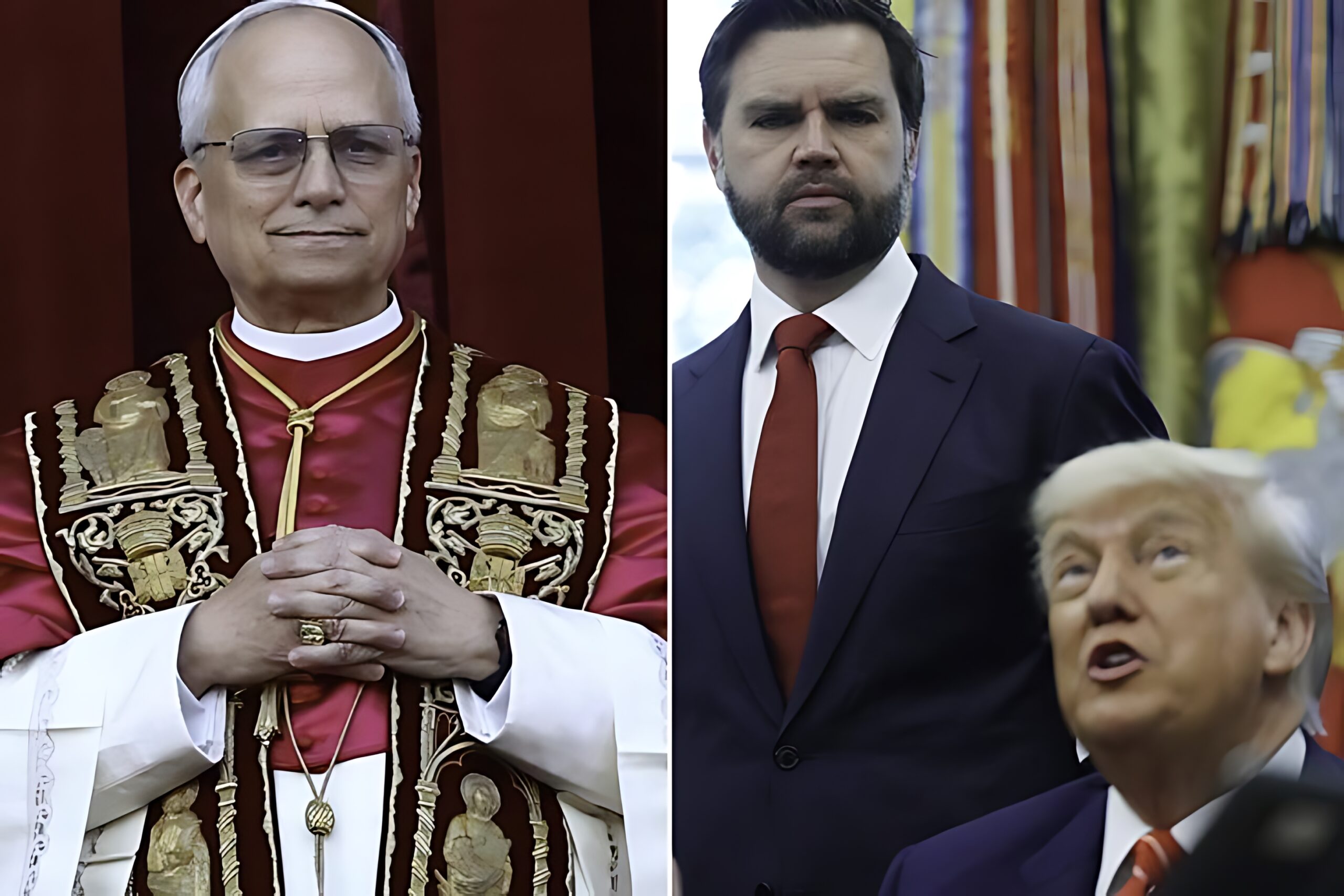
Washington, D.C. — In a highly unusual clash between modern politics and ancient church history, President Donald Trump ignited controversy this week after asserting that he was responsible for the election of Pope Leo as Bishop of Rome — a claim historians and church officials immediately dismissed as impossible.
The remarks came during an impromptu exchange with reporters, where Trump criticized what he described as “ungrateful leadership” in the Vatican and suggested that Pope Leo owed his position to Trump’s influence. “If it weren’t for me, he wouldn’t even be Bishop of Rome,” Trump said, without specifying which Pope Leo he was referring to — a title held by multiple pontiffs across more than a thousand years.
Vatican Officials Respond With Confusion
Officials in Rome reacted with a mixture of bewilderment and restraint. A spokesperson for the Holy See noted that every Pope Leo lived centuries before the United States existed, making presidential involvement “chronologically unworkable.” The spokesperson added that papal elections are conducted by cardinals, not heads of state, and that the Church “remains grateful for all world leaders who respect historical fact.”
Church historians were more blunt. “Unless the president has discovered time travel, there is no scenario in which he could have influenced the election of Pope Leo I in the 5th century, Pope Leo III in the 8th century, or any of the others,” said one scholar at Georgetown University.
Political Motives Behind the Claim
Analysts say the comments appear to be part of a broader pattern in which Trump positions himself as a decisive force in global affairs, even in contexts where the claim is symbolic or impossible. Some political observers suggested the remarks were aimed at energizing supporters who view Trump as a uniquely influential figure on the world stage.
Others noted that the president has recently escalated criticism of religious leaders who challenge his policies, making the Pope Leo comments part of a larger rhetorical campaign.
Public Reaction Ranges From Amused to Alarmed
The remarks quickly went viral online, with historians, theologians, and political commentators weighing in. Some users treated the claim as humorous, posting memes of Trump standing beside medieval popes. Others expressed concern about the president’s grasp of history.
Faith leaders in the United States largely avoided direct confrontation but emphasized the importance of accuracy when discussing religious institutions. One Catholic bishop said only, “The Church has existed for two millennia. Its history speaks for itself.”
A Clash of Eras
While Trump has frequently clashed with contemporary religious figures, this is the first time he has publicly taken credit for the rise of a leader from the distant past. Scholars say the episode highlights the increasingly surreal intersection of modern political rhetoric and historical reality.
For now, Vatican officials appear content to let the matter rest, confident that the historical record — and the calendar — are on their side.