Harold didn’t speak to Ethan for four days.
He wasn’t a man given to shouting or long lectures — the silence was worse, and Ethan knew it. He spent those four days scouring the auction site’s records, tracking down the buyer’s shipping information through the seller’s account, and calling every number he could find associated with the transaction. On the fifth day, he sat Ethan down and, for the first time since the incident, spoke to him directly.
“I’m not asking you to fix this alone,” Harold said. “But you’re going to help me try.”
Together, grandfather and grandson tracked the medals to a private collector in Ohio who had purchased them, unaware of their origin, believing them to be estate-sale surplus. Harold wrote the man a letter — not angry, but plain and honest — explaining who Danny, Tommy, and Bill had been, and what the medals represented to a family that never intended to sell them.
The collector, a retired history teacher named Walter Pruitt, called Harold two days after receiving the letter. He’d served in the Army Reserve himself and understood immediately. He returned every item, refusing any reimbursement beyond shipping costs, and included a note: “These belong with the man who earned the right to hold them.”
But Harold made sure the story didn’t end with simply getting the medals back.
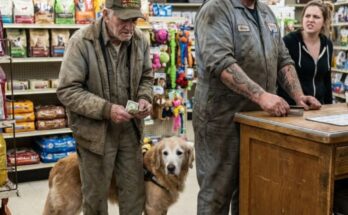
He required Ethan to spend the following months earning back, dollar for dollar, the money the medals had sold for — not to repay his grandfather financially, but to understand what actual sacrifice looked like. Ethan mowed lawns, washed cars, and took on extra hours at a local grocery store. More importantly, Harold began talking to him — really talking — for the first time about Vietnam, about Danny’s laugh, about Tommy’s terrible harmonica playing, about the last thing Bill Sutter ever said to him in the field.
By the time the medals came home, Ethan didn’t see old metal in a cigar box anymore. He saw three young men who never got to become old men, and a grandfather who had spent five decades making sure they weren’t forgotten.
That following March, for the first time in his life, Ethan sat beside his grandfather at the kitchen table while Harold laid the medals out in their row. And when Harold said the names — Danny Ruiz, Tommy Okafor, Bill Sutter — Ethan said them too, quietly, right along with him.
Harold never got his wasted three hundred and eighty dollars back from the sale. He didn’t want it. What he got instead was something he considered far more valuable: a grandson who finally understood exactly what those small pieces of metal had cost, and a promise, spoken without words, that the names would keep being said long after Harold himself was gone.