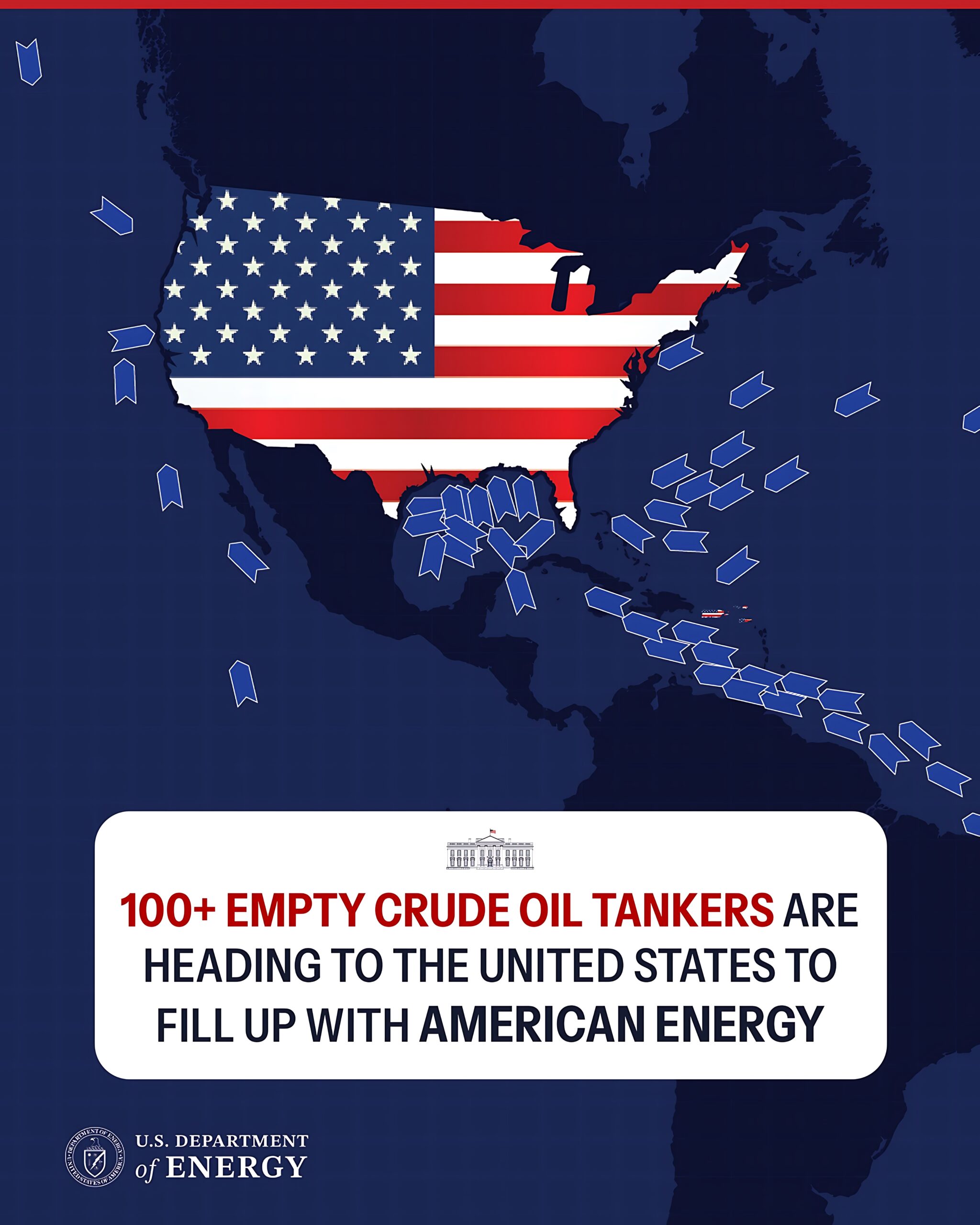
WASHINGTON — The White House said Wednesday that President Donald Trump’s “American Energy Dominance” agenda is delivering a “critical energy lifeline” to countries around the world, arguing that expanded U.S. production and exports have helped stabilize global markets during a period of geopolitical volatility.
Senior administration officials pointed to record‑high U.S. oil and natural‑gas output, expanded LNG export capacity, and new international supply agreements as evidence that American energy policy is reshaping global supply chains.
“The United States is now the world’s indispensable energy supplier,” a White House spokesperson said. “President Trump’s policies are ensuring that our allies have reliable, affordable energy at a time when instability is disrupting markets.”
The administration highlighted recent shipments of U.S. LNG to Europe and Asia, as well as increased crude exports to countries facing supply shortages.
What the Administration Means by ‘Energy Dominance’
The “energy dominance” agenda, first introduced during Trump’s earlier term, centers on:
- Expanding domestic oil and gas production
- Accelerating federal permitting for drilling and pipelines
- Increasing LNG export capacity
- Reducing regulatory barriers for energy companies
- Strengthening bilateral energy partnerships with allies
Officials say these policies have positioned the U.S. as a top global supplier at a moment when conflicts in the Middle East and supply disruptions elsewhere have strained international markets.
Global Demand Drives U.S. Exports
Energy analysts note that U.S. exports have surged as countries seek alternatives to disrupted supply routes. European nations, in particular, have increased reliance on American LNG to offset instability in the Middle East and fluctuations in global shipping lanes.
Asian markets — including Japan, South Korea, and India — have also expanded long‑term contracts with U.S. suppliers.
Critics Question Long‑Term Impact
Environmental groups and some Democratic lawmakers argue that the administration’s approach prioritizes fossil‑fuel expansion at the expense of climate goals. They warn that increased drilling and export infrastructure could lock in decades of carbon emissions.
Energy‑market economists also caution that global reliance on U.S. exports may expose American consumers to higher domestic prices during periods of international demand spikes.
The White House rejects those concerns, saying increased production has kept domestic prices stable while supporting allies abroad.
A Central Theme of Trump’s Economic Messaging
The administration has made energy policy a centerpiece of its economic and foreign‑policy agenda, portraying U.S. production as a strategic asset that strengthens American influence and global stability.
Officials say additional announcements on export capacity and new bilateral energy agreements are expected later this year.