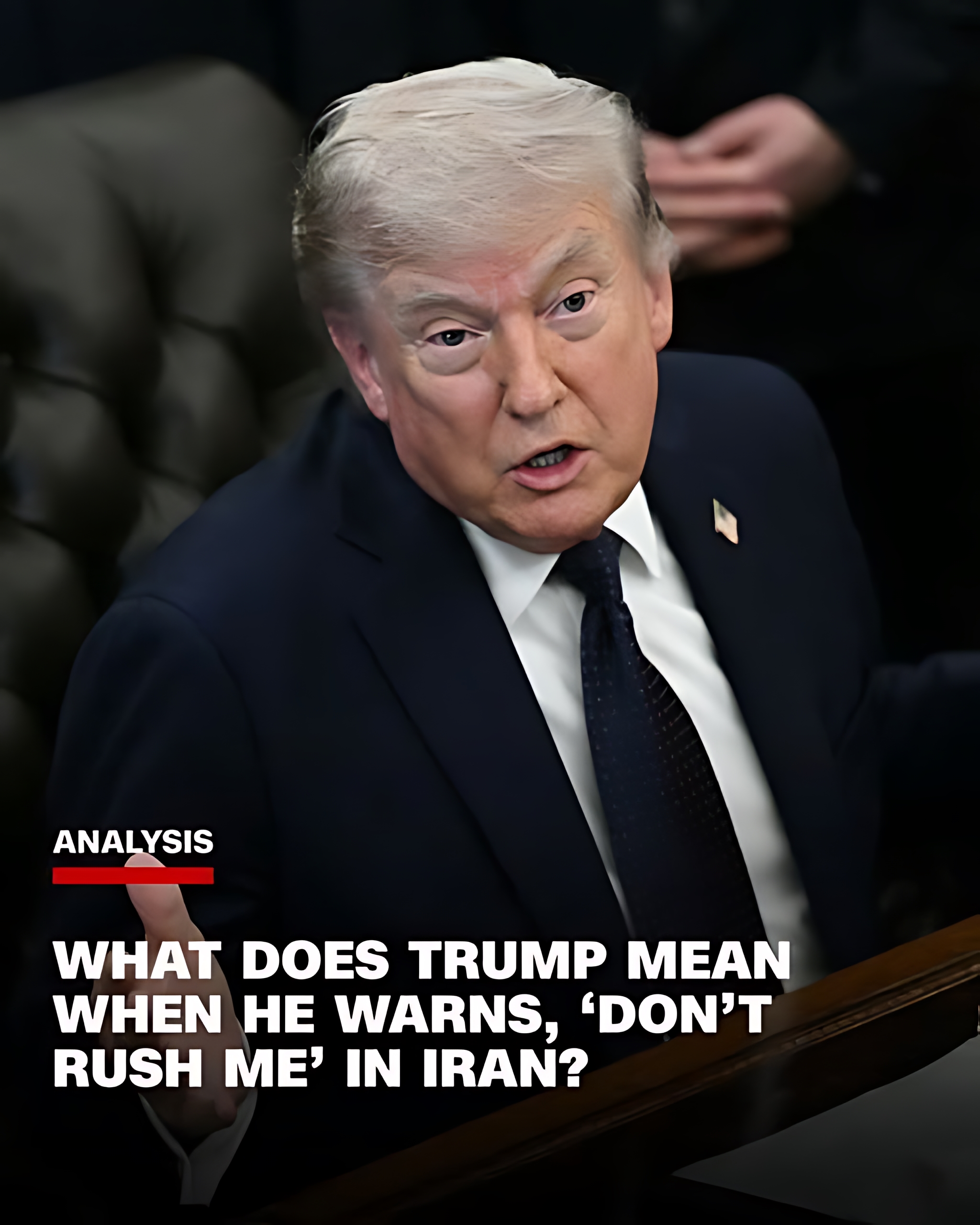
President Donald Trump’s repeated warning — “Don’t rush me” — has become one of the defining phrases of the current U.S.–Iran standoff. According to multiple analyses, including reporting from CNN and Yahoo News, the phrase is part of a broader effort by Trump to project control, strength, and strategic patience in a conflict that has stretched for weeks.
1. He’s Rejecting the Idea That He’s Under Pressure
Trump has pushed back hard against media narratives suggesting he is eager or desperate to end the war. He insists that Iran is the side facing urgency, not the United States.
“Every story I see, ‘Oh, Trump is under time pressure.’ I’m not. You know who’s under time pressure? They are.”
This framing is meant to reinforce the idea that the U.S. can wait indefinitely, while Iran’s economy and oil infrastructure cannot.
2. He Wants to Signal Strategic Patience — Not Weakness
Trump has said he has “all the time in the world” and refuses to set deadlines for a deal. This is intended to show that he is not rushing into concessions and is willing to let pressure build on Iran. Analysts note that this stance is also designed to counter criticism that the conflict is dragging on longer than the four‑to‑six‑week timeline he initially suggested.
3. He’s Trying to Shape Public Perception of the War
CNN’s analysis notes that Trump’s messaging is aimed at two audiences:
- Iran’s leaders, to convince them the U.S. will not blink first
- The American public, to maintain support for a war that has produced mixed results and rising fuel prices
By saying “Don’t rush me,” Trump is trying to project confidence and control even as the conflict becomes more complicated.
4. He’s Masking the Reality of a Stalemate
Reporting indicates that despite Trump’s claims of “total control” over the Strait of Hormuz, Iran continues to disrupt shipping, lay mines, and seize vessels. The Pentagon has told Congress it could take six months to clear Iranian mines — contradicting Trump’s more optimistic statements.
Analysts suggest that Trump’s insistence on not being rushed may also be an attempt to downplay the mounting pressure the U.S. faces as the war extends.
5. He’s Positioning Himself for a Better Deal
Trump has repeatedly said he wants “the best deal” and will not be hurried into accepting a weaker agreement. He argues that Iran’s leadership is in “turmoil” and that time will force Tehran to compromise.
Bottom Line
Trump’s “Don’t rush me” warning is a strategic message meant to:
- Assert that he controls the pace of the conflict
- Signal that Iran is the side running out of time
- Maintain domestic support by projecting confidence
- Mask the reality of a prolonged and difficult standoff
It is both a negotiating tactic and a public‑relations strategy — one aimed at shaping perceptions as much as shaping outcomes.