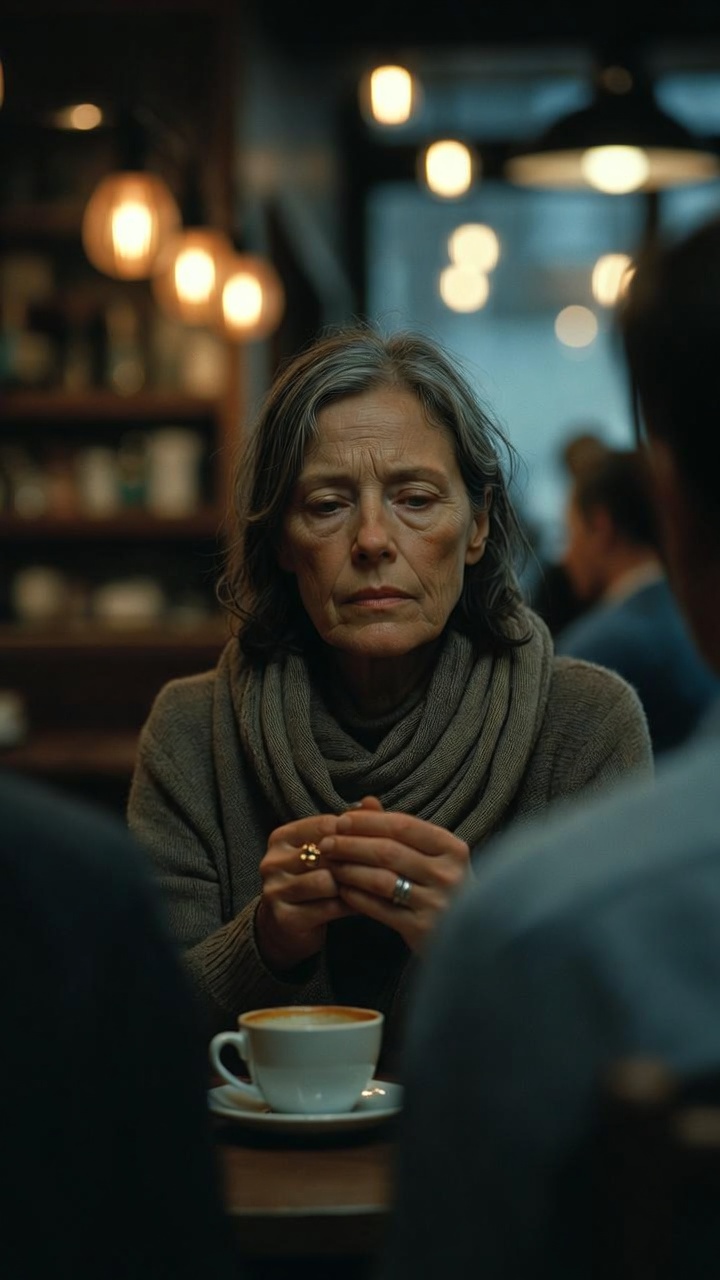
A heartbreaking short story
The coffee shop was warm, filled with the soft hum of conversation and the smell of roasted beans. But Marianne, age 58, felt cold.
She sat alone at a small corner table, fingers wrapped around a mug she hadn’t touched. Her eyes weren’t on the coffee. They were on her wedding ring — the one she still wore even though the marriage was long gone.
She twisted it slowly, the metal loose now after years of weight loss and sleepless nights.
A man approached the table beside hers — mid‑40s, kind eyes, a stranger. As he sat down, he glanced at her scarf.
“That’s a beautiful color,” he said gently.
She looked up, startled. People didn’t usually talk to her anymore. She’d become good at being invisible.
“Thank you,” she whispered.
Maybe it was the warmth in his voice. Maybe it was the loneliness she’d been carrying like a stone in her chest. Maybe it was the way he looked at her — not through her, but at her.
Whatever it was, something inside her cracked open.
And the words began to spill.
She told him about the affair — how she found the messages, the lies, the late nights. How she confronted her husband and he didn’t deny it. How he said he “deserved to be happy,” as if she had been the obstacle.
She told him about the divorce, the empty house, the friends who took sides, the nights she cried into a pillow so no one would hear.
She told him about the years of pretending — smiling at work, laughing at parties, telling everyone she was “fine.”
She wasn’t fine.
She hadn’t been fine in a long time.
The stranger listened — really listened — without interrupting, without judging, without offering clichés.
When she finally stopped talking, her hands were trembling.
He leaned forward slightly and said softly, “You’re braver than you think.”
Marianne let out a small, broken laugh.
“I wasn’t brave,” she said, eyes wet. “I was just tired.”
Tired of fighting. Tired of pretending. Tired of holding herself together with nothing but willpower and silence.
The stranger nodded, understanding more than she expected.
They sat there for a moment — two people connected by nothing except the quiet truth of pain.
When he finally stood to leave, he gave her a gentle smile.
“Take care of yourself,” he said.
She nodded, wiping her eyes.
As he walked out, Marianne looked down at her wedding ring one last time.
Then she slipped it off.
Not because she was healed. Not because she was ready. But because she was tired of carrying a story that no longer belonged to her.
Lesson:
Sometimes survival isn’t strength — it’s endurance. And endurance, too, has a breaking point.