When Maya moved from Atlanta to marry Daniel, she knew his mother wasn’t thrilled. She just didn’t know why.
Maya was warm, educated, kind, and steady — the kind of woman who remembered birthdays and brought homemade food to neighbors. But she was also a Black woman marrying into a white family in rural Pennsylvania, where people still whispered their opinions instead of saying them out loud.
Daniel’s mother, Carol, didn’t whisper.
The first time she met Maya, she smiled too wide and said, “Oh… you’re darker than I expected.” As if Maya were a paint sample.
At family dinners, Carol made “jokes” about Maya’s hair, asking if it was “real” or “one of those things you people wear.” She mocked Maya’s skin tone, comparing it to coffee, chocolate, anything she could turn into a punchline. She told relatives Maya was “lucky” Daniel “looked past all that.”
When Maya cooked, Carol refused to eat it. When Maya spoke, Carol interrupted. When Maya tried to help, Carol said, “No, no, we don’t do things like that here.”
Daniel defended Maya at first. But over time, he grew tired of the conflict. He started saying things like, “She’s old-fashioned,” “She doesn’t mean it,” “Just ignore her.”
But racism doesn’t soften when ignored. It grows.
One afternoon, Maya overheard Carol on the phone saying, “I don’t know why he married her. She’s not our kind. She’ll never fit in with this family.”
Maya stood in the hallway, hand over her mouth, feeling her chest tighten. Not because the words were new — but because they were said so casually, like discussing the weather.
That night, Maya told Daniel what she heard. He sighed, rubbed his forehead, and said, “She didn’t mean it like that.”
And that was the moment Maya realized something painful:
The problem wasn’t just Carol. It was a son who refused to see the harm his mother caused.
So Maya stopped trying.
She stopped forcing smiles. Stopped attending dinners where she was the punchline. Stopped shrinking herself to make others comfortable.
She focused on her work, her friends, her peace.
Months later, when Daniel finally confronted his mother — really confronted her — it was too late. Maya had already packed her things.
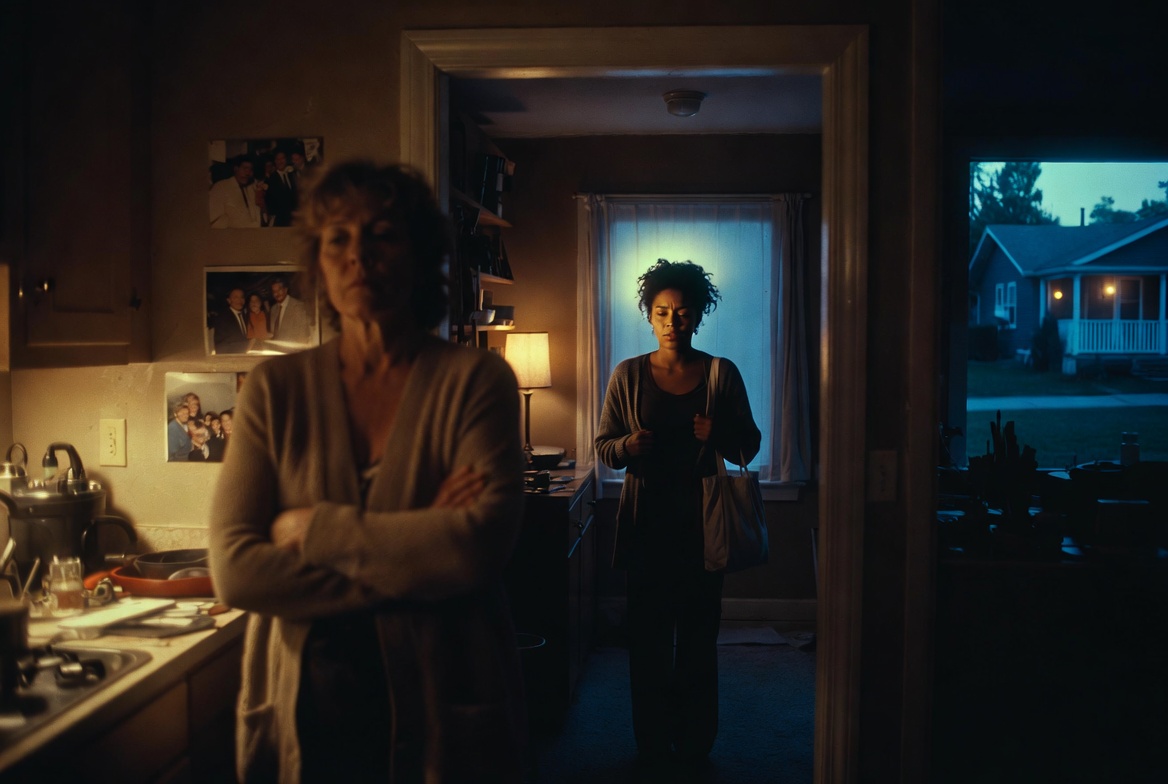
As she left the house for the last time, Carol stood at the doorway, arms crossed.
“You’re really leaving?” she asked.
Maya looked at her calmly.
“I’m leaving because I deserve a home where I’m not treated like a problem.”
Carol didn’t respond. She didn’t apologize. She didn’t even blink.
But Daniel did.
He watched Maya walk away and realized he had lost the only person who ever loved him without conditions.
Lesson:
Racism doesn’t always scream — sometimes it whispers in kitchens, hides behind jokes, and destroys families from the inside. And the people who stay silent are just as responsible as the ones who speak the hate.