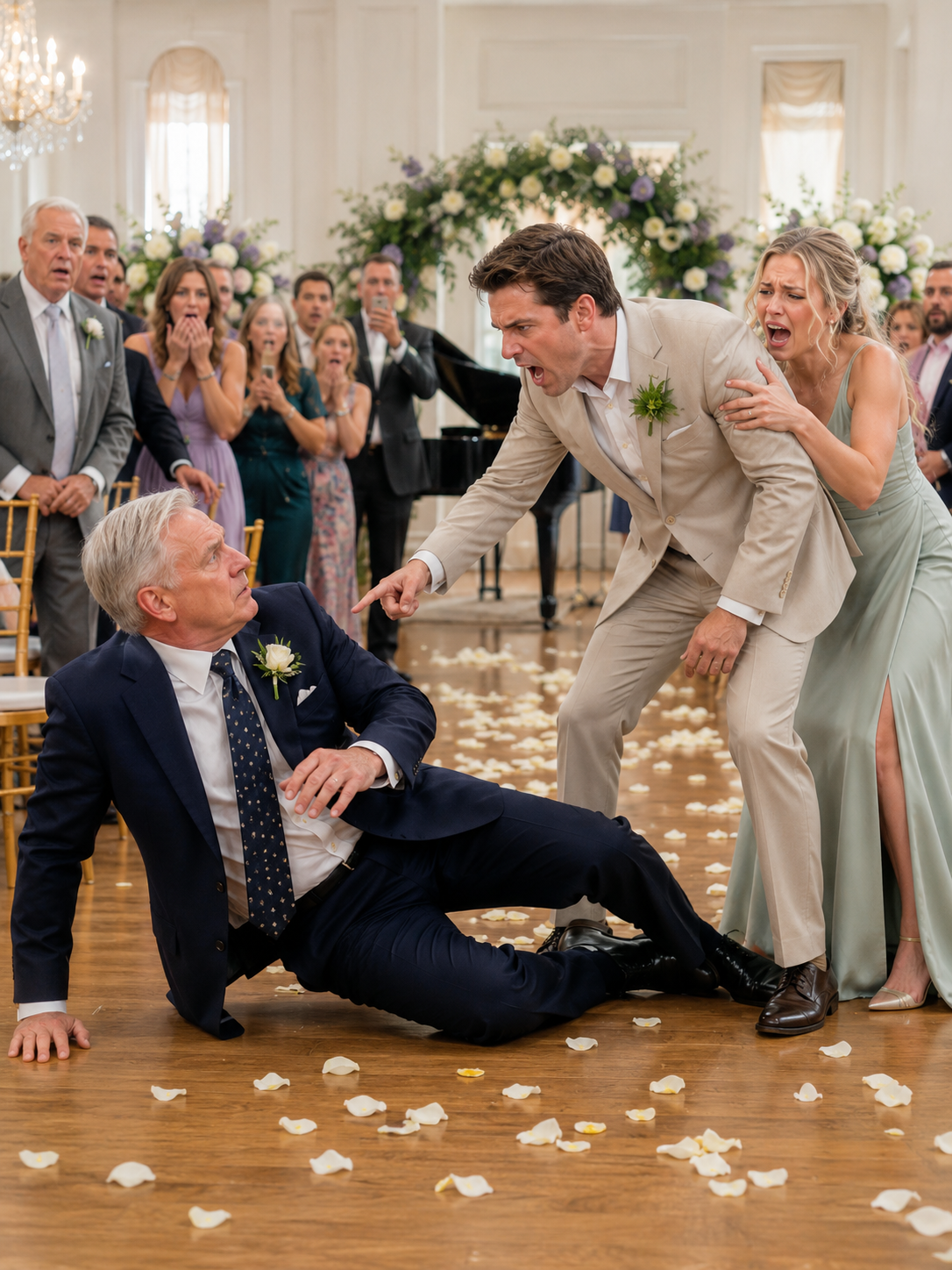
Henry Callahan had spent sixty‑eight years building a life on the land he inherited from his father and grandfather. The Callahan Ranch, just outside Austin, Texas, was more than acreage and cattle; it was the place where he raised his daughter Emily, buried his wife, and poured decades of sweat into keeping the family legacy alive. The ranch was the one constant in a life marked by loss, responsibility, and the quiet pride of a man who worked with his hands and kept his word.
On the day of Emily’s wedding, Henry believed he was witnessing the beginning of her new life. She wore her late mother’s restored lace dress, and for a moment, as she walked down the aisle, Henry felt a rare peace. He had carried doubts about her fiancé, Carter Blake, but he pushed them aside for Emily’s sake. Carter was polished, articulate, and charming in a way that impressed crowds but never quite convinced Henry. Every conversation Carter initiated with him eventually circled back to the ranch — its value, its future, its potential. Carter spoke of it like a business acquisition, not a family legacy.
Still, Henry wanted to believe his daughter had chosen well. He wanted to believe Carter’s interest in the ranch was simply enthusiasm for the life he and Emily planned to build. But beneath the surface, Henry sensed something calculating in the young man’s eyes, something that made him uneasy.
The wedding ceremony passed without incident. The reception, held in a luxury Austin hotel ballroom, was elegant and lively. Guests danced, laughed, and toasted the newlyweds. Henry stood near the bar, watching Emily glow with happiness, and tried to quiet the unease that had followed him for months.
That was when Carter approached him.
Carter’s breath carried the sharp scent of champagne, and his smile was tight with impatience. He reached into his jacket and produced a velvet box. Inside were copies of Henry’s ranch keys — keys Emily had apparently made for him in secret. Carter presented them as if they were a wedding gift he was entitled to receive.
Before Henry could respond, Carter placed a stack of prepared deed‑transfer papers on the bar. His voice was low but firm, carrying the confidence of a man who believed the outcome was already decided. He demanded that Henry sign the ranch over to him immediately. He dismissed the land’s history, calling it wasted on “cattle and sentiment,” and insisted that he and Emily deserved ownership now rather than waiting for Henry to die.
Henry refused. Quietly. Firmly.
That single word shattered Carter’s carefully maintained charm. His expression twisted with anger and entitlement. He accused Henry of being a stubborn old man standing in the way of his daughter’s future. When Henry refused again, Carter’s restraint snapped.
In front of two hundred guests, Carter struck him across the face with enough force to knock him onto the marble floor.
The ballroom fell silent. Gasps rippled through the crowd. Emily stood frozen at the edge of the room, tears streaming down her face. But what struck Henry most was not her shock — it was the fear in her eyes. It was the look of someone who had seen this side of Carter before.
Slowly, despite the pain radiating through his jaw, Henry pushed himself back to his feet. He ended the reception with a calmness that unnerved everyone present. Carter immediately tried to backtrack, insisting Henry was overreacting, begging him not to “make things dramatic.” But Henry walked out without another word.
Outside, the night air was cool against his bruised skin. He sat in his truck, staring at the steering wheel, and felt the weight of twenty‑five years settle on his shoulders. There was a truth he had avoided confronting, a truth he had buried for reasons he once believed were noble.
But Carter’s violence had changed everything.
Henry picked up his phone and dialed a number he had not called in decades. When the man on the other end answered, Henry spoke only one sentence:
“It’s time everyone learned the truth.”
The voice on the other end was steady, unsurprised. “I figured this day would come,” the man replied.
As Henry ended the call, he looked across the parking lot. Carter stood near the hotel entrance, watching him with growing panic. The young man had expected compliance, submission, and silence. He had expected Henry to be an obstacle easily pushed aside.
What he did not expect was that the ranch he coveted — the ranch he assaulted Henry for — might never have legally belonged to Henry at all.
The truth Henry had kept hidden for twenty‑five years was about to unravel everything Carter believed he had secured. And for the first time that night, Henry felt something other than pain or humiliation.
He felt control returning to his hands.
The ranch was more than land. It was history. It was legacy. And it was tied to a truth that would soon expose Carter Blake for who he truly was — not a husband, not a partner, but a man who built his future on entitlement and deception.
Henry started the truck engine, the headlights cutting through the darkness. The night that began with celebration had ended in violence, but the story was far from over. The truth he had set in motion would not only protect Emily — it would dismantle the illusion Carter had built around himself.
And as Henry drove away from the hotel, he knew one thing with absolute certainty:
Carter Blake had just picked a fight with the wrong man.