The words hit the room like a thunderclap.
“There has to be a mistake!”
My father’s face had gone pale.
Attorney Henderson remained perfectly calm.
“There is no mistake, Mr. Whitmore. Your mother revised her will three years ago and updated it twice afterward. Every version was witnessed, notarized, and reviewed by independent counsel.”
My mother leaned forward.
“This is absurd. Elena manipulated her.”
The accusation wasn’t surprising.
It was almost comforting in its predictability.
I sat quietly.
The same way I had sat quietly my entire life.
The same way I had listened while they called me lazy because I didn’t become a lawyer like my cousin.
The same way I listened when they told people I worked a “small office job.”
The same way I listened when they introduced me at family gatherings as “our daughter who never quite found her direction.”
Grandma Rose had warned me.
“They’ll never see what they don’t want to see.”
At the time, I thought she was being cynical.
Now I understood she was being realistic.
My father stood.
“We’re contesting this.”
Mr. Henderson nodded.
“That is your legal right.”
Three months later, we were standing inside Probate Court.
The challenge had become ugly.
Very ugly.
My parents claimed Grandma Rose had suffered from diminished capacity.
They claimed I had isolated her.
They claimed I had influenced her financial decisions.
They claimed I had somehow convinced an elderly woman to leave me everything.
The irony would have been amusing if it weren’t so exhausting.
For years, I had barely spoken about my life.
Not because I was ashamed.
Because nobody asked.
When family members called, the conversations lasted three minutes.
When holidays came around, nobody wanted to hear about my work.
The moment I mentioned anything career-related, someone changed the subject.
Eventually I stopped volunteering information.
The courtroom was packed on the morning of the hearing.
Relatives filled the gallery.
Neighbors attended.
Even a few local reporters appeared after hearing about the unusual inheritance dispute.
My parents looked confident.
They believed the case was already won.
After all, who was I?
A single woman.
No husband.
No children.
No flashy social media presence.
No public recognition.
According to them, I had spent my adult life accomplishing absolutely nothing.
Their attorney spent nearly an hour painting that picture.
“Miss Whitmore has lived an isolated existence.”
“Miss Whitmore has no significant public achievements.”
“Miss Whitmore’s financial history raises questions.”
“Miss Whitmore appears to have benefited disproportionately from the decedent’s final decisions.”
I watched the judge take notes.
I said nothing.
Then my parents took the stand.
That was when things became painful.
Not because of what they said.
Because they actually believed it.
“Elena never lived up to her potential.”
My mother sighed dramatically.
“We tried to help her.”
My father nodded.
“She always lacked ambition.”
The judge looked up.
“What is your daughter’s occupation?”
My father hesitated.
“Administrative work.”
The judge looked at my mother.
She shrugged.
“Some government office, I think.”
The courtroom became strangely quiet.
The judge glanced toward me.
Then he looked down at a folder sitting on his desk.
A folder I hadn’t submitted.
A folder the opposing attorney hadn’t submitted.
A folder that had arrived directly from federal counsel.
The judge opened it.
His eyebrows rose.
Then rose even higher.
He looked back at my parents.
“You don’t know what your daughter does?”
My father shifted uneasily.
“Not exactly.”
The judge flipped another page.
“And you’ve made no effort to find out?”
Silence.
The judge removed his glasses.
For the first time all day, he seemed genuinely surprised.
“Interesting.”
He turned toward me.
“Miss Whitmore, is this information accurate?”
I nodded.
“Yes, Your Honor.”
The judge leaned back.
The courtroom waited.
Then he asked the question that changed everything.
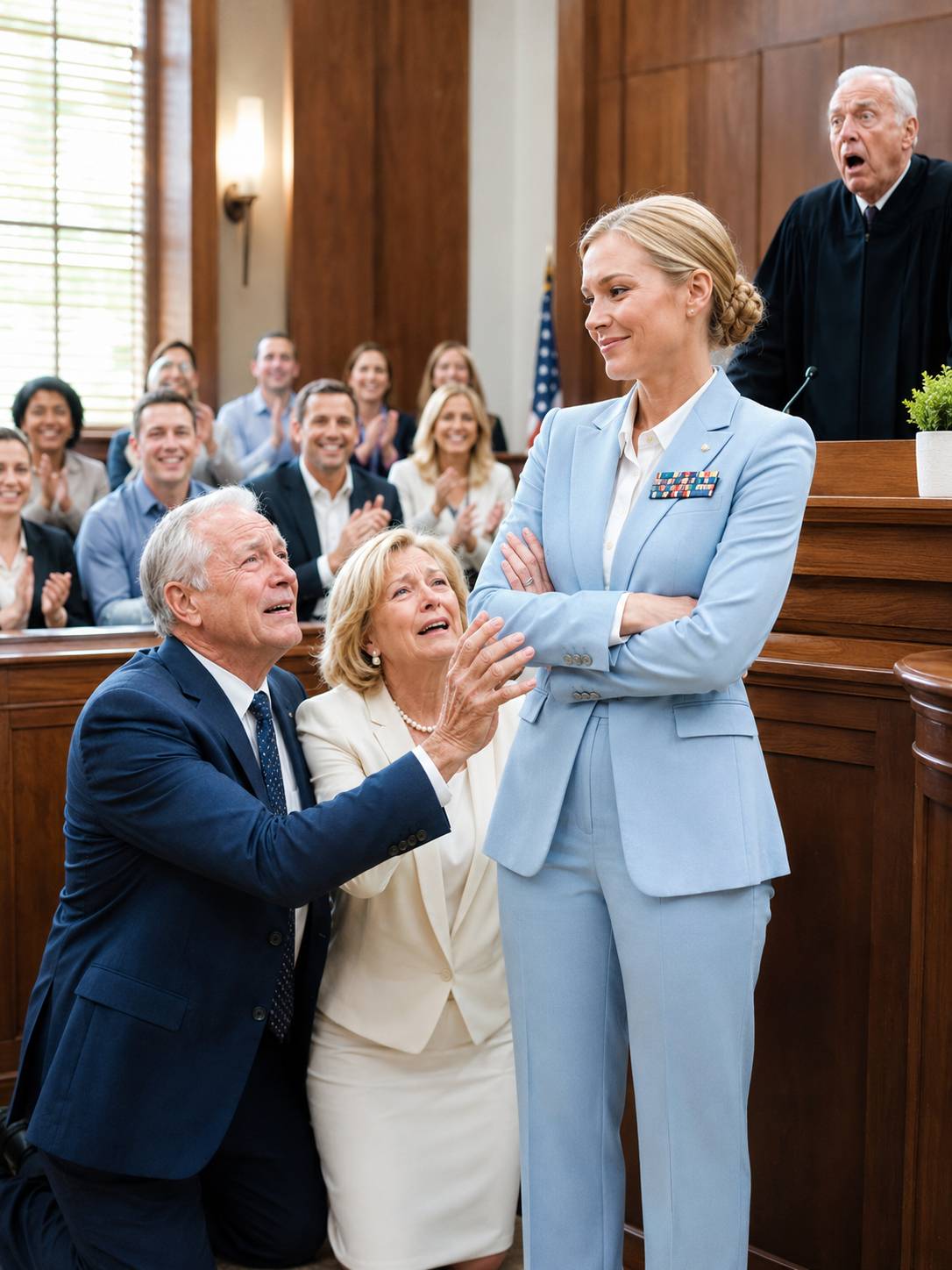
“How long have you been serving as Deputy Director of Strategic Cybersecurity Operations?”
The room froze.
Every single person turned toward me.
My mother blinked.
My father looked confused.
Their attorney stopped writing.
I simply answered.
“Almost six years.”
The silence became deafening.
The judge continued.
“Responsible for national infrastructure protection?”
“Yes.”
“Security clearance?”
“Top-level.”
The judge nodded.
“And before that?”
I explained.
Federal service.
Technology leadership.
International cybercrime investigations.
Government task forces.
National security initiatives.
Years of work.
Years of promotions.
Years of responsibility.
Years of accomplishments.
Every achievement they never bothered to ask about.
Every milestone they never cared enough to learn.
The expressions on my parents’ faces were unforgettable.
Not anger.
Not embarrassment.
Shock.
Pure shock.
Because for the first time in their lives, they were hearing about their daughter from someone else.
The judge wasn’t finished.
He opened another section of the file.
“This compensation history is extraordinary.”
Murmurs spread through the gallery.
My mother’s face turned white.
The judge continued.
“Miss Whitmore was financially independent long before the inheritance.”
Another pause.
“In fact, she appears to have earned more than enough to support herself comfortably.”
My parents’ entire argument began collapsing.
They had spent months claiming I wanted Grandma’s money.
The records showed something different.
I didn’t need it.
I never had.
The inheritance wasn’t financial dependence.
It was trust.
The court then heard testimony from doctors.
Every physician who treated Grandma Rose confirmed she was mentally sharp.
Every caregiver confirmed she made her own decisions.
Every witness described the same thing.
A woman who knew exactly what she was doing.
Then came the final piece.
A sealed letter.
One written by Grandma herself.
The judge allowed it into evidence.
Mr. Henderson read it aloud.
The room became completely silent.
“My family may question my decision, so I want my reasons clearly understood.”
I felt my throat tighten.
Grandma’s words filled the courtroom.
“Elena never asked me for money.”
“Elena never expected anything.”
“Elena visited because she loved me.”
Several relatives lowered their eyes.
The letter continued.
“When my health declined, she rearranged meetings to take me to appointments.”
“When I was lonely, she called.”
“When I was frightened, she stayed.”
My mother began crying.
Not performative tears.
Real tears.
For the first time.
The final paragraph broke everyone.
“I leave my estate to Elena because she inherited the only thing that truly mattered to me: character.”
The courtroom remained silent long after the reading ended.
Even the judge looked moved.
A week later, the ruling arrived.
The challenge was dismissed completely.
The will stood.
Every dollar.
Every property.
Every asset.
Exactly as Grandma intended.
But the money wasn’t what stayed with me.
What stayed with me happened afterward.
The courthouse steps were crowded with reporters and relatives.
Most people drifted away quickly.
Eventually only my parents remained.
For several moments nobody spoke.
Then my father looked at me.
Really looked at me.
Maybe for the first time.
“Why didn’t you tell us?”
The question surprised me.
I considered several answers.
Because you never asked.
Because you never listened.
Because nothing was ever enough.
All of them were true.
But I chose a different one.
“I spent years trying.”
Neither of them spoke.
“I told you about promotions.”
“I told you about projects.”
“I told you about opportunities.”
My voice remained calm.
“You just decided those things weren’t important.”
My mother’s eyes filled again.
“We didn’t know.”
“No.”
I nodded.
“You didn’t.”
For a moment, all three of us stood there in silence.
The distance between us suddenly measurable.
Not in feet.
In years.
Decades.
Missed conversations.
Ignored achievements.
Assumptions mistaken for understanding.
Finally my father asked quietly:
“Can we fix this?”
I looked at them.
The people who had spent my life judging a version of me that existed only in their imagination.
I thought about Grandma Rose.
About forgiveness.
About boundaries.
About truth.
Then I answered honestly.
“I don’t know.”
And that was the full disclosure.
Not that I was wealthy.
Not that I had inherited millions.
Not that I held an important position.
The real revelation was far simpler.
My parents spent thirty-five years believing they knew exactly who I was.
The courtroom proved they had never actually taken the time to find out.
The inheritance wasn’t Grandma’s final gift.
The truth was.
And for the first time in my life, everyone finally saw me exactly as I was.