Sunday changed the architecture of Harold’s days.
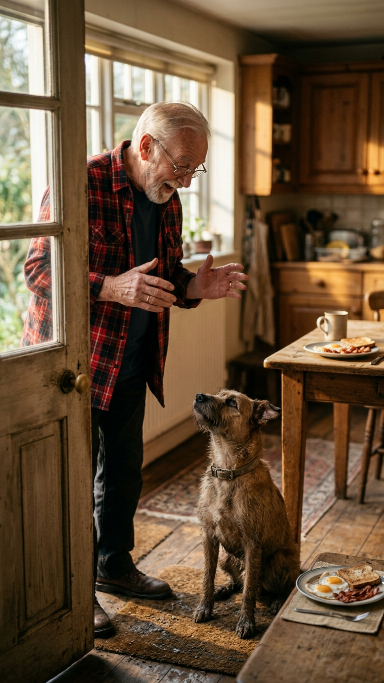
Morning walks became mandatory — the dog’s bladder operated on military precision. Harold found himself pulling on his old Army jacket, breathing cold air, nodding to neighbors he’d spent two years avoiding. Sunday trotted ahead, tail high, pausing occasionally to check that Harold was still following.
He always was.
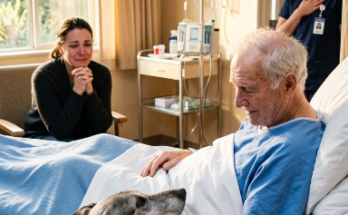
By December, Carol called and noticed something different in her father’s voice — a current running underneath the words. She drove the forty minutes. She found Harold on the porch, laughing, untangling Sunday from a garden hose.
She stood in the driveway and cried quietly where he couldn’t see.
Richard came the following Sunday. Then both children came together. The pot roast returned. The kitchen filled with voices again.
In February, Harold’s neighbor — a young veteran named Marcus, home from his third tour and barely leaving his apartment — saw Harold and Sunday on their morning walk. Harold stopped. Something in the young man’s posture told him everything.
“Walk with us,” Harold said simply.
Marcus did. Every morning after that.
By spring, four more neighborhood veterans were joining the route. Harold, without intending to, had built a unit.
In April, Harold’s doctor reviewed his bloodwork and looked up with visible surprise.
“Whatever you’re doing,” she said, “keep doing it.”
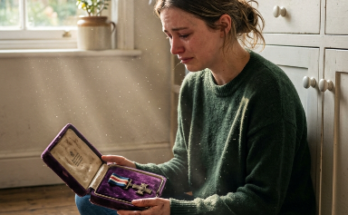
Harold drove home, parked in the driveway, and sat a moment. He thought about Margaret. He thought about the thirty years, the wars, the cold Sundays in the empty chair.
Sunday sat in the passenger seat watching him patiently.
Harold scratched the dog’s folded ear.
“One more deployment,” he said quietly.
He went inside and put the coffee on — enough for two cups. Marcus would arrive in twenty minutes, and Harold had learned something the Army never taught him:
The mission isn’t over until nobody needs you anymore.