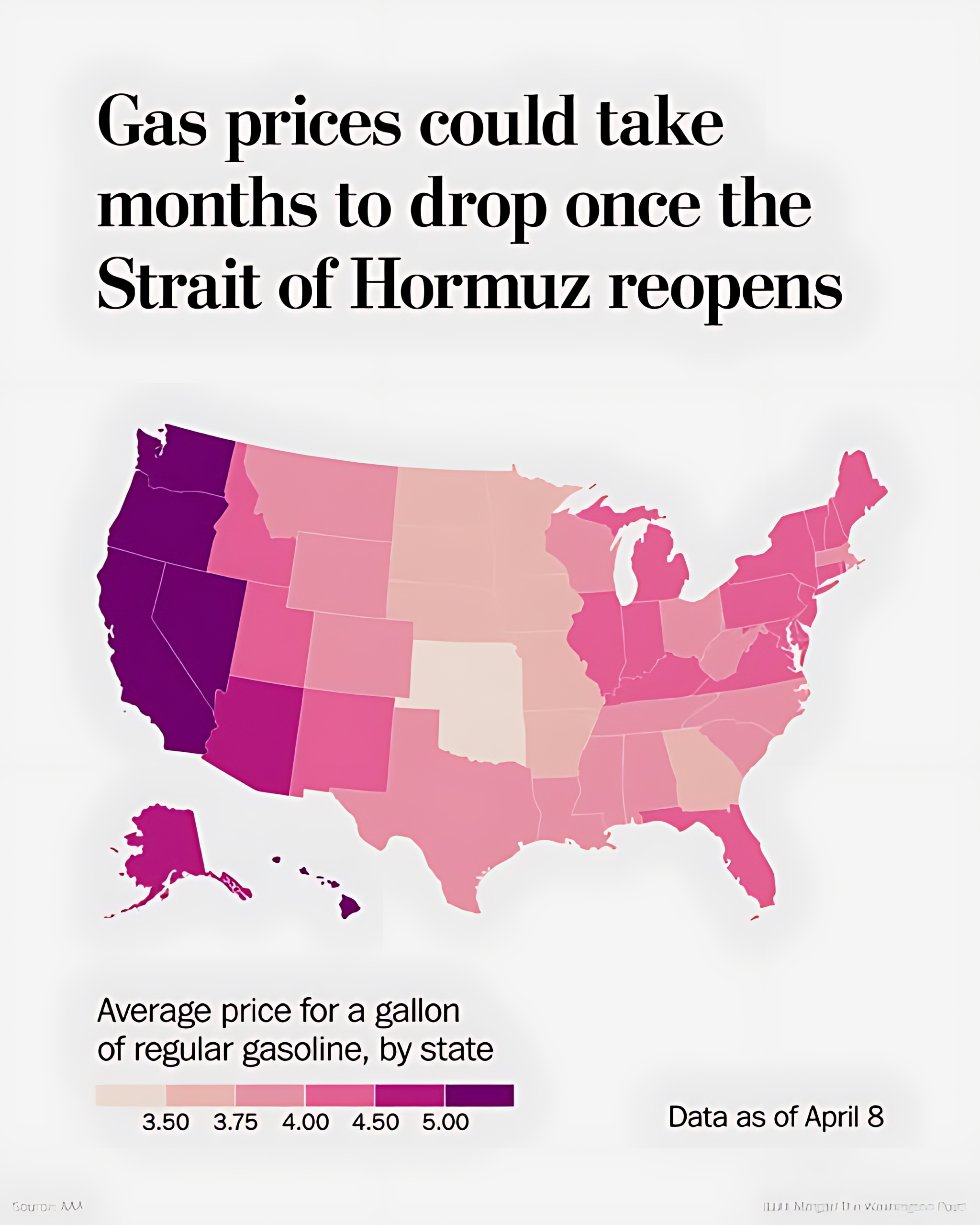
HONOLULU — Even if the Strait of Hormuz fully reopens in the coming days, gas prices across the United States may take weeks — and potentially months — to fall, according to energy analysts who say the recent blockade has already sent shockwaves through global oil markets.
The strait, a narrow passage between Iran and Oman, handles nearly 20 percent of the world’s oil shipments. Its partial closure during the ongoing U.S.–Iran standoff has disrupted tanker routes, tightened supply, and pushed crude prices to their highest levels in more than a year.
While diplomatic negotiations have raised hopes that traffic could resume soon, experts say the economic effects will linger long after the first tankers move through.
“Even if the strait reopened tomorrow, the supply chain damage is already done,” said one senior analyst at the Energy Policy Institute. “Refineries are behind schedule, shipping queues are backed up, and inventories are low.”
Why Prices Won’t Drop Immediately
Energy economists point to several factors that will delay relief at the pump:
- Backlogged tankers waiting to pass through the strait
- Refinery slowdowns caused by inconsistent supply
- Higher shipping insurance costs that will remain elevated for weeks
- Global buyers competing for limited available barrels
- Market volatility driven by uncertainty over long‑term stability
Even after oil begins flowing normally, it can take four to eight weeks for crude to reach U.S. refineries and be processed into gasoline.
Impact on U.S. Consumers
Drivers across the country have already seen prices jump sharply, with some regions reporting increases of 40 to 70 cents per gallon in just two weeks. States heavily dependent on imported crude — including those on the West Coast — are expected to feel the longest delays in price relief.
Gas station owners say customers are frustrated, but many are unaware of how global shipping disruptions ripple through the supply chain.
“People think prices change overnight,” said a station operator in Los Angeles. “But the fuel we’re selling today was bought weeks ago.”
Market Reaction to Diplomatic Talks
Oil prices dipped slightly after U.S. officials announced progress in negotiations with Iran, but analysts say markets will remain volatile until a formal agreement is reached and tanker traffic resumes at full capacity.
Energy traders are watching closely for signs of:
- A verified reopening of the strait
- A reduction in regional military activity
- Long‑term guarantees of maritime security
Without those assurances, prices may remain elevated even after the immediate crisis ends.
Looking Ahead
If the strait reopens soon and diplomatic progress continues, analysts expect gas prices to begin stabilizing by early summer. But a full return to pre‑crisis levels could take much longer.
For now, consumers should expect continued price pressure, even as negotiations offer a path toward easing global supply concerns.