The VA letters started arriving six weeks after discharge. Denials, mostly — claims lost, forms missing, codes mismatched. Elias, a man who once commanded sixty soldiers under enemy fire, now sat at a kitchen table trembling over bureaucratic paperwork he couldn’t decode.
Maria tried. She called every number. Waited on hold for hours. Drove two states to a VA office only to be told the appointment hadn’t been “properly logged.” The medical bills didn’t wait. The mortgage didn’t wait.
Diego dropped out of college to work. Lucia stopped speaking much. Maria, exhausted and heartbroken, said words one night that she could never fully take back. Six months later, she left — not out of cruelty, but survival. She had carried the weight long enough.
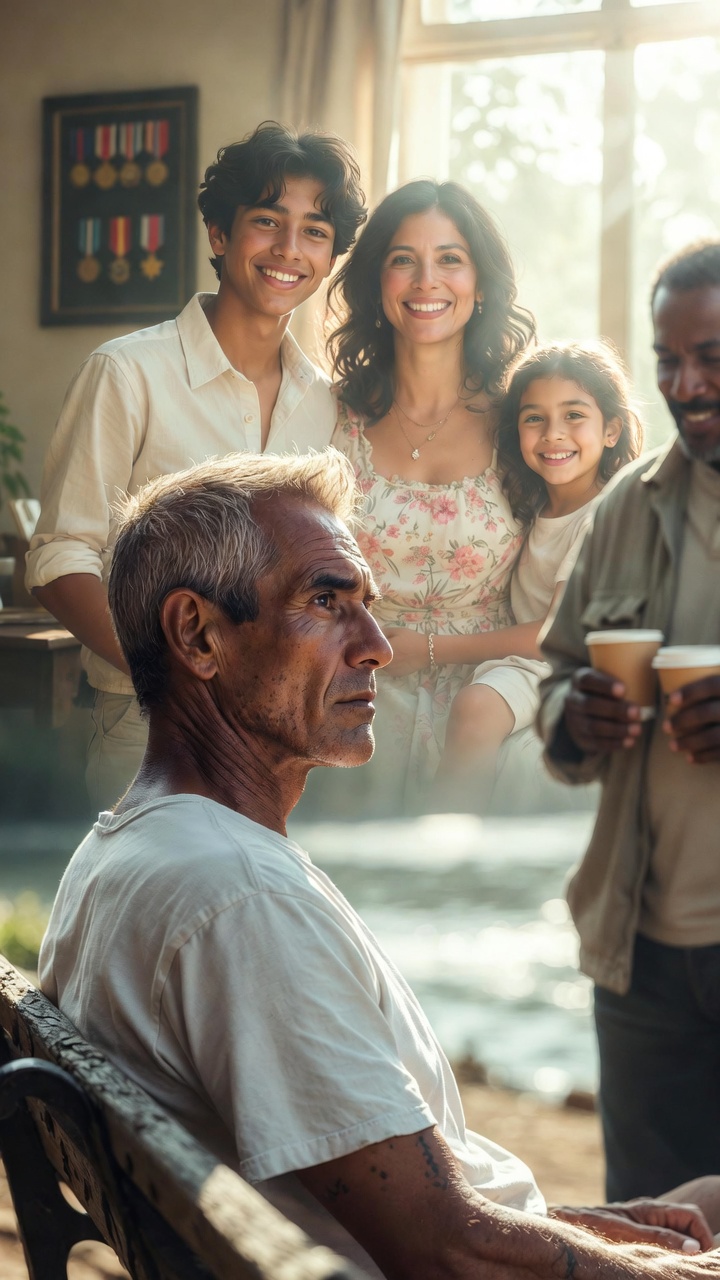
Elias moved into a motel on Route 9. Then a shelter. Then a bench in Riverside Park where a volunteer named Terry brought coffee every Tuesday morning.
A man who had walked through fire for his country was now sleeping under a fleece blanket donated by a church he’d never attended.
His military ID — the one thing he kept on his person at all times — was cracked down the middle from the winter cold.
Neighbors walked past him. Some crossed the street. Nobody recognized the medals that used to hang on a wall in a house he no longer owned.
One night, Terry sat beside him and asked, “Did anybody ever thank you?”
Elias looked at the river for a long time.
“They put my name on a wall once,” he said quietly. “But walls don’t pay rent.”
He wasn’t bitter. That was the most devastating part. He was simply done — a man who had given the marrow of his life to a country that had since moved on to the next news cycle.
Sergeant Major Elias Reyes. Forgotten. But not gone — not yet.