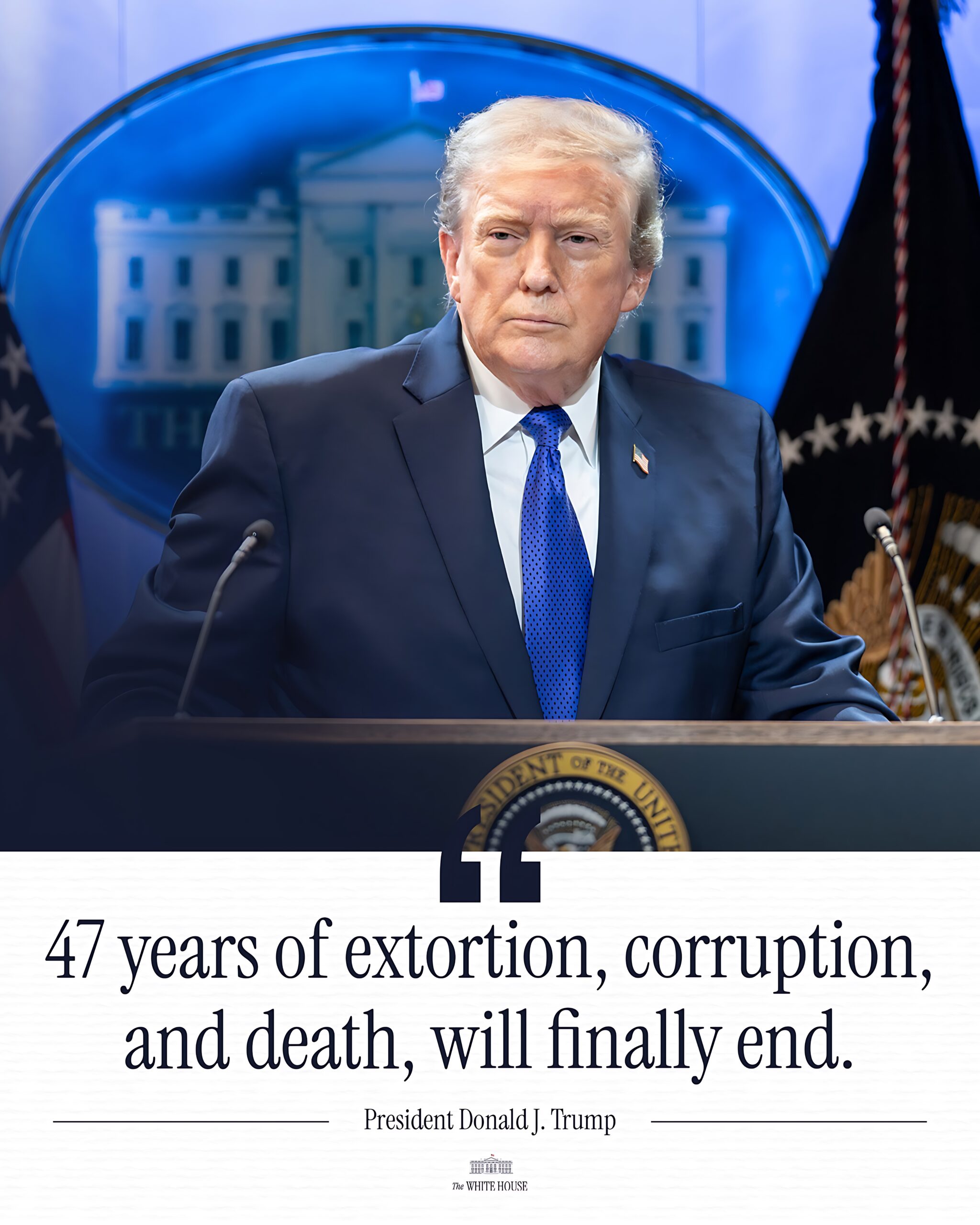
April 9, 2026 — Washington, D.C. The White House issued one of its strongest statements to date on Iran’s regional activities on Thursday, declaring that what officials described as “decades of state‑sponsored terrorism” would “not be allowed to continue” under President Donald Trump. The remarks came amid rising tensions in the Middle East and renewed debate over the administration’s strategy toward Tehran.
Senior administration officials said the President has directed national security agencies to pursue what they called a “maximum pressure enforcement phase,” aimed at curbing Iran’s support for proxy groups and its involvement in regional conflicts. The White House did not provide specifics on new measures but emphasized that “all tools of national power” remain under consideration.
Administration’s Position
According to officials, the administration believes Iran has long used proxy militias, covert financing networks, and intelligence operations to destabilize neighboring countries. A spokesperson said the President views the issue as a “top-tier national security priority” and intends to “hold the Iranian government accountable for actions that threaten U.S. personnel, allies, and global stability.”
The White House also referenced past attacks attributed to Iranian-backed groups, arguing that previous administrations failed to impose sufficient consequences. Officials said the current approach is designed to “reverse that pattern.”
Iran’s Response
Iranian state media dismissed the White House’s claims, accusing the U.S. of “manufacturing threats” and pursuing “hostile policies.” Iranian officials said the country’s foreign policy is defensive in nature and warned that any escalation by Washington would be met with “firm and proportional” responses.
Diplomats in the region said the rhetoric from both sides has intensified in recent weeks, raising concerns about miscalculation.
International Reaction
Allies in Europe urged restraint, with several governments calling for renewed diplomatic engagement. Analysts noted that many U.S. partners share concerns about Iran’s activities but remain wary of actions that could trigger broader conflict.
A senior European official said the situation “requires careful management and clear communication from all parties,” adding that the region “cannot afford another destabilizing crisis.”
What Comes Next
The administration is expected to outline additional policy steps in the coming weeks. Lawmakers from both parties have requested briefings, seeking clarity on the scope of the President’s strategy and its potential implications for U.S. forces in the region.
For now, the White House maintains that its message is firm: Iran’s behavior, as described by U.S. officials, will face heightened scrutiny and consequences.