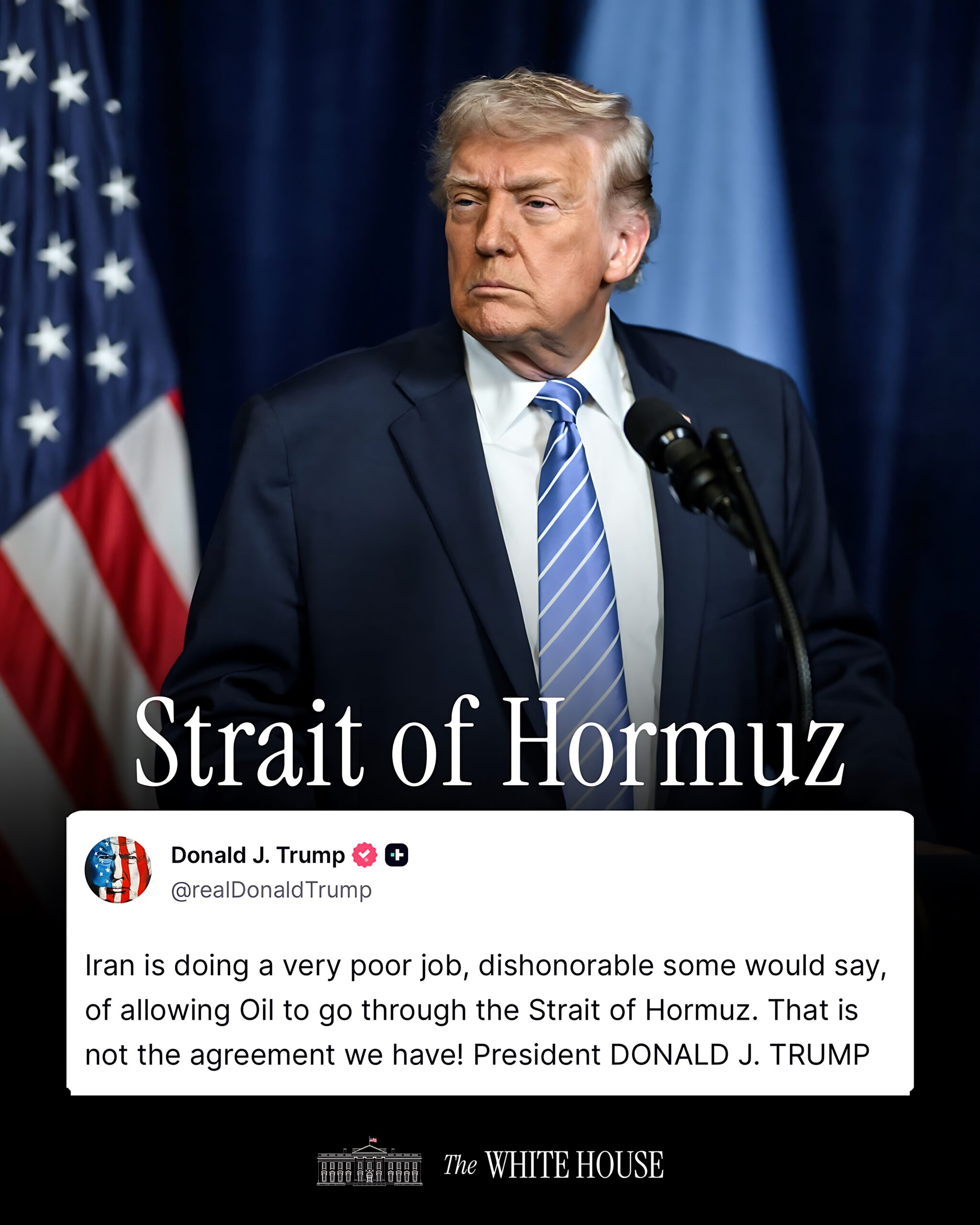
WASHINGTON, D.C. — President Donald J. Trump sharply criticized Iran’s handling of oil transit through the Strait of Hormuz, calling the country’s actions “a very poor job” and “dishonorable,” in a statement that has drawn renewed attention to one of the world’s most strategically important waterways.
The president’s remarks referenced what he described as an existing understanding regarding the safe passage of oil shipments through the strait, a narrow chokepoint through which a significant portion of the world’s petroleum supply travels. “That is not the agreement we have,” he said, suggesting that Iran’s recent behavior has deviated from prior expectations or commitments.
Strategic Importance of the Strait
The Strait of Hormuz, located between Oman and Iran, is a critical artery for global energy markets. According to international energy agencies, roughly one-fifth of the world’s crude oil passes through the channel each year. Any disruption — whether due to military tensions, political disputes, or maritime interference — can have immediate global economic consequences.
Context Behind the Remarks
The president’s comments come amid ongoing friction between Washington and Tehran over regional security, sanctions, and maritime activity. In recent years, both nations have accused each other of escalating tensions in the Persian Gulf, with incidents involving commercial tankers, naval patrols, and drone operations contributing to a volatile environment.
While the president did not specify which actions by Iran prompted his criticism, analysts note that concerns about shipping safety in the region have resurfaced periodically, often tied to broader geopolitical disputes.
International Reaction
Global markets responded cautiously, with energy analysts noting that even rhetorical escalations can influence oil prices. Several U.S. allies have previously urged both nations to maintain open communication channels to prevent misunderstandings that could threaten maritime security.
Diplomatic observers say the latest remarks may signal a harder line from Washington, though it remains unclear whether additional policy steps will follow.
Looking Ahead
The situation in the Strait of Hormuz remains a focal point for international security watchers. As tensions ebb and flow, governments and industry leaders continue to monitor the region closely, aware that stability in the waterway is essential for global economic health.