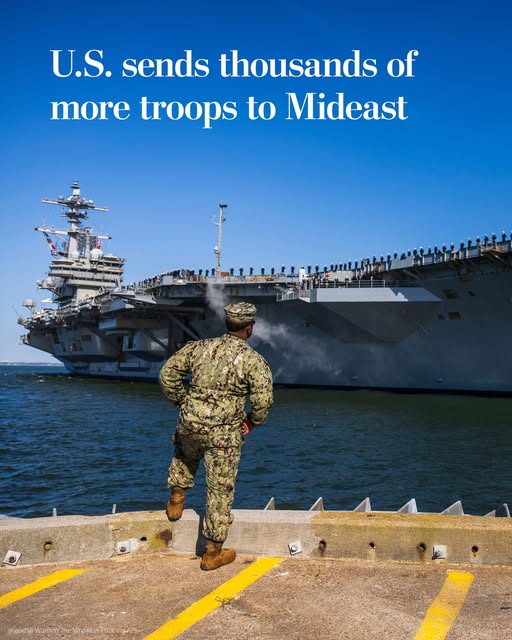
WASHINGTON — The United States is deploying thousands of additional troops to the Middle East, the Pentagon confirmed Monday, as escalating tensions and ongoing instability across the region prompt a significant expansion of the U.S. military footprint.
Defense officials said the deployment is intended to bolster force protection, support ongoing naval operations, and deter potential threats to U.S. personnel and commercial shipping. The move follows a series of security incidents involving U.S. forces and regional militias, as well as continued disruptions to maritime traffic.
A senior Pentagon official said the decision was made “out of an abundance of caution” and emphasized that the troops are being sent to reinforce existing missions, not to initiate new combat operations.
Where the Troops Are Going
Officials did not publicly specify exact locations for operational security reasons, but the additional forces are expected to be distributed across:
- U.S. bases in the Persian Gulf
- Naval assets operating in the Red Sea and Gulf of Oman
- Regional logistics hubs supporting air and missile defense
The deployment includes a mix of infantry, air‑defense units, and support personnel.
Why the U.S. Is Expanding Its Presence
The troop increase comes amid:
- Heightened militia activity targeting U.S. and allied positions
- Continued instability near key shipping lanes
- Concerns about the safety of commercial vessels
- Ongoing regional fallout from the conflict involving Iran
Defense analysts say the buildup reflects Washington’s effort to prevent further escalation while reassuring allies who rely on U.S. security guarantees.
International Reaction
Allies in Europe and the Gulf expressed support for the move, saying it underscores the need for stability in a region critical to global energy markets. Some governments, however, urged the U.S. to pair military reinforcement with diplomatic efforts to reduce tensions.
Regional governments have not publicly commented on the deployment but have increased their own security postures in recent weeks.
Domestic Response
Members of Congress from both parties requested briefings on the deployment, with some lawmakers calling for clarity on the mission’s scope and duration. Others said the move was necessary to protect U.S. forces and maintain freedom of navigation.
The Pentagon said additional updates will be provided as the deployment progresses.
What Happens Next
Officials stressed that the deployment is temporary but did not provide a timeline for when the additional forces might return. Military planners are continuing to assess regional conditions and may adjust troop levels as needed.
For now, the buildup marks one of the most significant U.S. military movements in the Middle East in recent years — a sign of the growing complexity and volatility of the regional security environment.