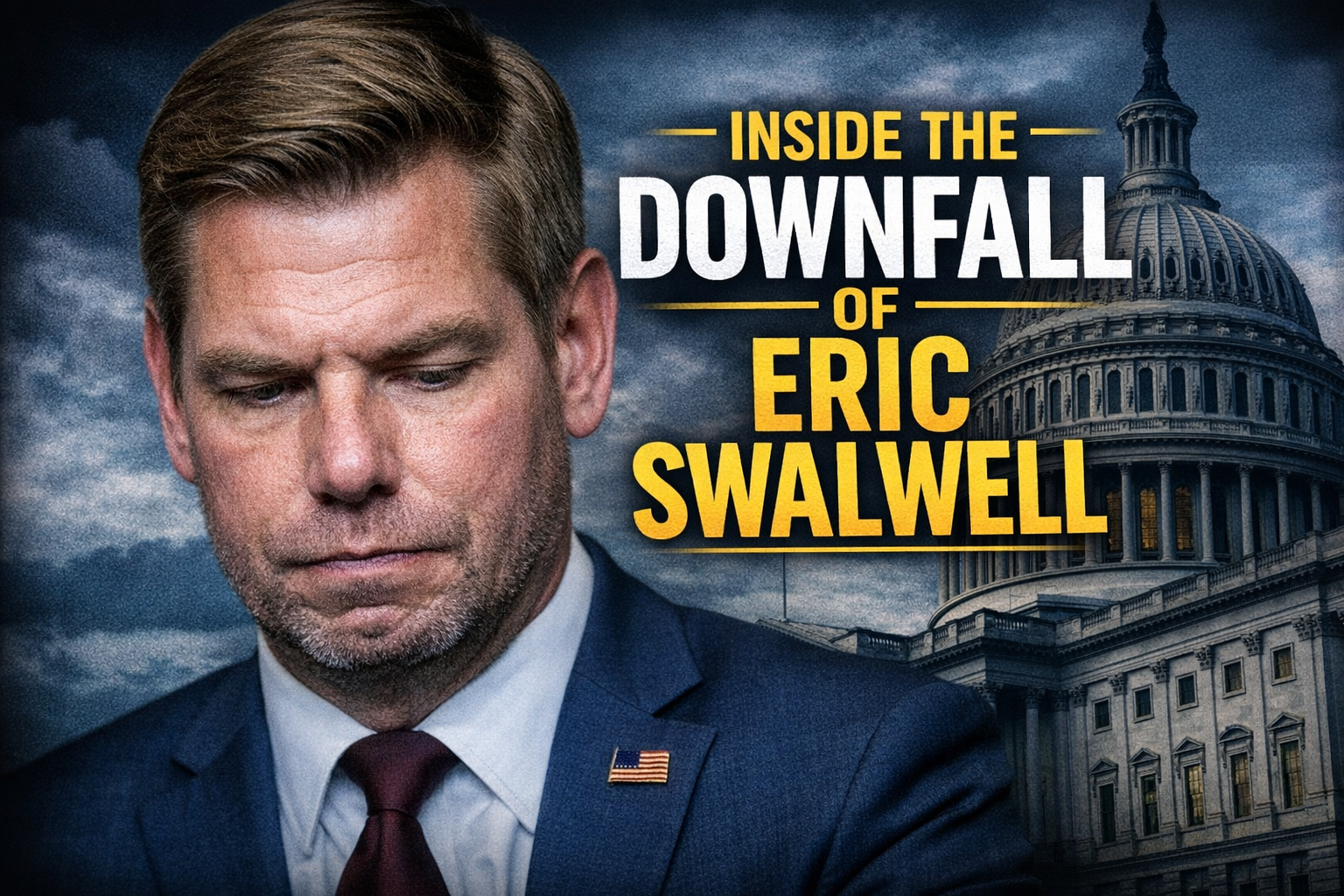
WASHINGTON — Just weeks ago, Rep. Eric Swalwell (D‑Calif.) was positioning himself as a competitive contender in the California governor’s race. Today, he is preparing to leave Congress altogether — the result of a stunning political collapse that unfolded with unusual speed and left Democratic leaders scrambling to contain the fallout.
Swalwell announced Monday that he would resign from Congress, saying that sexual assault and misconduct allegations — which he has repeatedly denied — had made it impossible for him to continue serving or sustain a statewide campaign. His departure marks one of the most abrupt resignations on Capitol Hill in recent years.
A Campaign Derailed Almost Overnight
Swalwell launched his gubernatorial bid earlier this year with strong fundraising and a message centered on public safety and technology policy. But within days of his announcement, multiple media outlets reported allegations of sexual misconduct involving an individual connected to his congressional office.
The reports triggered immediate political shockwaves:
- Major donors paused contributions
- Party strategists urged him to suspend his campaign
- Democratic colleagues privately warned that an ethics investigation was inevitable
By the end of the week, Swalwell had withdrawn from the governor’s race. Within days, he announced he would resign from Congress entirely.
The Ethics Investigation That Accelerated the Crisis
The House Ethics Committee confirmed it had opened a review into the allegations shortly after they became public. While the committee did not release details, officials said the inquiry would continue even after Swalwell leaves office.
The prospect of a prolonged investigation — combined with the possibility of an expulsion vote — intensified pressure on Swalwell to step aside.
A senior Democratic aide said party leaders feared the situation could “consume the caucus” if it dragged into the summer.
Swalwell’s Response: Denial and Departure
In a written statement, Swalwell called the allegations “false” and “politically motivated,” but acknowledged that the controversy had become an overwhelming distraction.
“These allegations are false, but they have taken a tremendous toll,” he said. “I am stepping aside to allow the House to move forward and to focus on clearing my name.”
He did not take questions from reporters and has not given interviews since the allegations surfaced.
A Vacancy With Political Consequences
Swalwell’s resignation triggers a special election in California’s 14th Congressional District, a reliably Democratic seat but one that will now see a competitive scramble among local officials and activists.
His departure also reshapes the early landscape of the California governor’s race, removing a candidate once viewed as a potential top‑tier contender.
What Comes Next
The Ethics Committee will continue its investigation, and legal experts say civil litigation remains possible even if no criminal charges are filed.
For Democrats, the priority now is stabilizing the caucus and preparing for a special election. For Swalwell, the focus shifts to defending himself against allegations that ended his congressional career far sooner than expected.
As one longtime Democratic strategist put it, “This was a downfall that happened faster than anyone in Washington could process — and it’s not over yet.”