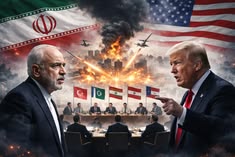
ISLAMABAD / WASHINGTON — Pakistan has unexpectedly stepped into a central diplomatic role in recent weeks, with U.S. and regional officials saying the country has become a key intermediary in efforts to de‑escalate tensions between Washington and Tehran. Analysts say the shift reflects Islamabad’s ability to “speak Trump’s language” — a blend of direct communication, personal outreach, and strategic messaging that has resonated with the White House.
Senior Pakistani officials have held multiple rounds of shuttle diplomacy, relaying proposals, clarifying red lines, and helping maintain communication channels at moments when direct U.S.–Iran dialogue has stalled. While Pakistan has historically tried to balance relations with both nations, its emergence as a mediator in the current crisis has surprised many observers.
“Pakistan has positioned itself as a translator of political intent,” said a South Asia security analyst. “They understand how to communicate with the Trump administration in a way that feels clear, firm, and transactional.”
A Diplomatic Approach Tailored to the White House
Officials familiar with the talks say Pakistan’s strategy has relied on three elements:
- Direct, unambiguous messaging — mirroring the communication style favored by President Trump
- Personal outreach between senior leaders, including military‑to‑military channels
- Framing proposals in terms of mutual benefit, a format U.S. officials say aligns with the administration’s negotiation preferences
A Pakistani diplomat described the approach as “meeting Washington where it is,” emphasizing clarity over nuance.
Why Pakistan’s Role Matters Now
The U.S. has limited direct communication with Iran, making intermediaries essential. Pakistan’s geographic proximity, intelligence networks, and longstanding ties with Tehran give it access few countries possess.
At the same time, Islamabad has worked to strengthen its relationship with Washington, particularly through counterterrorism cooperation and regional security coordination.
A senior U.S. official said Pakistan’s involvement “has been constructive,” though the White House has not publicly commented on the extent of Islamabad’s role.
Iran’s Calculus: Familiarity and Leverage
Iranian officials have historically viewed Pakistan as a neighbor with overlapping security concerns and a pragmatic diplomatic posture. Tehran has accepted Pakistan’s involvement in part because it sees Islamabad as less aligned with U.S. regional rivals than other potential mediators.
Iranian state media has acknowledged “ongoing consultations” with Pakistan but has not detailed the substance of those discussions.
Skepticism and Strategic Caution
Some analysts warn that Pakistan’s influence has limits. The U.S.–Iran standoff is driven by deep strategic disagreements, and intermediaries can only do so much to bridge them.
Others note that Pakistan must balance its role carefully to avoid appearing aligned too closely with either side.
A former Pakistani ambassador said the country is “walking a tightrope,” adding that success depends on maintaining trust with both Washington and Tehran.
What Comes Next
Diplomats say Pakistan will continue facilitating communication as negotiations evolve, though the path forward remains uncertain. Regional governments have welcomed Islamabad’s involvement, hoping it may help prevent further escalation.
For now, Pakistan’s emergence as an unlikely peacemaker underscores how shifting geopolitical dynamics — and an ability to adapt to the Trump administration’s communication style — have elevated its role at a critical moment in Middle Eastern diplomacy.