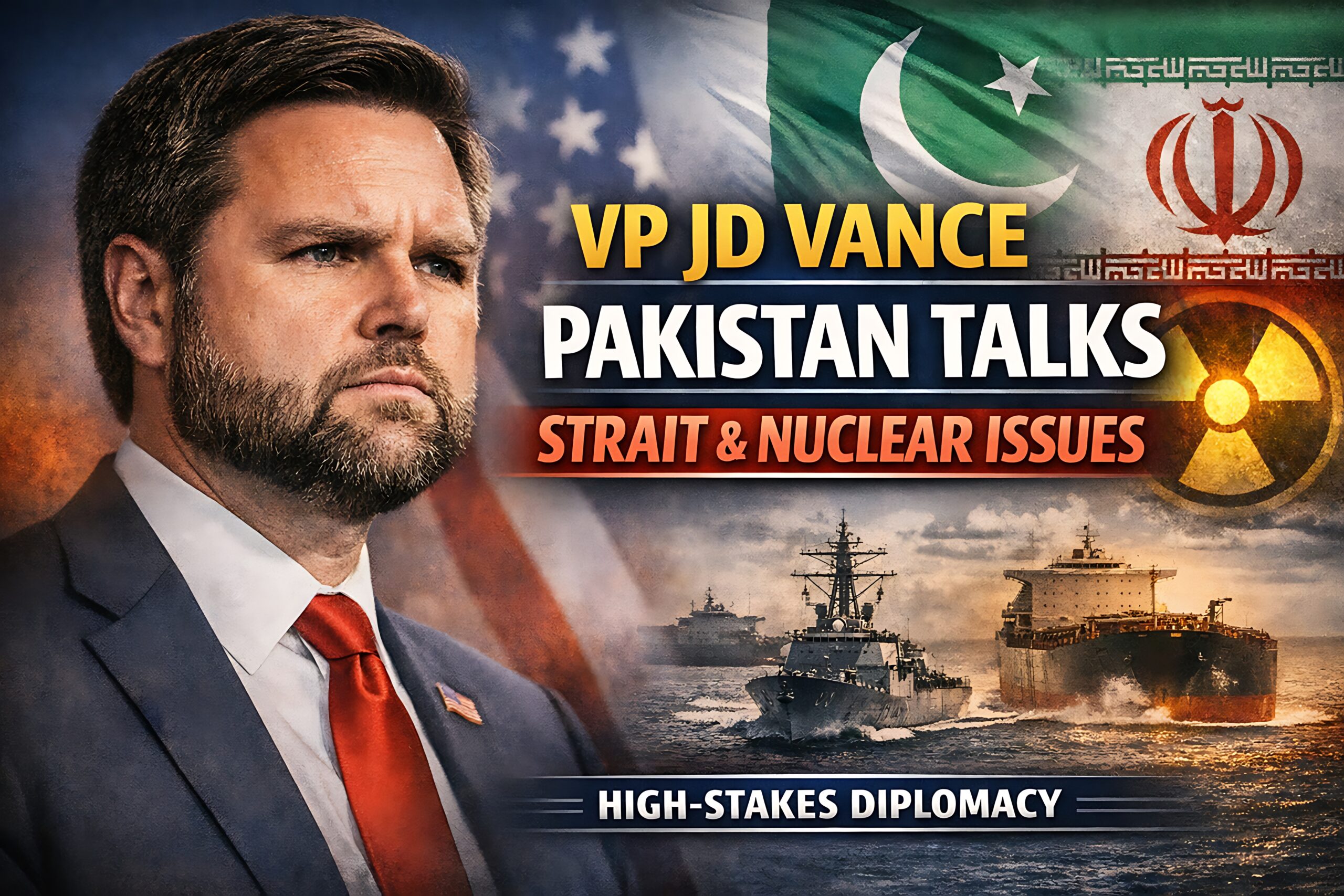
WASHINGTON — Vice President JD Vance is expected to travel to Pakistan later this week for a second round of indirect talks with Iranian negotiators, according to U.S. and Pakistani officials familiar with the planning. The discussions come at a pivotal moment, with the Strait of Hormuz and Iran’s nuclear ambitions emerging as the core issues shaping the diplomatic effort.
The trip follows marathon negotiations earlier this month in Islamabad, where U.S. and Iranian delegations — working through Pakistani intermediaries — failed to reach a breakthrough but agreed to continue the dialogue.
A senior administration official said Vance’s return signals “a narrow but real opening” for further progress, though expectations remain cautious.
“The Vice President is prepared to re-engage if there is a credible path forward,” the official said, noting that the White House views Pakistan as “an essential conduit” in the talks.
Strait of Hormuz: A Flashpoint Driving Urgency
The Strait of Hormuz, a chokepoint for nearly a fifth of global oil shipments, has seen heightened tensions amid recent maritime confrontations. U.S. officials say securing safe passage for commercial vessels is a top priority, and they want Iran to commit to de-escalation measures.
Iranian negotiators, according to regional diplomats, have insisted that U.S. naval operations in the area must also be addressed as part of any agreement.
Nuclear Commitments Remain a Sticking Point
The most sensitive issue remains Iran’s nuclear program. During the first round of talks, Vance said Iran declined to provide assurances that it would not pursue or develop a nuclear weapon — a position the U.S. considers non-negotiable.
Pakistani officials, who have been shuttling messages between the two sides, say both delegations appear willing to revisit the nuclear question, though major gaps remain.
Pakistan’s Expanding Role as Mediator
Pakistan has emerged as an unexpected diplomatic bridge, leveraging its longstanding ties with Tehran and its improving relationship with Washington.
Islamabad’s foreign ministry confirmed it is preparing to host the next round of talks and said it remains “committed to facilitating dialogue that reduces regional tensions.”
Analysts say Pakistan’s involvement reflects both strategic opportunity and geopolitical necessity.
Regional and International Reactions
European governments have welcomed the renewed engagement, urging both sides to “seize the moment” to prevent further escalation. Gulf states, wary of instability near their shipping lanes, have privately encouraged Pakistan’s mediation efforts.
Oil markets reacted cautiously to news of the upcoming talks, with traders watching for signs of progress on maritime security.
What Comes Next
U.S. officials say Vance’s trip will focus on clarifying U.S. demands, testing Iran’s willingness to compromise, and exploring confidence‑building steps related to maritime safety and nuclear transparency.
If the talks show movement, additional sessions could follow in the coming weeks.
For now, the Vice President’s return to Pakistan underscores the high stakes — and the fragile diplomatic window — surrounding one of the most consequential security challenges facing the administration.