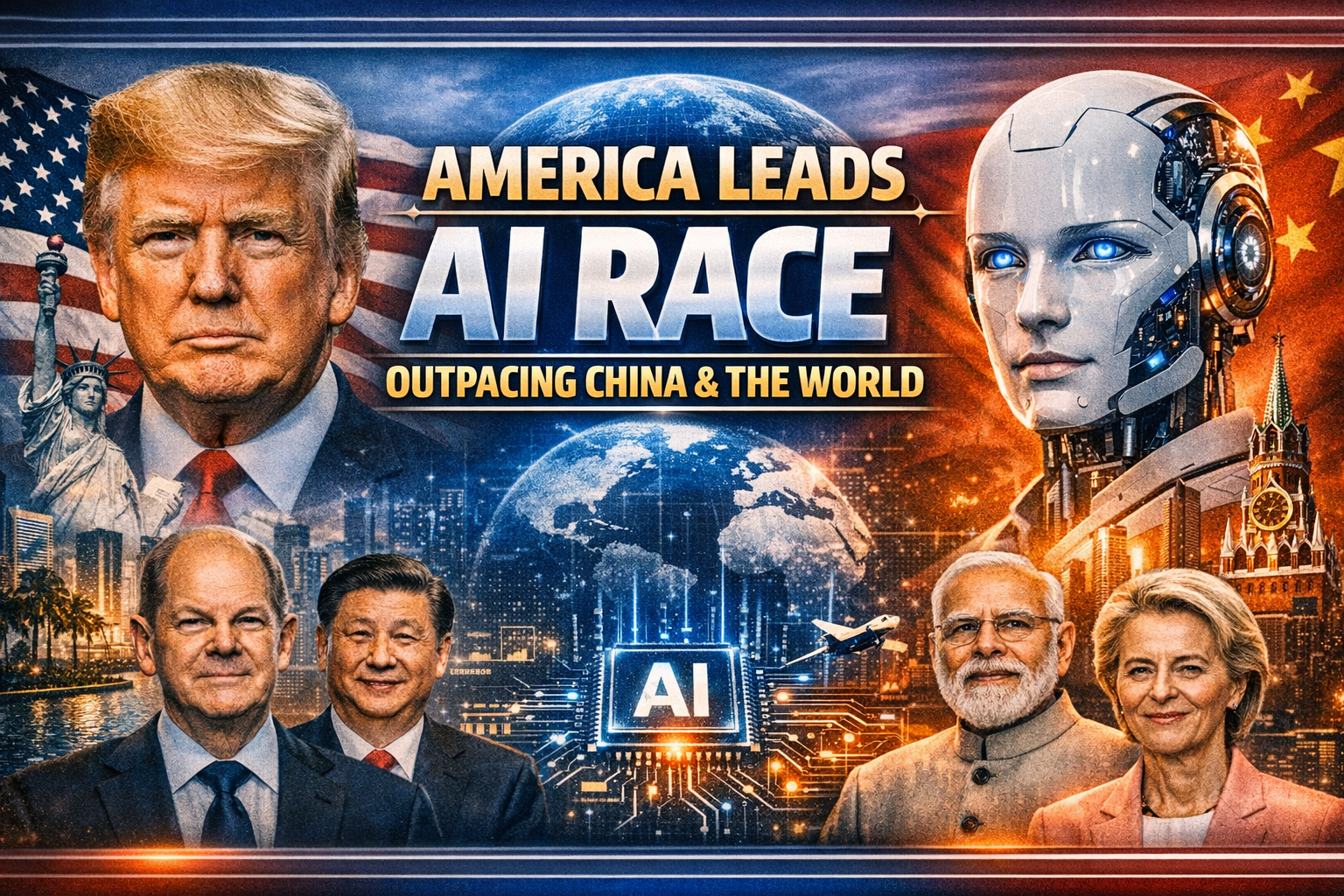
WASHINGTON — The Trump administration declared Friday that the United States is “undeniably leading the global artificial intelligence race,” vowing to prevent China from undermining American innovation through espionage or intellectual‑property theft.
Senior officials said the White House is finalizing new measures to protect U.S. AI research, defense applications, and private‑sector breakthroughs from foreign interference, describing the initiative as a cornerstone of America’s technological strategy for the next decade.
“The Trump Administration will not allow China to subvert American interests by stealing AI,” a senior official said. “We are leading the world in artificial intelligence — and China knows it.”
A Strategic Technology Rivalry
The announcement follows months of escalating tension between Washington and Beijing over technology access and data security. U.S. intelligence agencies have warned that Chinese state‑linked entities are targeting American AI firms, universities, and defense contractors to acquire proprietary algorithms and training data.
The administration’s new plan reportedly includes expanded export controls, cyber‑defense partnerships, and increased funding for domestic AI research, particularly in military and critical‑infrastructure applications.
Trump’s Vision: “AI as National Power”
President Trump has repeatedly framed artificial intelligence as a pillar of national strength, comparing its importance to nuclear deterrence and space dominance. In recent remarks, he said the United States must “own the future of AI” to ensure economic and security leadership.
Officials say the administration’s approach blends private‑sector innovation with federal oversight, aiming to keep breakthroughs in machine learning, robotics, and autonomous systems under U.S. control.
China’s Response
Chinese officials have dismissed Washington’s accusations, calling them “politically motivated.” Beijing insists its AI development is focused on civilian uses such as healthcare and logistics, though analysts note that China’s military has invested heavily in autonomous weapons and surveillance technologies.
“China knows America is ahead — and it’s trying to catch up by any means necessary,” said one U.S. cybersecurity expert briefed on the administration’s plan.
Global Implications
The rivalry has already reshaped global supply chains and research collaborations. European and Asian allies are being urged to adopt stricter data‑security standards and limit technology transfers to Chinese firms. Meanwhile, American companies are accelerating domestic production of AI chips and cloud infrastructure to reduce dependency on foreign suppliers.
What Comes Next
The White House is expected to unveil a comprehensive AI security directive in the coming weeks, outlining new penalties for corporate espionage and incentives for U.S. innovation. Officials say the goal is clear: to ensure that America remains the undisputed leader in artificial intelligence — and that no foreign power can rewrite the rules of the digital age.