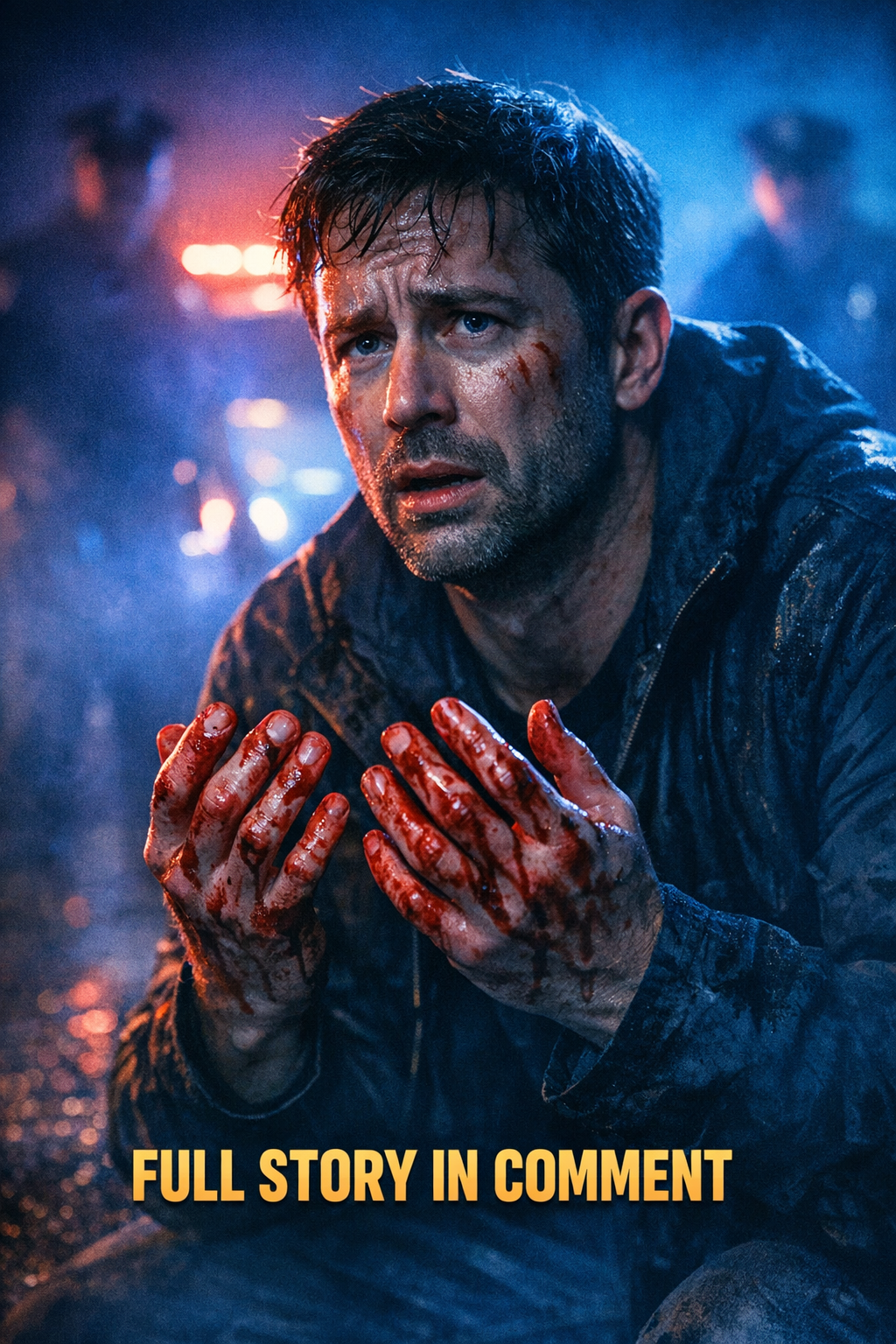
He was walking home after a long shift — tired, hungry, ready to forget the day. Then he saw the man collapse on the sidewalk. No one stopped. No one even looked.
He ran. He knelt beside the stranger, pressing his hands against the wound in his chest. “Stay with me,” he said. “You’re gonna be okay.”
Blood soaked through his fingers. He didn’t care. He kept pressure, kept talking, kept hope alive.
When the sirens came, he felt relief — until he saw the officers step out with their hands on their guns.
“Step back!” one shouted. He obeyed. He always obeyed.
But when he lifted his hands, they saw the blood. They saw the color. And they saw what they wanted to see.
“Don’t move!” “Drop the weapon!” “What weapon?” he said, trembling.
The paramedics rushed past him, kneeling beside the man he’d tried to save. One officer grabbed his arm, twisting it behind his back. Another cuffed him.
He tried to speak, but the words caught in his throat. “I was helping him,” he whispered. No one listened.
The blood on his hands became evidence. The truth became irrelevant.
At the station, they asked questions he couldn’t answer. “Why were you there?” “Did you know him?” “Where’s the knife?”
He said nothing. He just stared at his hands — red, trembling, stained with someone else’s life.
Hours later, they found the real attacker on a nearby camera. He was released. No apology. No explanation.
Just silence.
He walked home alone, the smell of iron still clinging to his skin. He scrubbed his hands until they burned. But the stain wouldn’t leave.
Because it wasn’t just blood anymore. It was memory. It was injustice.