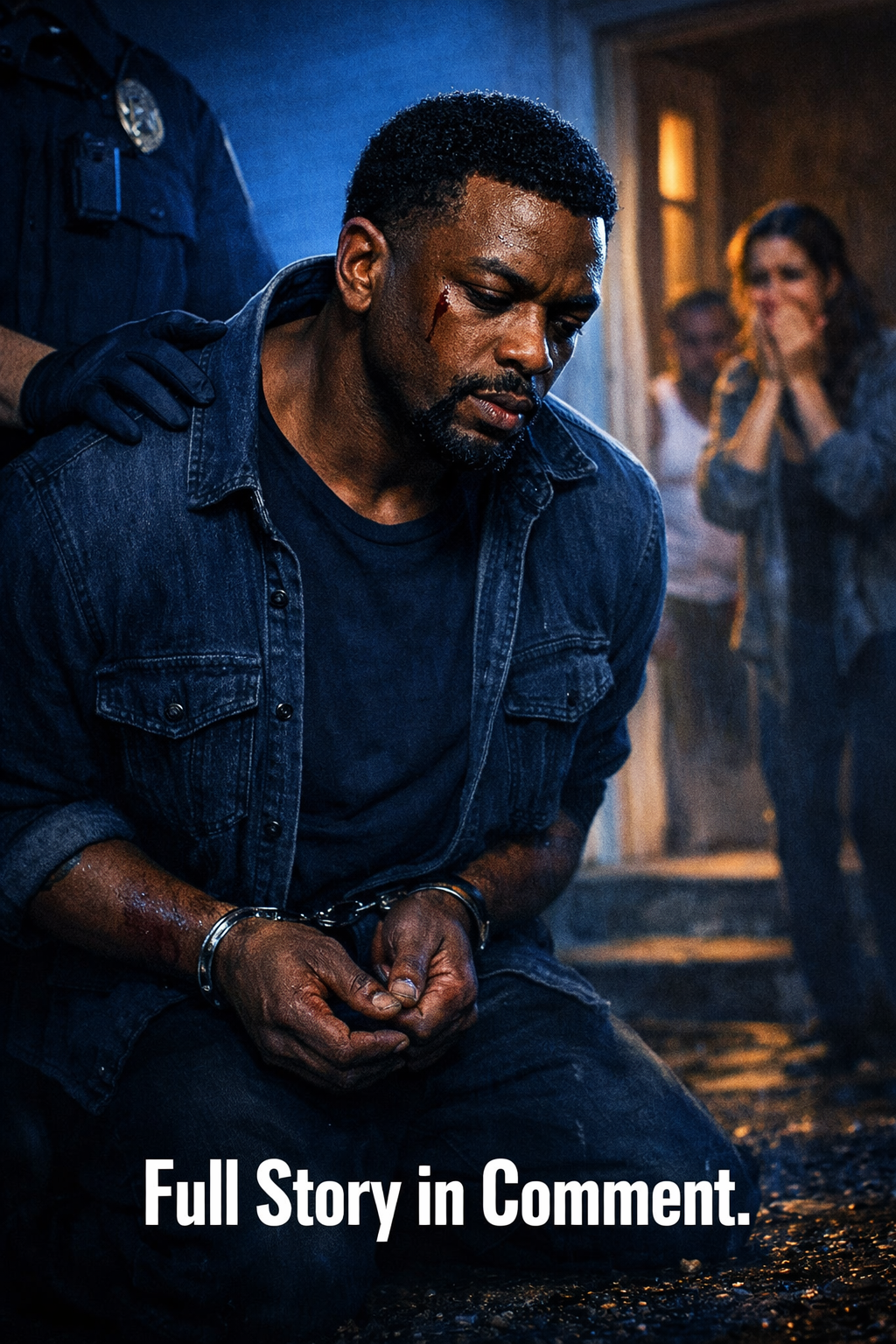
He heard the shouting first — muffled, sharp, desperate. Then the crash of glass. Then silence.
He lived next door. He’d seen the woman before — quiet, polite, always smiling when she watered her plants. Tonight, her porch light flickered like a warning.
He hesitated. Then he knocked. “Ma’am? You okay?”
The door opened just enough for her face to appear — tear‑streaked, frightened. Behind her, a man’s voice barked, “Who the hell is that?”
She turned, startled. The man stormed forward, saw him — a Black man standing in the doorway — and swung.
The blow landed before he could speak. He stumbled back, hands raised. “I heard screaming! I was just checking—”
But the man’s rage was louder than reason. The woman screamed again. Neighbors came out. Phones came up. Police arrived.
When the officers pulled up, they saw a white man bleeding and a Black man standing nearby. They didn’t ask questions. They didn’t look at the broken glass or the bruises on the woman’s arm. They looked at him.
“Hands behind your back.”
He obeyed. He always obeyed.
The woman tried to speak. “He was helping!” she cried. But her voice was lost in the noise — sirens, radios, shouting.
They cuffed him anyway. The husband pointed, shaking his head. “He attacked me!”
No one asked why he was there. No one asked what he heard.
Hours later, at the station, the woman came in. Her arm was bandaged. Her eyes were swollen. She told them everything. How he’d knocked to help. How her husband had hit him first. How she’d screamed for mercy, not fear.
The officer sighed. “Misunderstanding,” he said. “You’re free to go.”
Free. But not clean. Not whole.
He walked home past the same porch light — still flickering, still broken. He looked at his hands, still trembling. Hands that knocked to help, now marked by cuffs.
He whispered, “Next time, I’ll stay quiet.” And that was the saddest part — not the bruises, not the humiliation, but the silence that racism taught him to keep.