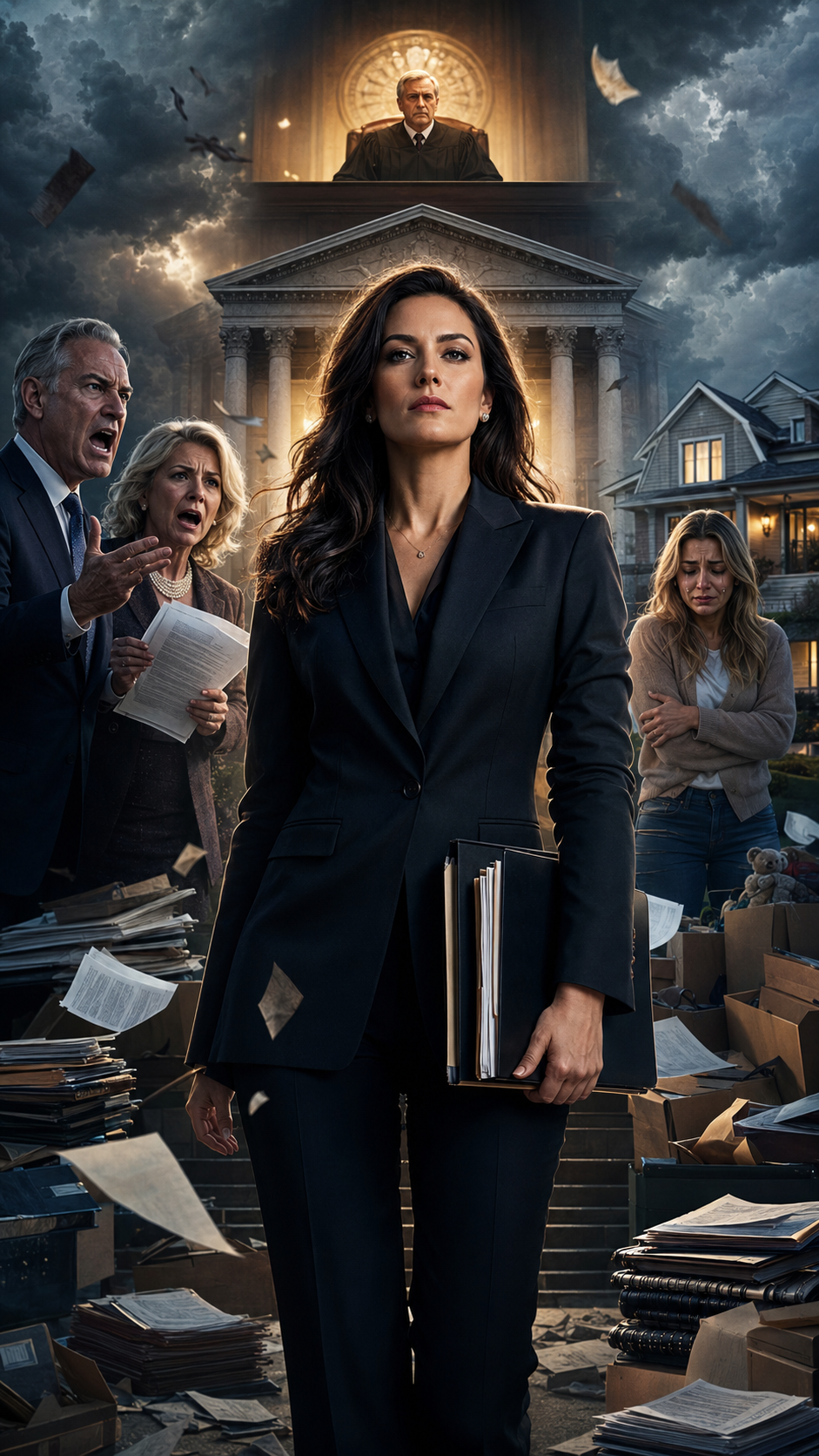
The courtroom was packed on the morning of the hearing.
My parents sat confidently beside their attorney, convinced they had already won. My mother wore the same expression she had worn my entire life whenever Chloe was involved—a look that said her favorite daughter deserved everything and everyone else existed to provide it.
Chloe sat behind them, dabbing fake tears from her eyes.
I sat quietly across the aisle.
For once, I wasn’t nervous.
Because while my parents believed they were suing me for $350,000, they had no idea what was waiting inside the evidence boxes stacked beside my attorney.
The judge adjusted her glasses.
“Mr. and Mrs. Carter,” she said, looking at my parents’ filing. “You are seeking reimbursement for the cost of raising your daughter?”
“Yes, Your Honor,” my father said confidently.
The judge looked confused.
“You are claiming diapers, food, housing, medical expenses, school tuition, transportation, and emotional support as recoverable debts?”
“Correct.”
“And you voluntarily chose to become parents?”
My father hesitated.
“Well… yes.”
A ripple of laughter spread through the courtroom.
The judge immediately silenced the room.
Then she turned toward my attorney.
“Counselor, I understand your client has filed a counterclaim.”
My attorney stood.
“Yes, Your Honor. A substantial one.”
He opened the first evidence box.
What followed changed everything.
For the next two hours, document after document appeared on the courtroom screens.
Bank statements.
Trust records.
Insurance documents.
Tax filings.
Letters.
Emails.
Everything.
The truth was far uglier than anyone expected.
Ten years earlier, my grandmother had established a trust fund intended equally for Chloe and me.
The fund contained nearly six million dollars.
But when my grandmother’s health declined, my parents had secretly convinced her to sign revised documents she barely understood.
Those changes allowed them temporary control over the trust.
And once they gained access?
They emptied nearly all of my portion.
Not for medical bills.
Not for emergencies.
For Chloe.
Luxury cars.
Designer vacations.
Failed business ventures.
Credit-card debt.
A beach condo.
Even cosmetic procedures.
Every time Chloe overspent, my parents transferred more money from accounts meant for me.
By the time I discovered the truth years later, over $2.8 million had vanished.
I never sued.
I simply walked away from them.
I built my own company.
I built my own life.
I became successful without a penny of their help.
But the ledgers I had carried into my attorney’s office contained every transaction.
Every stolen dollar.
Every forged signature.
Every fraudulent transfer.
The courtroom became silent.
My mother looked pale.
My father stopped making eye contact.
And Chloe?
She looked like she might faint.
The judge leaned forward.
“Are these records authentic?”
“Yes, Your Honor.”
“Verified?”
“By three independent forensic accountants.”
The judge nodded slowly.
Then came the final bombshell.
My attorney displayed a recorded phone call.
One I had legally obtained.
The courtroom speakers crackled.
My mother’s voice filled the room.
“We can pressure Elena. She always caves eventually.”
Then my father’s voice.
“If she refuses, we’ll sue her. The debt claim doesn’t need to win. We just need to scare her into paying Chloe’s mortgage.”
The recording ended.
Silence.
Absolute silence.
The judge stared at my parents.
“You knowingly filed a frivolous lawsuit to extort money from your daughter?”
Neither answered.
The judge didn’t need one.
The evidence spoke for itself.
Three weeks later, the ruling arrived.
My parents’ lawsuit was dismissed with prejudice.
They were ordered to pay sanctions.
Their attorney withdrew from representation.
But that wasn’t the real outcome.
The fraud investigation continued.
Several months later, additional findings emerged.
The trust documents contained forged signatures.
Financial disclosures contained false statements.
Assets had been hidden.
Eventually, settlements were negotiated.
Properties were sold.
Accounts were liquidated.
And for the first time in my life, my parents were forced to face consequences.
Not because I wanted revenge.
Because I wanted truth.
The hardest moment came afterward.
Not in court.
Not during the investigation.
At my front door.
One rainy evening, my doorbell rang.
When I opened it, Chloe stood there alone.
She looked exhausted.
Older.
Smaller somehow.
The arrogance was gone.
“I lost the house,” she said quietly.
I nodded.
“I know.”
“They blame you.”
“Of course they do.”
Tears formed in her eyes.
“For years I believed them when they said you were selfish.”
I said nothing.
“Do you know what they told me?” she continued. “They said every sacrifice they made was for me because you never needed them.”
I laughed bitterly.
The irony was almost unbearable.
She looked down.
“I didn’t know they stole from you.”
“You never asked where the money came from.”
She couldn’t argue with that.
For a long moment we stood in silence.
Finally she whispered:
“I’m sorry.”
Those two words were something I had waited half my life to hear.
But strangely, they didn’t bring satisfaction.
Only peace.
“I forgive you,” I said.
Her shoulders shook.
“But forgiveness doesn’t mean access.”
She nodded.
“I understand.”
And she did.
For the first time, she truly did.
She walked away carrying nothing except the truth.
As for my parents, they never apologized.
Even after everything.
Even after the court rulings.
Even after losing assets.
Even after the entire family learned what they had done.
They still believed they were victims.
Some people would rather lose everything than admit they were wrong.
A year later, I received one final letter.
It wasn’t from them.
It was from the bank overseeing the recovered trust assets.
The settlement had been finalized.
The remaining funds, along with damages and recovered assets, had been transferred.
The amount was substantial.
Enough to change lives.
So I used part of it to create something my parents never understood.
A scholarship fund.
For students aging out of foster care.
Young people with no family safety net.
Young people who knew what it felt like to be unwanted.
The fund carried my grandmother’s name.
Not my parents’.
Because she had been the only one who ever loved me without conditions.
On the day the first scholarships were awarded, I stood before dozens of students and smiled.
For the first time in years, I felt completely free.
My parents had tried to send me a bill for my childhood.
Instead, they paid the price for selling their integrity.
And in the end, the greatest victory wasn’t winning in court.
It was discovering that family isn’t defined by blood.
It’s defined by the people who value you as a human being—not as an investment.