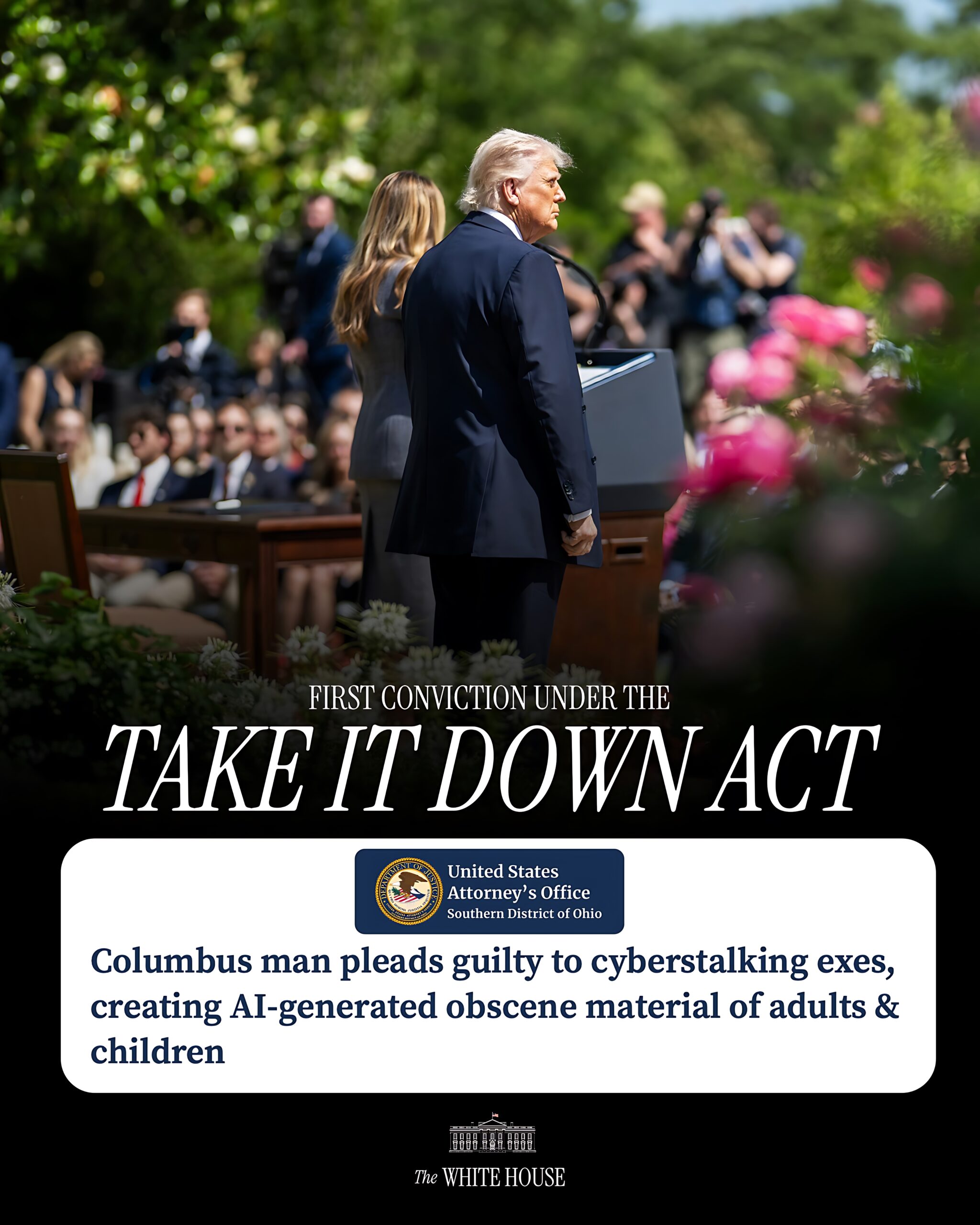
April 9, 2026 — Washington, D.C. In a landmark decision that could shape the future of digital privacy enforcement in the United States, a federal court on Thursday issued the first-ever conviction under the Take It Down Act, a law designed to combat the non-consensual distribution of intimate or harmful digital content.
The defendant, 28-year-old Marcus Ellery of Phoenix, Arizona, was found guilty on three counts of knowingly distributing explicit images of a former partner without consent and refusing to comply with multiple takedown orders issued under the Act. Prosecutors argued that Ellery not only uploaded the images to several social platforms but also reposted them after removal, triggering the law’s enhanced penalties for repeat violations.
Judge Alana Ruiz, who presided over the case, called the conviction “a clear message that digital harassment and exploitation will face real consequences.” Sentencing is scheduled for next month, with Ellery facing up to five years in federal prison and substantial civil penalties.
What the Take It Down Act Does
Passed in 2025 with bipartisan support, the Take It Down Act created a national framework requiring online platforms to remove non-consensual intimate images, deepfakes, and other forms of digital exploitation within 48 hours of a verified request. The law also criminalizes intentional distribution of such content and empowers victims to pursue civil damages.
Digital rights advocates have praised the Act for closing long-standing gaps in state-level revenge-porn laws, while tech companies have expressed concern about the speed and scope of mandated removals.
A Case That Tested the Law’s Limits
According to court documents, Ellery’s former partner submitted multiple takedown requests after discovering the images online. While platforms complied, Ellery allegedly created new accounts to re-upload the content, prompting federal investigators to intervene.
Assistant U.S. Attorney Dana Whitfield said the case demonstrates the law’s intended purpose: “This conviction shows that the Take It Down Act is not symbolic. It has teeth, and it will be used to protect victims who have been ignored or silenced for far too long.”
Defense attorneys argued that Ellery did not fully understand the legal implications of the new law, but the jury deliberated for less than four hours before returning a unanimous verdict.
Broader Implications
Legal experts say the conviction could set precedent for how aggressively federal prosecutors pursue digital privacy violations. With deepfake technology becoming more accessible and online harassment increasingly sophisticated, the ruling may influence how platforms monitor and respond to harmful content.
Advocacy groups welcomed the decision. “For survivors, this is a watershed moment,” said Lila Hammond, director of the National Coalition Against Digital Abuse. “It signals that the justice system is finally catching up to the realities of online harm.”
What Comes Next
The Department of Justice has confirmed that more than a dozen active investigations are underway under the Take It Down Act, suggesting that Ellery’s case may be the first of many.
As lawmakers and tech companies continue to debate the balance between privacy, free expression, and platform responsibility, today’s conviction marks a turning point in how the U.S. confronts digital exploitation.