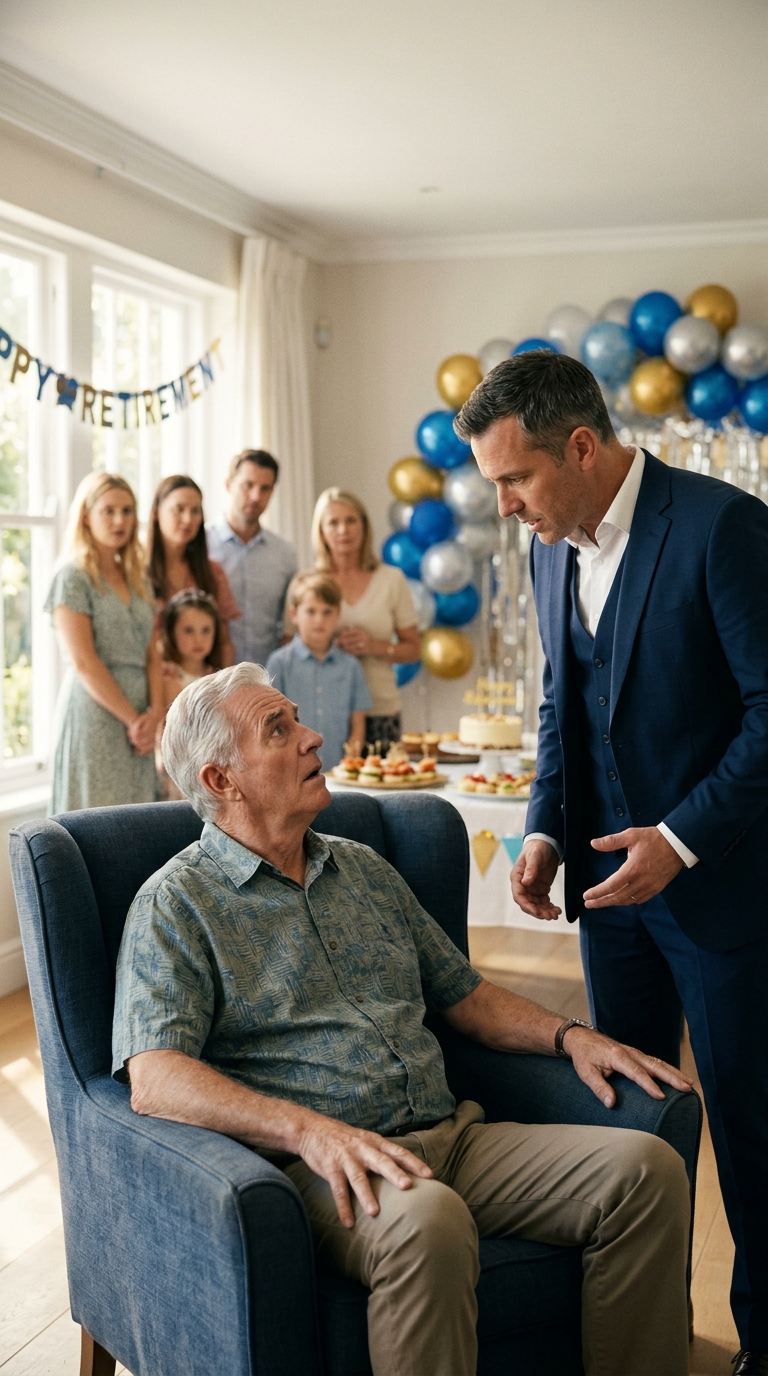
“We need to talk about what happens next,” my son said again, and this time his voice had that careful, over-rehearsed calm people use when they’ve been practicing a hard conversation for weeks.
He said my name, then said it again like he needed to hear himself say it. “You can’t keep living alone. We’ve talked about it — all of us — and we think it’s time you moved into Brookhaven.”
Brookhaven. The assisted living facility twenty minutes from my daughter’s house. I’d toured it once, years ago, for my late wife’s mother. I remembered fluorescent lights and a woman in the dining hall who cried every time someone left the room.
I laughed — actually laughed — because I thought it was a joke. Bad timing, maybe, but a joke. Then I looked at my daughter, and she wasn’t laughing. She was staring at her plate like it owed her money. My youngest wouldn’t look at me at all.
“This isn’t a discussion,” my son continued. “We already put down a deposit. Move-in is in three weeks.”
I felt the blood leave my face. Three weeks. They’d made this decision — signed papers, handed over money — without saying a single word to me. My own retirement party, the one I thought was a celebration of everything I’d built, had actually been staged so they could deliver this news in public, where I’d be too stunned, too polite, too outnumbered to argue.
“You don’t get a say in this, Dad,” my daughter finally said, still not looking up. “You forget things. You almost left the stove on last month. We’re doing this because we love you.”
I sat there in my blue shirt, in front of the cake with my own face on it, and realized the whole room had known. My grandchildren had hugged legs that were about to be taken out from under me. The slideshow of my life had been playing while my children finalized the end of my independence in a group text I was never added to.
I found my voice before I found my composure. “I forgot the stove once in forty-one years of living alone,” I said. “You don’t get to erase a lifetime because of one Tuesday.”
My oldest son’s jaw tightened. “It’s already decided.”
“No,” I said, standing up slowly, my knees protesting the same way they had for a decade. “It’s not. My name is on my house. My name is on my accounts. And nobody signed anything on my behalf that I didn’t put my own signature to.”
The room went quiet in a different way now — not the anticipation-quiet of before a toast, but the quiet of people realizing they’d badly misjudged someone.
I thanked them for the party. I told my grandchildren I loved them. And then I walked out of that banquet hall alone, got in my car, and drove myself home — to the house that was still, for now, entirely mine.
What I did in the weeks that followed surprised even me. But that’s a story for next time.