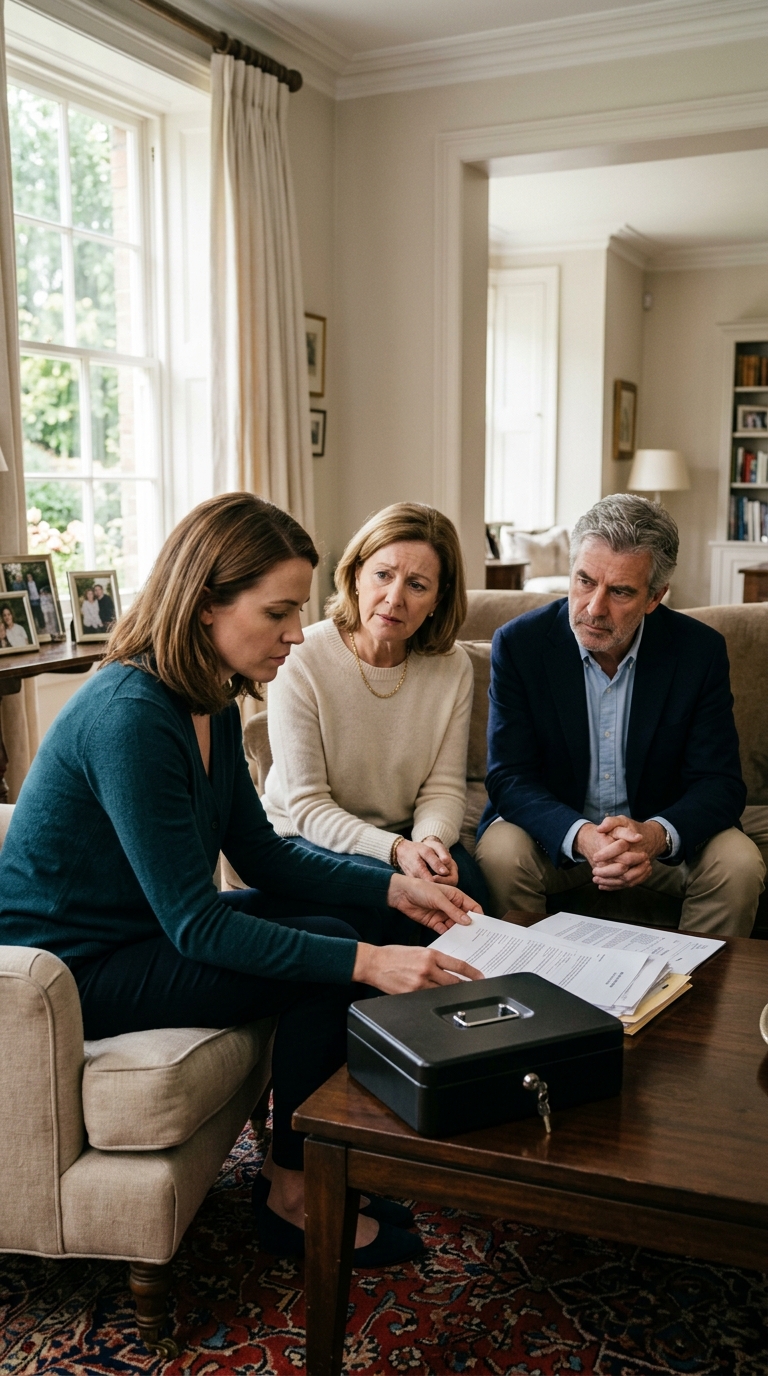
The prenup was only four pages, but every sentence had been written with surgical precision. There was no ambiguity, no loophole, nothing left to interpretation — exactly what you’d expect from a document drafted by someone who’d spent decades on the state’s highest court.
According to the agreement, in the event of Mom’s death, her husband would waive all rights to her estate, her savings, her property, and any spousal claim under state law. In exchange, he would receive exactly two things: a set of golf clubs he’d brought with him into the marriage, and the contents of the guest bedroom closet — his clothes and personal items that had been stored there.
That was it. That was his “spousal share.”
Our lawyer read through it twice, then looked up at us, visibly stunned. “This is one of the most airtight prenups I’ve seen,” he said. “Whoever drafted this knew exactly what they were doing.”
We later learned Mom had met with the retired judge quietly, months before the wedding, telling almost no one. She’d paid him privately, driven herself the forty miles to sign it, and rented the safety deposit box under only her name so her husband would never accidentally stumble across it during the marriage.
When we confronted her husband with the document, his lawyer tried to argue it wasn’t valid — that he hadn’t fully understood what he was signing, that there wasn’t adequate time between signing and the wedding, that any number of technicalities should void it.
But the judge who drafted it had anticipated every one of those arguments. There was a full thirty-day waiting period built in. Independent legal counsel had reviewed it with him before he signed. Video documentation existed of the entire signing process, timestamped and notarized.
The case never even made it to trial. His lawyer withdrew the contest within two weeks once they saw the documentation.
My brother and I sat in stunned silence when it was finally over. Our mother — the woman who baked us cookies, who fussed over Sunday dinners, who seemed like the most trusting, soft-hearted person we knew — had quietly out-maneuvered a legal challenge before it even happened.
She never told us. She never asked for credit. She just made sure that no matter what happened after she was gone, her children would be protected.
That’s when we understood: our mother hadn’t just loved us.
She’d planned for us.