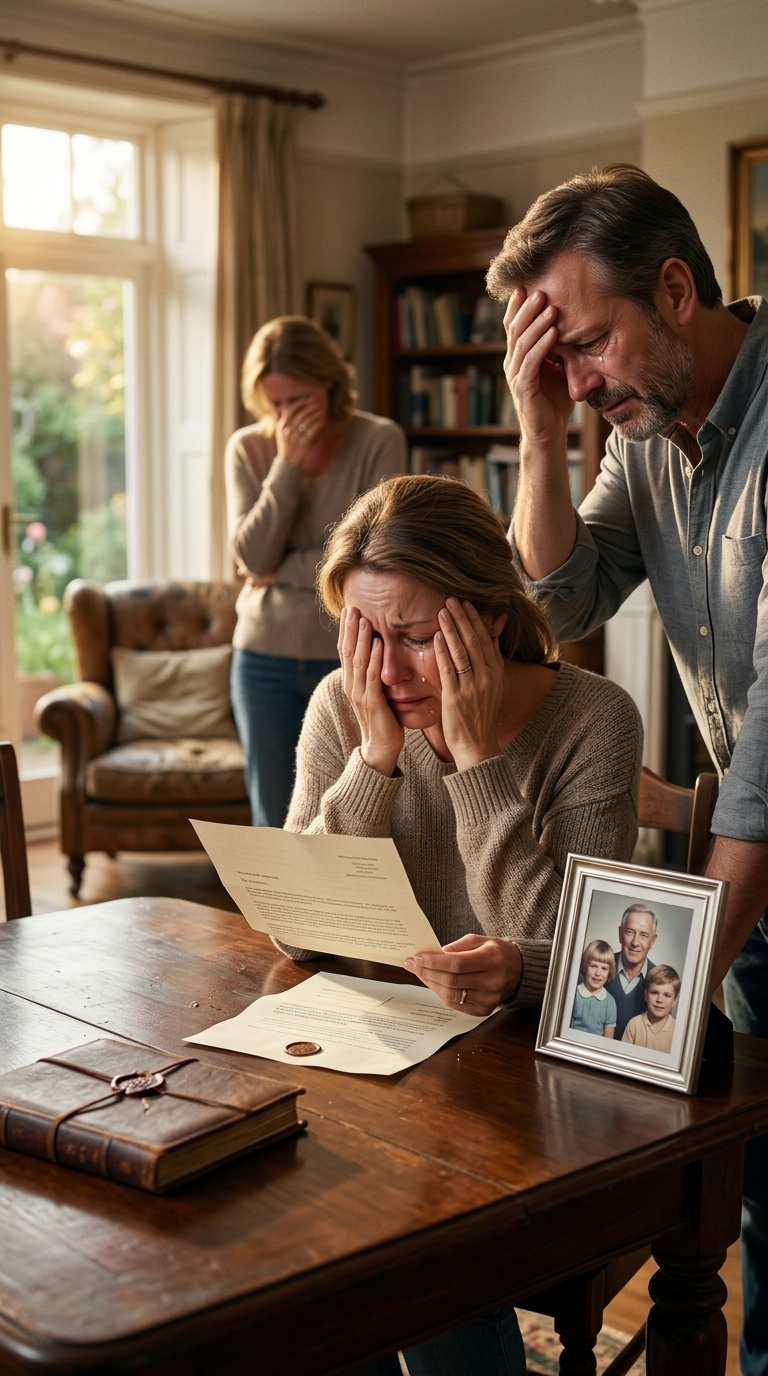
The lawyer slid three envelopes across the table — one for each of them. Frank watched, hands folded, saying nothing.
Michael tore his open first. Inside was a single photograph: himself at seven years old, asleep on Frank’s shoulder at a bus stop, the caption on the back written in Frank’s shaking handwriting — “The night after your mother left. You never knew I walked twelve blocks because I’d sold the car for your school shoes.”
Denise’s envelope held a similar photo — her at her college graduation, Frank in the crowd in a suit he’d rented because he couldn’t afford to buy one. On the back: “I worked a double shift the morning of, so I could leave early to see you cross that stage. I never told you that. I didn’t want you to feel guilty for something that was my joy to give.”
Carl’s held a photo of Frank teaching him to ride a bike, both of them laughing. On the back: “I broke my wrist that summer at the plant, but I still ran behind you every night until you didn’t need me to. That’s what fathers do. We don’t send bills for it.”
The room went silent. Denise was openly crying. Carl’s jaw was tight, his eyes wet, his rehearsed arguments forgotten completely.
Then Frank spoke, his voice steady despite the weight in it.
“I already sold the house,” he said. “Three weeks ago.”
Michael looked up, stunned. “Dad — why would you—”
“Because I didn’t want the last thing you three ever did together to be dividing up wood and drywall,” Frank said. “I used the money to pay off this facility for the next ten years, and to set up a fund — for Willow Creek’s residents who don’t have family who visit. There are a lot of us in here, you know. More than you’d think.”
He looked at each of them in turn, not with anger, but with something gentler and far heavier.
“I don’t need a house,” he said. “I needed my children. For eight months, nobody came. Not for me — just for what I owned.”
Nobody spoke. Denise reached for his hand first. Then Carl. Then Michael, kneeling beside the wheelchair he hadn’t even noticed his father now needed.
Frank didn’t ask for an apology. He simply said, “Come back next Sunday. Just to talk. That’s all I ever wanted.”
They did. Every Sunday after that, for as long as he had left.