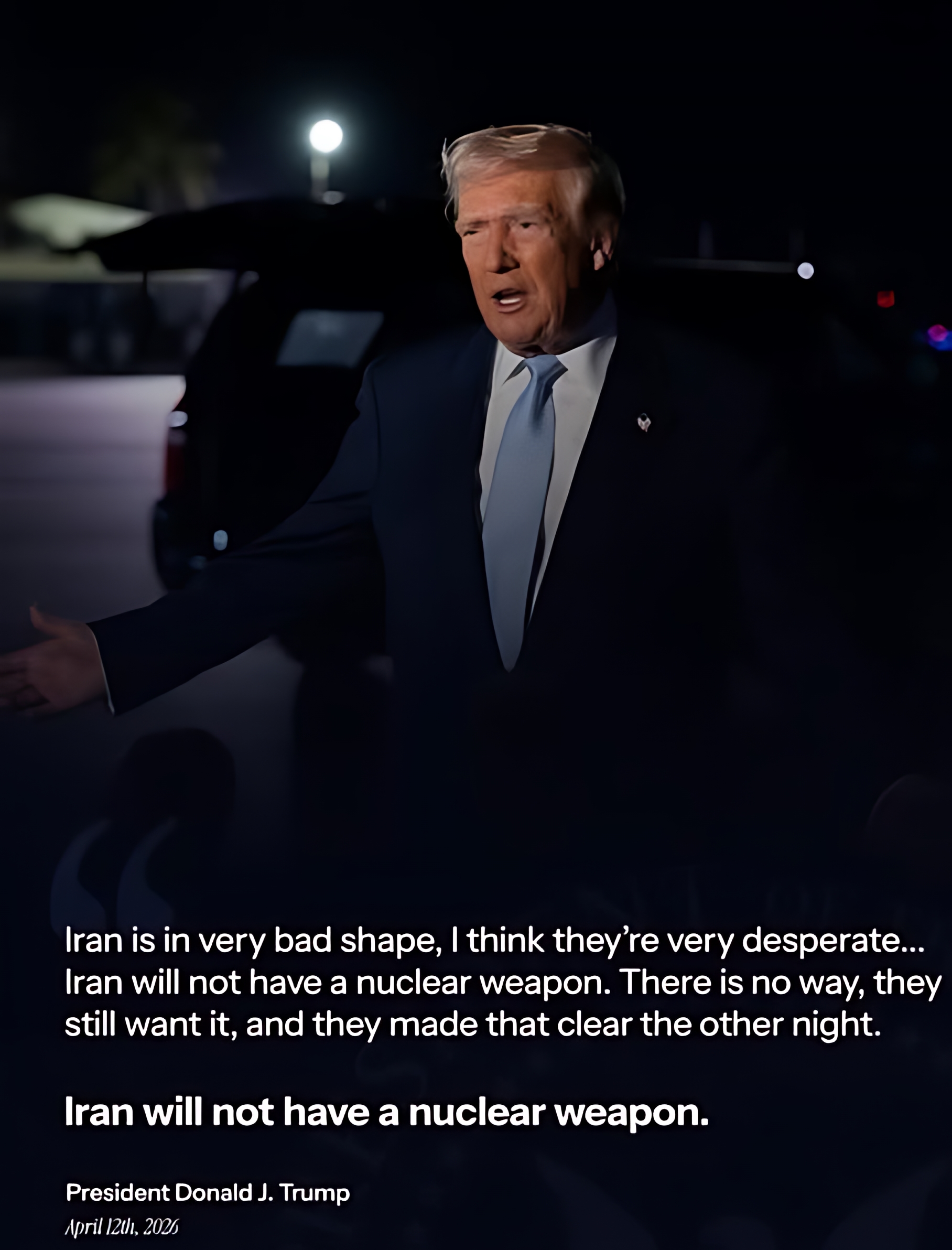
WASHINGTON — President Donald Trump vowed Tuesday that Iran would “never get a nuclear weapon” while he remains in office, issuing one of his strongest public assurances yet as tensions between Washington and Tehran continue to shape global security debates.
Speaking from the White House, Trump said his administration has taken “unprecedented steps” to limit Iran’s nuclear capabilities, citing sanctions, military pressure, and ongoing diplomatic efforts. The President did not outline new policy measures but framed the statement as a reaffirmation of his long‑standing position.
“As long as I am President, Iran will never have a nuclear weapon,” Trump said. “Not now, not ever.”
The remarks come amid renewed scrutiny of Iran’s nuclear program and questions about the future of international monitoring agreements.
Background: A Long‑Running Flashpoint
Iran’s nuclear ambitions have been a central issue in U.S. foreign policy for more than two decades. The 2015 nuclear agreement — known as the Joint Comprehensive Plan of Action (JCPOA) — placed limits on Iran’s enrichment activities in exchange for sanctions relief. The Trump administration withdrew from the deal in 2018, arguing it was insufficient and allowed Iran too much room to maneuver.
Since then, Iran has expanded certain nuclear activities, according to international inspectors, while insisting its program is for peaceful energy purposes.
Administration’s Strategy
White House officials say the administration’s approach relies on:
- Economic pressure, including extensive sanctions
- Regional deterrence, with U.S. forces positioned across the Middle East
- Diplomatic isolation, aimed at limiting Iran’s access to global markets
- Negotiation channels, maintained through European and Gulf intermediaries
Officials argue that this combination has constrained Iran’s capabilities, though critics say the absence of a formal agreement has increased long‑term risks.
Iran’s Response
Iranian officials dismissed Trump’s remarks, accusing the United States of “political theatrics” and reiterating that Iran does not seek nuclear weapons. Tehran has long maintained that its nuclear program is civilian in nature, though Western intelligence agencies have raised concerns about past activities.
State media said Iran would continue to expand its nuclear program unless sanctions are lifted.
International Reaction
Global responses reflected ongoing divisions:
- European Union diplomats urged both sides to return to structured negotiations.
- Israel welcomed Trump’s statement, calling Iran’s nuclear ambitions an “existential threat.”
- China and Russia criticized U.S. pressure tactics and called for renewed diplomacy.
Nonproliferation experts say the situation remains volatile, with no clear path toward a long‑term agreement.
What Comes Next
The administration has not announced new policy steps following Trump’s declaration, but officials say nuclear containment will remain a top priority. Analysts expect increased diplomatic activity in the coming weeks as global powers attempt to prevent further escalation.
For now, Trump’s statement underscores the central role Iran’s nuclear program continues to play in U.S. foreign policy — and the high stakes surrounding any future negotiations.