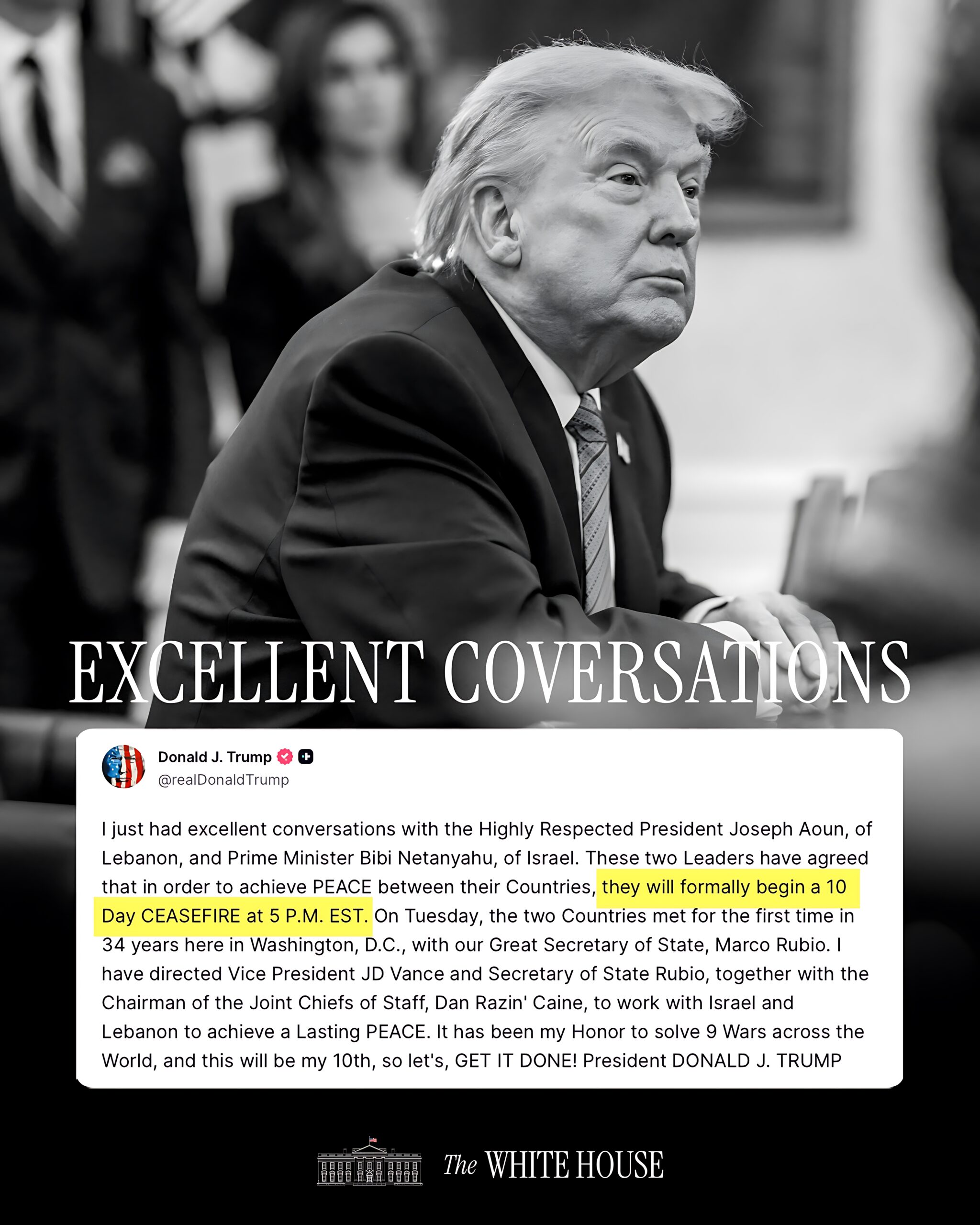
WASHINGTON — President Donald Trump on Friday announced that Israel and Lebanon have agreed to a 10‑day ceasefire, marking the most significant pause in hostilities since cross‑border clashes intensified earlier this year.
Speaking from the White House, Trump framed the agreement as part of his broader record on global conflict resolution.
“It has been my honor to solve nine wars across the world, and this will be my tenth, so let’s GET IT DONE,” Trump said, calling the ceasefire a “major step toward stability.”
The White House said the truce will take effect immediately and includes commitments from both sides to halt artillery fire, drone activity, and cross‑border raids.
How the Ceasefire Came Together
Senior administration officials said the agreement followed several days of intensive diplomacy involving U.S., French, and Qatari intermediaries. American negotiators held separate talks with Israeli and Lebanese officials, including indirect communication with Hezbollah through regional channels.
According to officials, the ceasefire includes:
- A 10‑day halt to offensive military operations
- A mechanism for rapid communication to prevent miscalculation
- U.S. monitoring through military and intelligence assets
- A commitment to explore longer‑term de‑escalation after the pause
The administration described the deal as “fragile but promising.”
Reactions From the Region
Israeli officials welcomed the pause but emphasized that the military remains prepared to respond to any violations. Lebanese officials, facing domestic pressure to avoid a wider conflict, said the ceasefire was “necessary to protect civilians” but warned that long‑term stability requires addressing border disputes and militia activity.
Hezbollah has not publicly commented, though Lebanese media reported that the group agreed to the pause under “specific conditions.”
International Community Responds
European governments praised the announcement, urging both sides to use the 10‑day window to pursue broader negotiations. The United Nations said it would increase monitoring along the Blue Line to help maintain calm.
Energy‑importing nations in Asia also expressed relief, noting that the conflict had raised concerns about potential disruptions to regional shipping routes.
Analysts: A Temporary Pause, Not a Resolution
Foreign‑policy experts say the ceasefire is a meaningful but limited achievement.
“A 10‑day pause is valuable, but it’s not a political settlement,” said one Middle East analyst. “It buys time — nothing more.”
Analysts also noted that Trump’s framing of the ceasefire as his “tenth solved war” reflects his emphasis on personal diplomacy and high‑visibility foreign‑policy moments.
What Comes Next
U.S. officials say the next 48 hours will be critical in determining whether the ceasefire holds. If successful, the administration hopes to expand the pause into a longer‑term de‑escalation agreement.
For now, the announcement marks a rare moment of calm in one of the region’s most volatile flashpoints — and a high‑profile diplomatic victory the White House is eager to highlight.