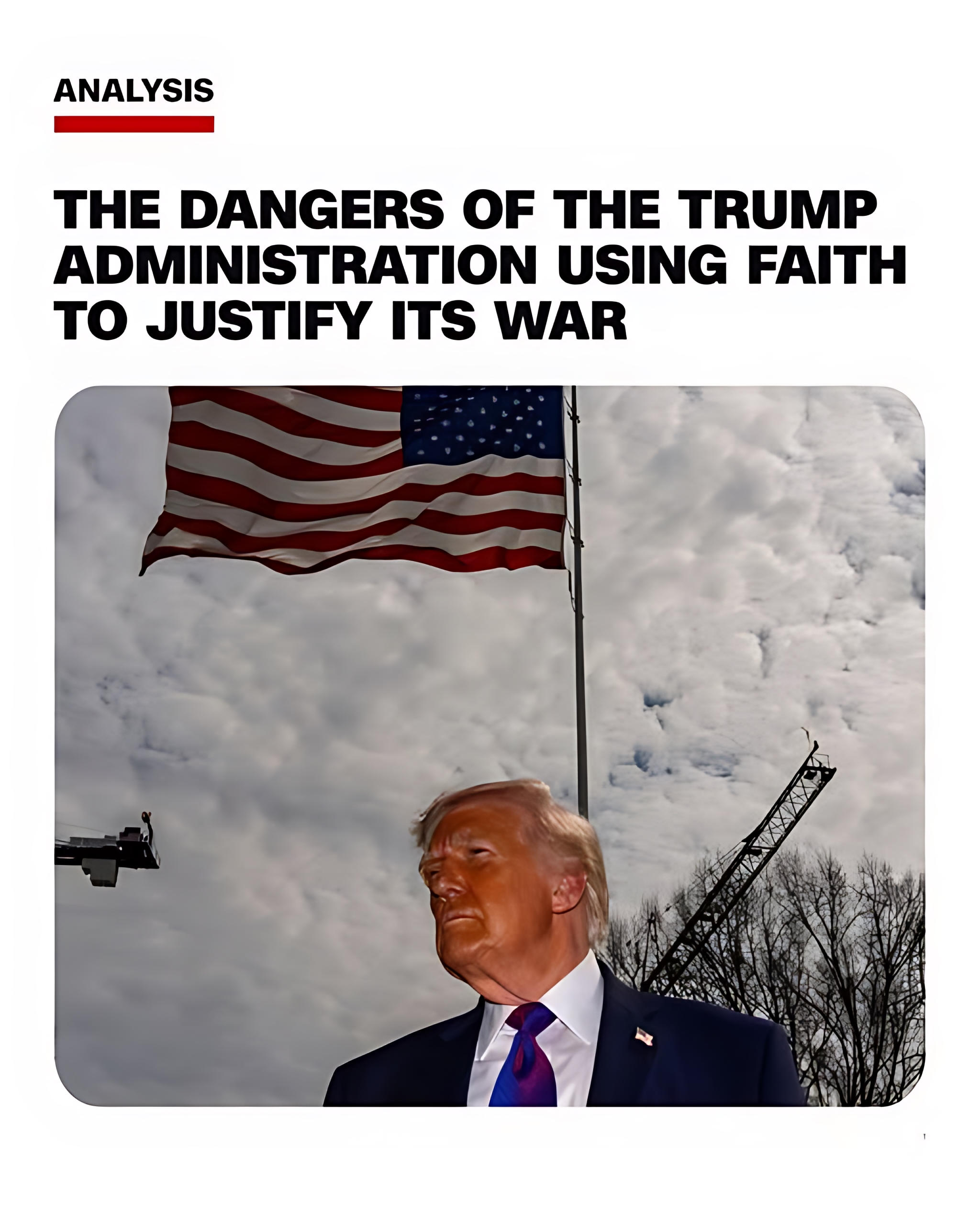
WASHINGTON — A new analysis from CNN columnist Stephen Collinson argues that the Trump administration’s use of religious language to frame the Iran war marks a significant departure from long‑standing presidential tradition, raising concerns about the blurring of faith and military policy.
In his column, Collinson writes that American presidents have historically invoked God’s blessing in wartime, often as a gesture of comfort to troops and the nation. But he warns that the Trump administration’s rhetoric goes further, suggesting a form of divine validation for its military decisions.
“American presidents have long sought God’s benediction in wartime and for soldiers heading into the fire of battle,” Collinson writes. “But the Trump administration’s willingness to imply divine endorsement of its authority and to cloak its war in Iran with faith‑based righteousness threatens to erode yet another long‑held political tradition.”
The commentary comes as the administration continues to defend its military operations in the Gulf and its broader strategy toward Iran.
A Shift in Tone From Past Administrations
While presidents from Franklin D. Roosevelt to Barack Obama have invoked faith during national crises, analysts note that such appeals were typically framed as calls for unity or moral clarity — not as justification for specific military actions.
Collinson argues that the Trump administration’s language represents a shift toward portraying its Iran policy as divinely sanctioned, a move he says could deepen political polarization.
Several religious scholars quoted in the piece echoed concerns about merging theological claims with wartime decision‑making, warning that it risks alienating Americans who do not share the administration’s religious framing.
White House Defends Its Messaging
Administration officials have dismissed criticism of their rhetoric, saying references to faith are consistent with long‑standing presidential tradition and reflect the president’s desire to support U.S. service members.
A senior official said the administration “does not claim divine authority” but believes that “faith is an important source of strength for many Americans during conflict.”
Broader Debate Over Religion and Politics
The discussion comes amid a wider national debate over the role of religion in public life, particularly as political leaders increasingly use faith‑based language to appeal to their constituencies.
Political historians note that while religious references have always been part of American political culture, explicit suggestions of divine endorsement for military action have been rare — and often controversial.
What Comes Next
As the Iran conflict continues, analysts expect the administration’s messaging to remain under scrutiny. Collinson argues that the stakes extend beyond the current war, warning that the normalization of religious justification for military action could reshape expectations for future presidents.
For now, the debate underscores the delicate balance between faith, politics, and national security — and the evolving ways presidents communicate during wartime.