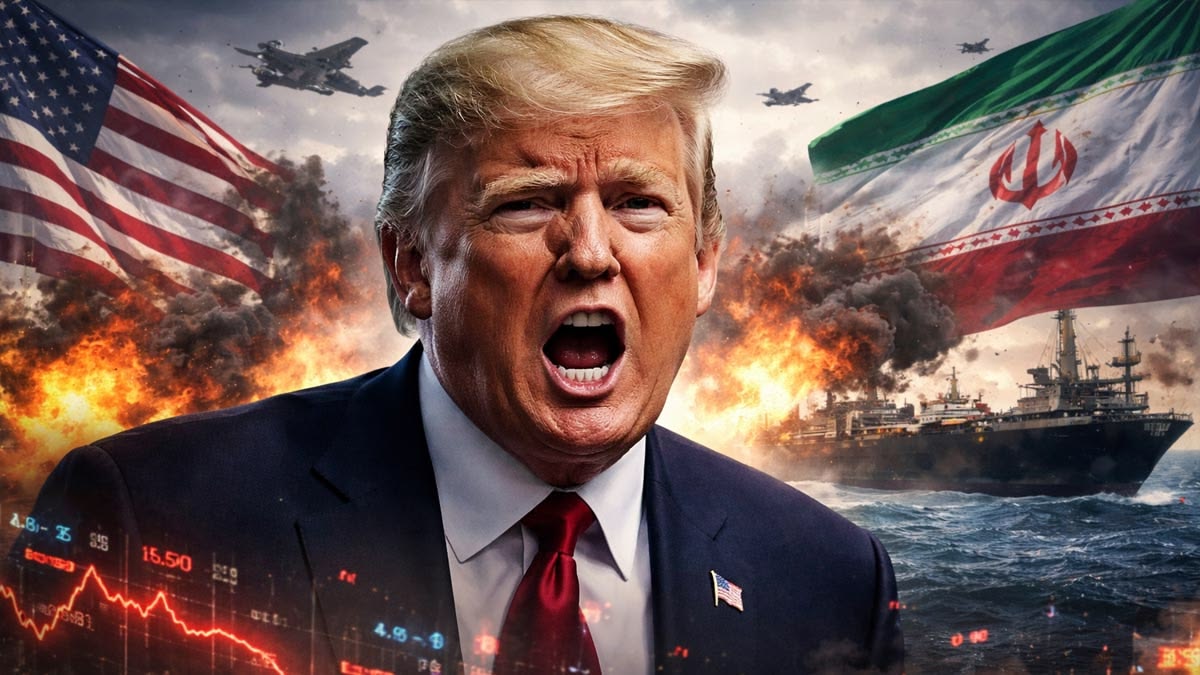
WASHINGTON — President Donald J. Trump said Sunday that U.S. forces have seized the Iranian‑flagged cargo ship Touska after the USS Spruance intercepted the vessel in the Gulf of Oman and disabled it by firing into its engine room following “hours of warnings.”
U.S. Central Command (CENTCOM) later confirmed that U.S. Marines boarded the ship and that it remains in American custody as officials assess its cargo and crew.
“The Touska refused repeated instructions to halt,” Trump said. “After hours of warnings, the USS Spruance took action to stop the vessel, and our Marines secured it without further incident.”
The White House did not provide details on what prompted the intercept, though U.S. officials have accused Iran in recent weeks of using commercial vessels to move military equipment amid the ongoing conflict.
CENTCOM: Boarding Conducted Without Casualties
CENTCOM said the boarding operation was carried out by a Marine detachment operating from a nearby amphibious ship. Officials said no U.S. personnel were injured and that the crew of the Touska is being held safely while the vessel undergoes inspection.
A CENTCOM spokesperson said the ship “posed a potential threat to regional security” but did not elaborate on what intelligence led to the decision to stop it.
Iran Has Not Yet Responded Publicly
Iranian state media had not issued an official response as of Sunday evening. Analysts say Tehran is likely to condemn the seizure, which comes at a time of heightened maritime tension and repeated confrontations in the Gulf of Oman and Strait of Hormuz.
A Significant Escalation at Sea
The incident marks one of the most direct U.S. actions against an Iranian‑flagged commercial vessel since the conflict began. Maritime security experts said firing into a ship’s engine room — even in a controlled manner — represents a serious escalation, though the U.S. emphasized that the action was taken only after prolonged warnings.
A former Navy officer said the tactic is designed to “disable propulsion without endangering the crew,” but noted that such operations carry inherent risks.
Regional and International Reaction
Early reactions from European and Gulf governments focused on concerns about further destabilization of shipping lanes. Oil markets, already sensitive to disruptions in the region, saw modest price fluctuations following the announcement.
Diplomats said the seizure could complicate ongoing negotiations aimed at reducing hostilities and securing maritime corridors.
What Comes Next
CENTCOM said the Touska will be moved to a secure location for a full inspection. U.S. officials have not indicated whether the ship will be released, impounded, or used as leverage in ongoing diplomatic efforts.
For now, the seizure underscores the volatility of the Gulf of Oman and the increasingly confrontational nature of U.S.–Iran interactions at sea.