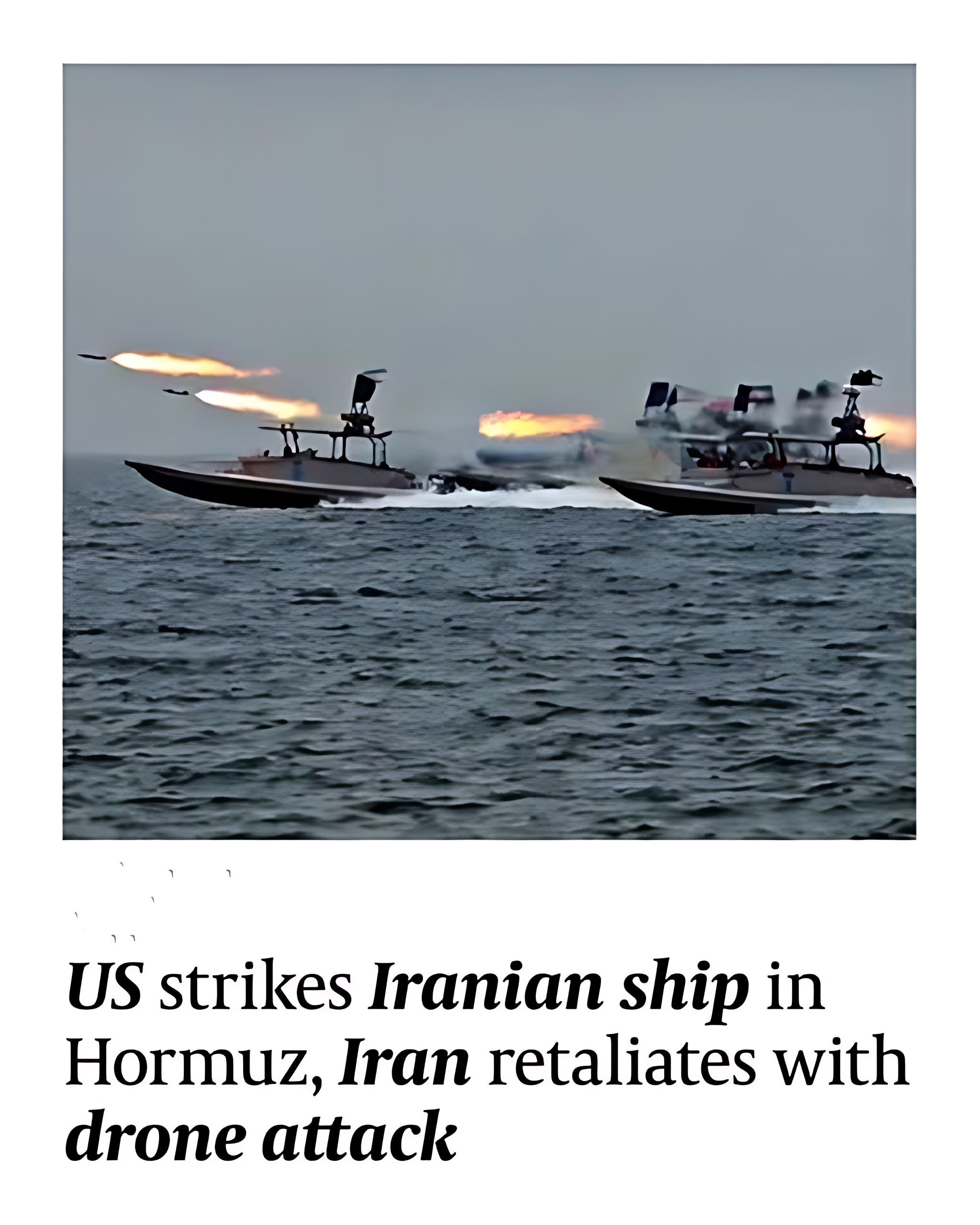
WASHINGTON / TEHRAN — Tensions in the Gulf escalated sharply this week after U.S. forces struck an Iranian vessel in the Strait of Hormuz, prompting a retaliatory drone attack by Iran against American positions in the region, according to officials from both governments.
The Pentagon confirmed that a U.S. Navy destroyer engaged the Iranian‑flagged ship after it allegedly ignored repeated warnings and made what officials described as “hostile maneuvers” near a convoy of commercial tankers. The strike reportedly disabled the vessel, which was later seen burning before being towed by Iranian rescue craft.
“U.S. forces acted in self‑defense after multiple warnings were disregarded,” a Defense Department spokesperson said. “The engagement was limited and precise.”
Iranian state media called the strike an “act of aggression” and said the country’s military responded by launching a coordinated drone attack on what it described as “U.S. naval assets and logistics sites” near the Gulf of Oman. U.S. Central Command confirmed that several drones were intercepted, with minor damage reported to one support vessel.
Escalation in a Strategic Waterway
The Strait of Hormuz — a narrow passage through which roughly one‑fifth of the world’s oil supply travels — has been the focal point of repeated confrontations between U.S. and Iranian forces since the start of the conflict.
Military analysts said the latest exchange represents one of the most direct clashes between the two nations in recent weeks and could further destabilize global shipping routes.
A senior regional diplomat described the situation as “extremely volatile,” warning that any miscalculation could trigger a broader confrontation.
Iran’s Response and Domestic Messaging
Iran’s Revolutionary Guard issued a statement vowing “swift and decisive retaliation” for what it called a violation of its territorial waters. State television broadcast footage of drones taking off from coastal bases, claiming they had “successfully targeted enemy positions,” though U.S. officials disputed that any major damage occurred.
Crowds gathered in Tehran on Monday evening for what state media described as “solidarity demonstrations” supporting the military’s response.
International Reaction
European and Gulf governments urged restraint, calling for immediate diplomatic engagement to prevent further escalation. Oil prices rose sharply in early trading, reflecting market fears of disruption to maritime traffic through the Strait.
The United Nations Security Council scheduled an emergency session to discuss the incident, with several members calling for an independent investigation.
What Comes Next
U.S. officials said naval forces remain on high alert and that additional defensive measures are being deployed in the region. Iranian commanders warned that any further attacks would be met with “expanded operations.”
For now, the exchange underscores the fragility of the Gulf’s security environment — and the growing risk that a single confrontation could ignite a wider regional conflict.