A heartbreaking short story
The apartment was quiet — the kind of quiet that hums in your ears until you start talking to yourself just to hear a voice.
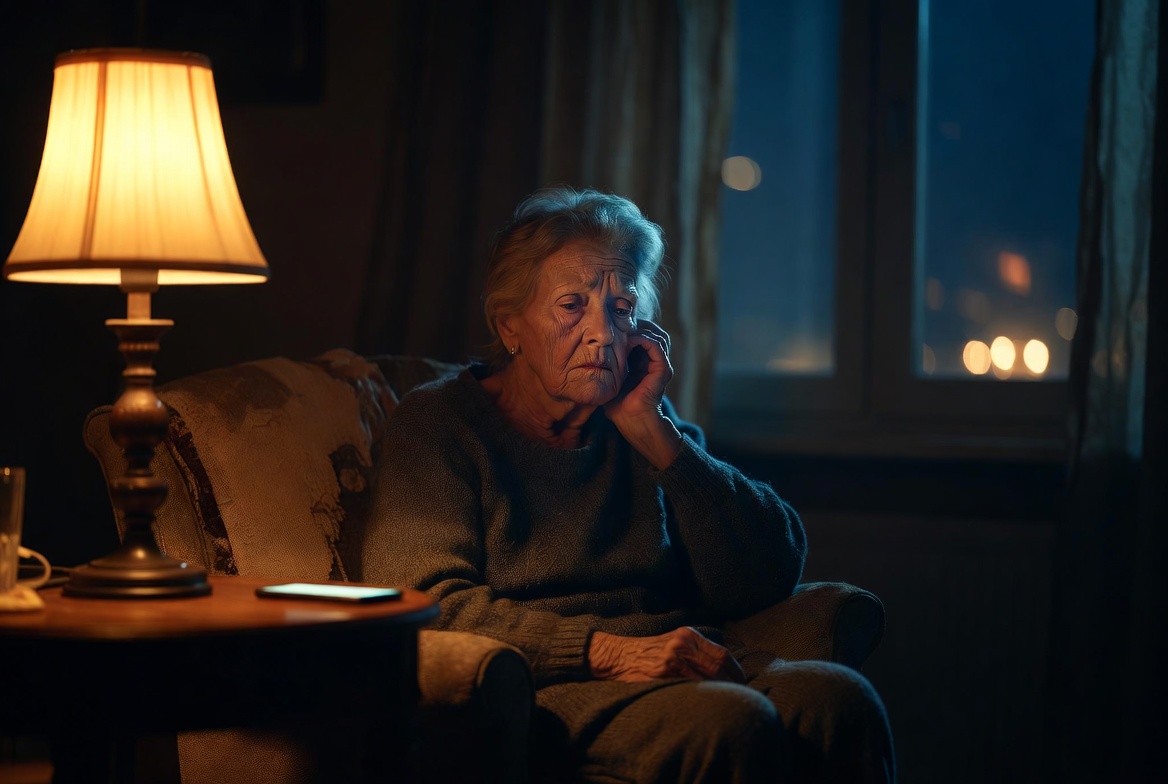
Eleanor, age 70, sat in her worn armchair by the window, the phone resting on the small table beside her. It was plugged in, charged, volume turned all the way up. She checked it every morning, every night, just to make sure it was ready.
Her son, David, had promised he’d call every Sunday.
That promise had become her calendar. Her reason to stay awake. Her reason to keep the phone close, even when she slept.
But Sundays came and went. First one missed call. Then two. Then ten. Weeks turned into months, and the silence grew heavier — like dust settling on everything she loved.
She still kept the phone beside her chair. Still waited. Still hoped.
Sometimes she imagined it ringing. She’d reach for it, heart racing, only to realize it was just the sound of the refrigerator humming.
One night, after dinner — a single bowl of soup and crackers — she stared at the phone for a long time. Her reflection shimmered faintly in the black screen. She hadn’t called him herself in years. She didn’t want to be a burden. Didn’t want to sound needy.
But loneliness has a way of breaking pride.
Her hand trembled as she dialed his number. She knew it by heart — muscle memory from a time when he used to call just to say, “Love you, Mom.”
The line rang once. Then went straight to voicemail.
She waited for the beep, then spoke softly, her voice fragile but steady.
“Hi sweetheart… it’s Mom. I just wanted to hear your voice.”
She paused, as if he might pick up mid‑message. He didn’t.
“I hope you’re okay,” she whispered. “I miss you.”
She hung up and stared at the phone for a long time, as if it might ring back out of guilt.
It didn’t.
Outside, the city lights flickered. Inside, the silence pressed against her chest.
She turned off the lamp, leaving the phone glowing faintly in the dark — a small, lifeless promise beside her chair.
Theme: The crushing silence between parents and adult children — the kind that doesn’t come from anger, but from neglect disguised as “busy lives.”