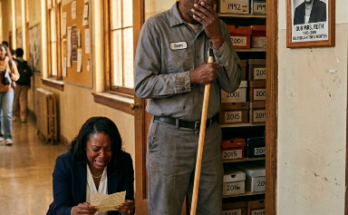
Madison Reed’s graduation celebration was meant to symbolize achievement, perseverance, and the quiet triumph of a young woman who had spent years building a life from limited resources. The event took place in her parents’ backyard outside Columbus, a neighborhood where familiarity and pretense coexisted. Her mother had spent days preparing the decorations—white folding chairs, blue table runners, potted plants, and the scent of roasted chicken and cornbread drifting through the patio doors.
For Madison, the day represented more than a degree. It marked the culmination of balancing full‑time studies, part‑time work, and the slow construction of a small but steadily growing business. Her early office had been a folding desk beside a drafty window; her equipment was secondhand; her hours were long. Yet the work was real, the income was real, and the independence she carved out for herself was real.
This celebration was supposed to belong to her.
Madison’s family communicated through a pattern of humor that carried an undercurrent of criticism. Comments were rarely direct; instead, they were wrapped in affection, leaving the recipient unable to respond without being labeled “too sensitive.”
Her mother joked, “We better celebrate now before you become some rich businesswoman and forget the rest of us.”
It was a familiar rhythm—sharpness disguised as warmth.
Madison had learned early that the safest role was agreeable. Smile, nod, move on. Any attempt to push back was interpreted as defiance. Over time, she understood that “difficult” was simply another word for “inconvenient.”
Daniel, her older brother, entered the celebration with the same effortless confidence he had carried since adolescence. He wore a crisp shirt and an expensive watch—items Madison knew he had not purchased through stable income.
He greeted her loudly, drawing attention from relatives:
“Look at our graduate. Don’t act too successful for the rest of us.”
Madison laughed, as she always did.
He hugged her and whispered, “Proud of you, kid.”
Despite everything, she wanted that version of him to be real—the brother who once held her hand walking to school, who defended her from teasing, who shared snacks when their mother refused. She searched for that boy long after adulthood had reshaped him into someone unreliable.
Daniel’s life operated in cycles of grand plans: music, real estate, fitness coaching, startups, investments. Each new dream required support, and that support inevitably came from Madison. She had funded a shared startup account, provided business loans, covered mortgage payments, and sent emergency transfers. Temporary help became permanent expectation.
Whenever she hesitated, he used the same phrase:
“Come on, Maddie. We’re family.”
Family—the most expensive word she ever learned.
As sunset approached, the cake was brought out—white frosting, blue flowers, “Congratulations Madison.” Guests gathered, phones ready. Someone asked for speeches.
Madison noticed Daniel moving toward the microphone. A quiet hope rose inside her.
Maybe he’ll say something kind.
Maybe today will be different.
He tapped the microphone. Conversations faded. Their mother looked emotional.
Daniel lifted his cup.
“I wanna say something about my little sister.”
People smiled.
Someone whistled.
Madison smiled too.
Then he delivered the line that would fracture the evening:
“Let’s raise a glass to the family black sheep who somehow managed to get a degree.”
Laughter erupted.
Not everyone laughed, but enough did. Enough to make the moment unforgettable.
Her mother laughed softly—just enough to signal agreement.
Madison smiled automatically, performing the role she had been assigned since childhood.
Inside, everything went still.
The humiliation did not explode outward; it settled inward, like a tectonic shift beneath calm ground. Madison continued smiling, continued thanking guests, continued playing the part expected of her. But something foundational had changed.
Three days later, she acted on that shift.
Unbeknownst to her family, Madison’s business had grown far beyond what they assumed. She had secured partnerships, built a client base, and managed her finances with discipline. She had also been quietly supporting Daniel’s ventures—funding a loan that kept his company afloat and covering mortgage payments he could not manage.
After the graduation incident, she reviewed the accounts, the transfers, the obligations she had carried alone. She made a decision.
She shut down the loan funding his company.
She ended the mortgage payments.
The financial safety net Daniel relied on disappeared overnight.
Daniel reacted with disbelief, then anger. He attempted to move into her apartment without permission, insisting he had a right to the space because “family helps family.” When she refused, he attacked her online—posting insults, twisting narratives, portraying her as ungrateful and selfish.
He believed she had no leverage.
He believed she would fold, as she always had.
He believed she had nothing to protect herself.
He was wrong.
Madison opened a folder she had kept for years—documents, screenshots, messages, agreements, and financial records. It contained every transfer, every loan, every promise, every instance of manipulation.
It was the history of their relationship, preserved in writing.
It was the truth he assumed she would never gather.
This folder represented the moment she stopped being the family’s silent, agreeable daughter and became the architect of her own boundaries.
Madison’s story is not about revenge. It is about reclamation.
It is about a woman who spent years absorbing disguised insults, carrying financial burdens, and performing emotional labor for a family that mistook her kindness for weakness.
The graduation speech was not the beginning of her transformation—it was the final catalyst.
By shutting down the loan, ending the mortgage payments, and revealing the folder of evidence, Madison dismantled the narrative that had defined her for years.
She was no longer the black sheep.
She was the one who finally stopped pretending the wool fit.