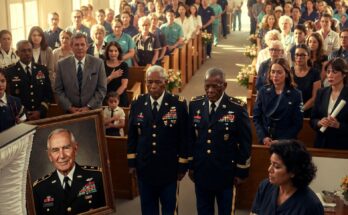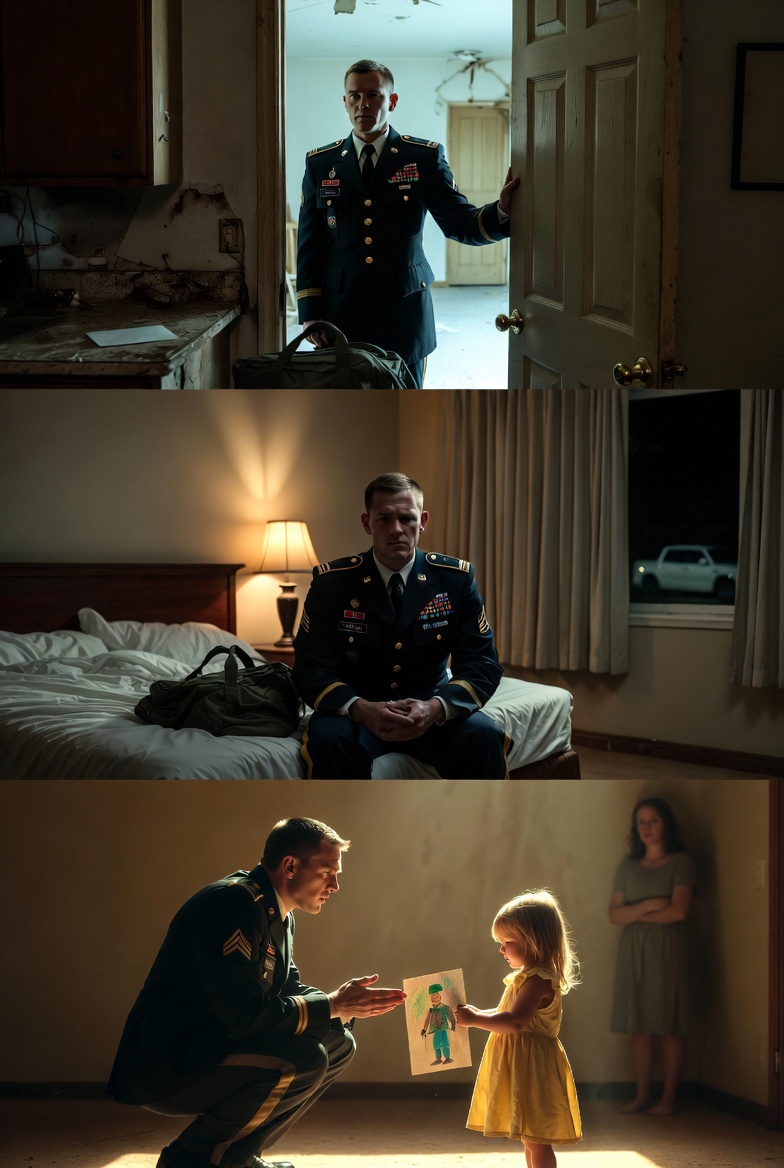
Caleb spent eleven days in that motel room.
He wasn’t hiding. He simply had nowhere that felt like forward yet, and he was disciplined enough to know that moving before you have direction is just motion — it isn’t progress.
He ate. He slept in fragments. He stared at the ceiling and conducted the kind of honest internal inventory that most people spend their entire lives successfully avoiding.
He had survived enemy fire, dehydration, temperatures that cracked equipment, and grief that had no formal ceremony. He had held a dying man’s hand in a foreign desert and promised him his family would know he was brave.
He could survive this too.
But surviving and living are separated by a distance that doesn’t appear on any map.
The VA appointment was on day twelve. A standard reintegration assessment — forty minutes, a checklist, a counselor who meant well but had seen so many men in that chair that genuine curiosity had been replaced with efficient processing. Caleb answered every question honestly and was referred to a group therapy program that met on Tuesday evenings.
He went.
Not because he believed it would fix anything. Because showing up was the only move he knew how to make.
The group was eight veterans. Different branches, different wars, different wounds. Some visible, most not. They sat in a circle in a community center on folding chairs and said true things out loud in a room where true things were permitted.
It didn’t fix anything.
But it cracked something open that needed air.
The custody process was painful in the methodical way that legal proceedings are — not dramatic, just slow and grinding and full of documents that reduce a human life to line items. Sandra had retained a sharp attorney. Caleb represented himself initially, until another veteran in his group connected him with a nonprofit legal organization that served military families.
They helped him build his case quietly and thoroughly.
The judge — a woman in her sixties who had a son who served — read Caleb’s file with visible attention. Sandra’s attorney presented a picture of a man perpetually absent, perpetually unavailable.
Caleb’s attorney presented twenty-two months of deployment orders, commendations, and a letter from Caleb’s commanding officer describing his character in terms that made two people in the courtroom visibly emotional.
He was awarded regular visitation. Structured, supervised initially — Sandra’s one firm condition — but consistent.
The first visit, Lily stood behind Sandra’s leg and looked at him with enormous careful eyes.
He crouched down to her level.
He didn’t rush her. Didn’t reach for her. Just said her name softly and told her he had been very far away but that he thought about her every single day and he was so happy to see her.
She studied him for a long moment.
Then she took two small steps forward and handed him the crayon drawing she’d been holding behind her back.
It was a picture of a man in a uniform.
“Mama showed me your picture,” she said quietly. “I drawed you.”
Caleb took the drawing with both hands.
He held it together until he got back to his car.
Then he pressed that crayon drawing against his chest — the left side, where it mattered most — and wept the way soldiers weep when no one is watching. Completely. Without apology.
He still has that drawing.
It’s framed now, on the wall of the small apartment where he rebuilt his life — one Tuesday group session, one custody visit, one honest day at a time.
Lily is seven now. She calls him Daddy without hesitation.
And every time she does, Caleb Morrison remembers why coming home was worth fighting for.
He fought for this country and came home to an empty house. But he kept fighting — for his daughter, for himself, for the life he deserved. Share this for every veteran who came home to silence when they deserved a parade. 🇺🇸🙏 Tag someone who needs to read this.