It was David Carr who found out first.
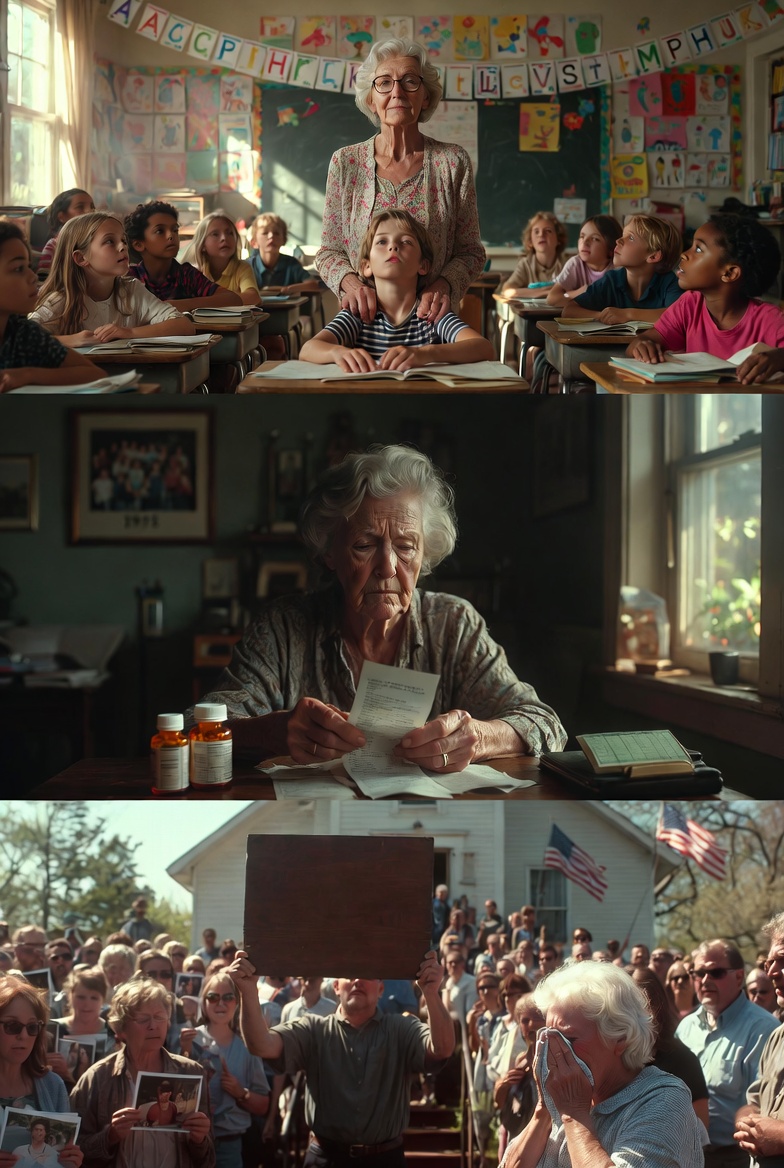
He was forty-one years old, owned a small contracting business in town, and had learned to read in Margaret Hollis’s classroom in 1991. He remembered specifically — a Tuesday afternoon, a book about a dog named Chester, the exact moment the symbols stopped being obstacles and became words. He remembered looking up at Mrs. Hollis and she had been watching him with an expression he only understood much later as quiet joy.
He heard about her passing through a mutual acquaintance. Heard, almost as an aside, that arrangements were complicated because there were no funds.
David sat in his truck in a parking lot for ten minutes.
Then he called his wife. Then he called his business partner. Then he opened Facebook and wrote something that was not polished or particularly well-constructed but was completely honest.
He wrote that Mrs. Margaret Hollis had died. That she had taught third grade for forty-two years. That she had spent her own money on their supplies, their snacks, their winter coats when they needed them. That she had died with forty-seven dollars and no funeral arrangements. And that he personally was contributing the first five hundred dollars toward changing that and wanted to know if anyone else remembered her.
He posted it at 9:14 on a Wednesday morning.
By noon it had been shared four hundred times.
By Thursday evening the fund had received contributions from thirty-one states.
Former students emerged from every decade of her career — now doctors, teachers, mechanics, nurses, parents, grandparents — each carrying a specific memory of something Margaret had done that had lodged permanently in their formation as human beings. The boy she had stayed after school with every Tuesday for a semester because he was dyslexic and the system had no resources allocated for him. The girl she had noticed crying at recess and had sat with quietly until the girl was ready to talk. The child who had arrived in her classroom unable to look adults in the eye and had left it eight months later reading chapter books aloud to the class with visible pride.
Margaret had never spoken of any of it.
They spoke of it now.
The funeral fund reached its goal in thirty-six hours. It exceeded the goal by the end of the week. The excess was directed — unanimously, by community vote in the comments section of David’s post — toward a classroom supply fund at the school where Margaret had taught, to ensure teachers never had to choose between their rent and their students’ pencils.
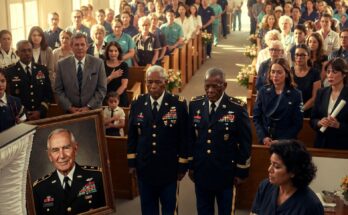
The funeral was full.
Standing room. People lined the walls. Former students drove from four states. A woman who had been in Margaret’s very first class in 1978 sat in the front row — she was a grandmother now — and wept with the particular grief of someone who understood exactly what had been lost.
The school renamed the third-grade hallway.
Not with ceremony or politics or budget allocation.
A former student who did woodworking made the sign himself. Sanded smooth. Stained dark walnut. Mounted on the wall outside the classroom where Margaret had spent the better part of her entire life.
The Margaret Hollis Hall.
Underneath, a smaller line:
She taught us how to read. We hope we learned how to see.
David Carr stood in that hallway after the dedication and looked at the sign for a long time.
Then he thought about a Tuesday afternoon in 1991. A book about a dog named Chester. A woman watching him with quiet joy.
He thought about how a person can change the entire trajectory of a life in a single afternoon and never know it.
Margaret knew.
She always knew.
She just never needed the credit.
She gave forty-two years and every spare dollar she had to children who needed her. She deserved so much better from the world that benefited from her. Share this for every teacher who gives more than anyone sees. 🍎🙏 Tag a teacher who changed your life — they need to hear it today.