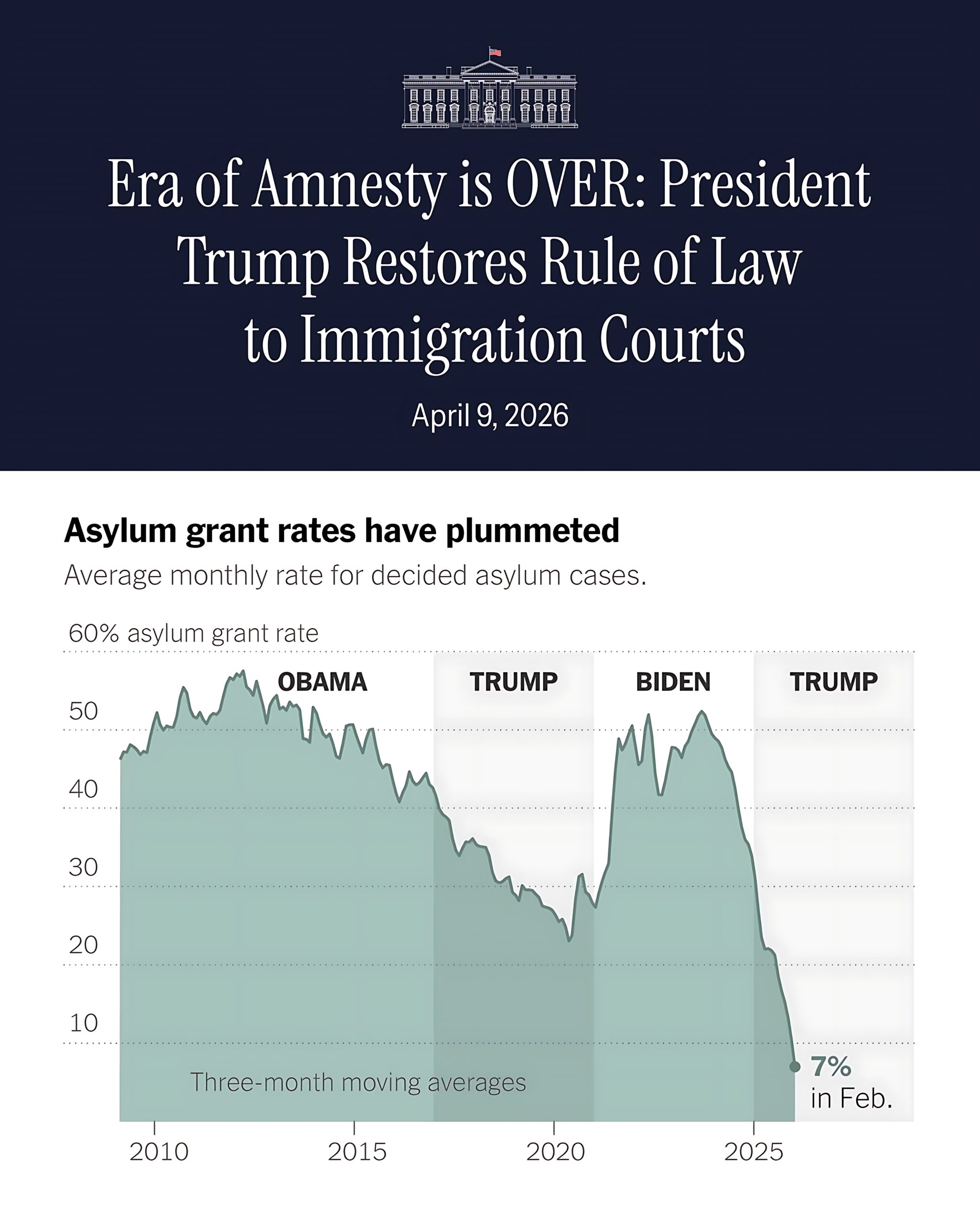
WASHINGTON, D.C. — President Donald J. Trump issued sharp criticism of the nation’s immigration court system, arguing that years of policy changes and rising caseloads have created what he described as “chaos” and significant delays in adjudicating cases. His remarks come as the administration announces a series of planned reforms aimed at reducing backlogs and tightening procedural standards.
In a statement, the president claimed that immigration courts had become “amnesty factories for unvetted individuals” and accused some judges of enabling prolonged delays in removal proceedings. “No more activist judges shielding criminal illegals. No more endless delays. Only results,” he said, framing the changes as part of a broader effort to restore what he called order and accountability to the system.
A System Under Strain
The U.S. immigration court system, overseen by the Department of Justice, has faced mounting pressure for years. According to government data, the backlog of pending cases has grown significantly over the past decade, driven by increased migration, staffing shortages, and shifting enforcement priorities.
Legal analysts note that the courts have struggled to balance due process requirements with the sheer volume of cases. Many hearings are scheduled months or years in advance, and both Republican and Democratic administrations have faced criticism for failing to address structural challenges.
Details of the Administration’s Planned Changes
While the administration has not yet released a full policy blueprint, officials have signaled several areas of focus:
- Streamlining case processing to reduce multi-year delays
- Revising internal guidelines for immigration judges
- Increasing resources for enforcement and adjudication
- Reevaluating criteria for asylum and other forms of relief
Supporters of the reforms argue that faster, more consistent rulings will deter unlawful entry and reduce incentives for migrants to remain in the country while awaiting hearings.
Critics Raise Concerns About Due Process
Immigration advocates and legal scholars have expressed concern that accelerated timelines could limit migrants’ ability to obtain legal representation or gather evidence for their cases. Some groups warn that framing judges as “activists” risks undermining judicial independence within the immigration system, which already operates differently from traditional federal courts.
Several organizations have called for broader reforms, including increased staffing, independent court oversight, and updated legal standards that reflect current global migration patterns.
Looking Ahead
The administration is expected to release more detailed policy proposals in the coming weeks. As the debate continues, immigration courts remain a focal point in the broader national conversation about border policy, enforcement, and the balance between security and humanitarian obligations.