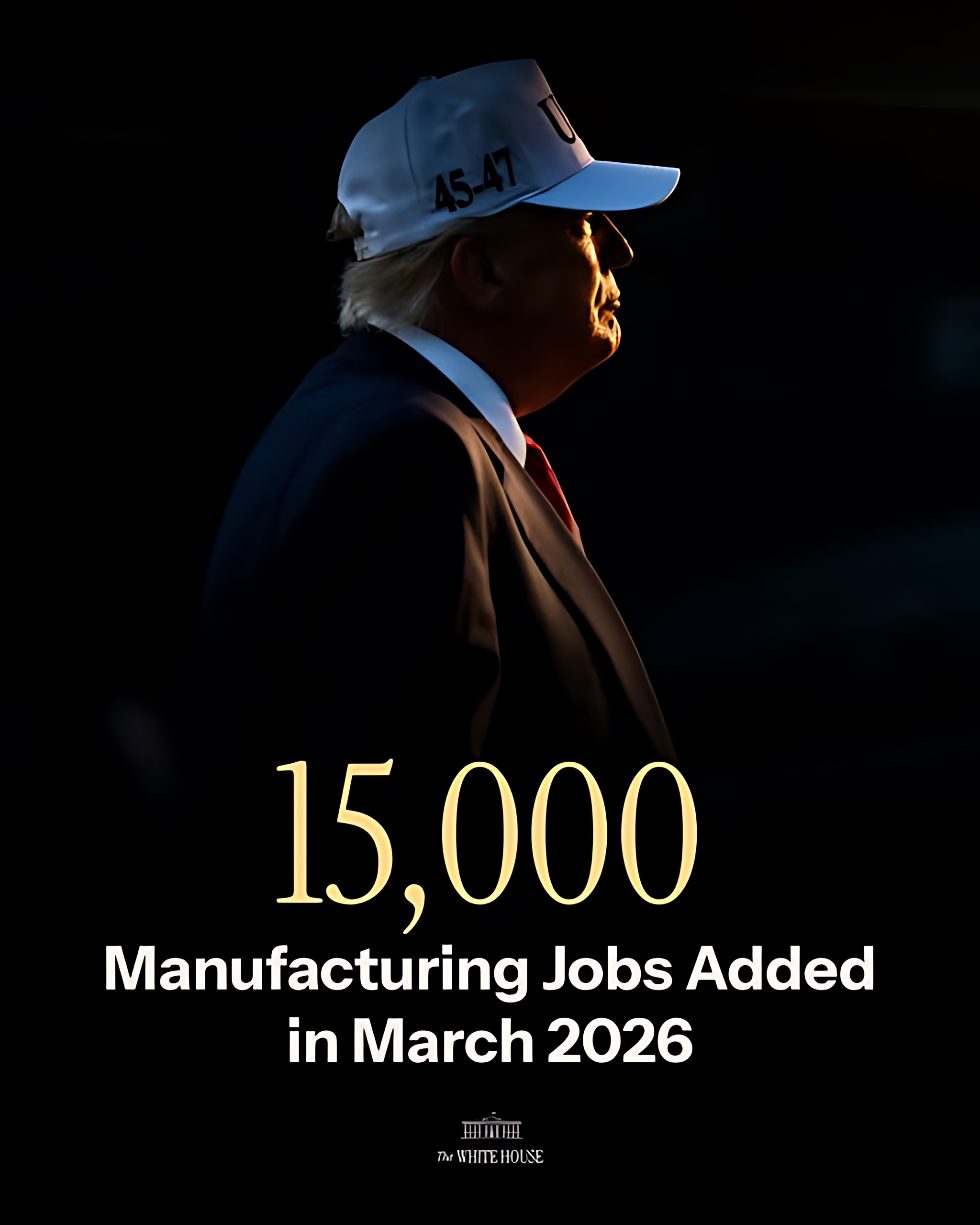
WASHINGTON — The White House said Wednesday that American manufacturing is experiencing its first positive job growth in three years, crediting President Donald Trump’s re‑shoring agenda for what officials describe as a “clear reversal” of the sector’s decline during the previous administration.
New federal labor data shows a modest but measurable uptick in manufacturing employment during the first quarter of the year. Administration officials say the gains reflect a broader shift in corporate investment, with more companies announcing plans to expand or relocate production inside the United States.
“American manufacturing is back,” a senior administration official said. “We are finally seeing the results of policies designed to bring jobs home and rebuild the industrial base.”
Re‑Shoring Push Drives New Investment
The Trump administration has spent the past year pressuring U.S. companies to return production from overseas, offering tax incentives, fast‑track permitting, and federal procurement guarantees for firms that expand domestic operations.
According to the Commerce Department, more than two dozen manufacturers — including firms in electronics, automotive parts, and heavy machinery — have announced new or expanded facilities since January.
Economists say the trend reflects a mix of policy incentives, supply‑chain concerns, and global instability that has pushed companies to diversify away from foreign production hubs.
A Shift After Years of Decline
Manufacturing employment fell steadily over the past three years, driven by automation, global competition, and pandemic‑era disruptions. The recent uptick marks the first net job growth since before 2023, though analysts caution that the gains remain early and uneven across states.
Several Midwestern and Southern states — including Ohio, Tennessee, and South Carolina — reported the strongest increases, driven by growth in advanced manufacturing and logistics.
Business Leaders Cite Policy Certainty
Industry groups say the administration’s emphasis on domestic production has created a more predictable environment for long‑term investment.
Executives point to streamlined regulations, expanded apprenticeship programs, and federal support for semiconductor and energy‑sector manufacturing as key drivers of the shift.
Still, some economists warn that global demand, interest rates, and supply‑chain costs will determine whether the trend continues.
Critics Urge Caution
Some policy analysts argue that the job gains are too small to declare a full manufacturing revival and note that automation continues to limit the number of workers needed in modern factories.
Others say the administration’s tariffs and trade restrictions could raise costs for consumers and businesses.
What Comes Next
The White House plans to release a broader manufacturing strategy later this spring, outlining new incentives for domestic production and additional measures aimed at reducing reliance on foreign supply chains.
For now, the administration is framing the latest data as evidence that its re‑shoring push is beginning to take hold — and that the long‑struggling sector may finally be stabilizing.