Riley James entered her fiancé Graham Whitmore’s world with quiet dignity. A decorated Army medical officer, she had endured war zones, helicopter extractions, and midnight emergencies. Yet her greatest test came not on the battlefield but in the polished dining rooms and vineyards of Graham’s wealthy family.
The Brunch at the Lake Estate
Her first encounter with Lydia Whitmore, Graham’s mother, set the tone. Lydia’s words were wrapped in elegance but carried sharp edges. She introduced Riley not as “Captain James” or “medevac specialist,” but simply as someone who “works in an Army medical unit.” The omission was deliberate.
The family’s response revealed their hierarchy of worth. Ambassadors, surgeons, investors — achievements displayed like trophies. Riley’s service was reduced to “bandages and boots.” She smiled, but inside she felt the sting of dismissal.
The Vineyard Wedding Plans
Conversation shifted to Marissa’s upcoming vineyard wedding. Lydia turned to Riley with another “gentle” directive: do not wear her uniform. The green would clash with the aesthetic. Neutral colors would be better. Riley, trained to remain steady under pressure, nodded. But the uniform was more than fabric — it was identity, sacrifice, and honor.
The Ride With the Luggage
On the day of the wedding, Riley was placed not with guests but with luggage. The symbolism was clear: she was baggage, not family. Every insult was delivered with a smile, every slight disguised as etiquette. She endured silently, her composure her shield.
The Ceremony Interrupted
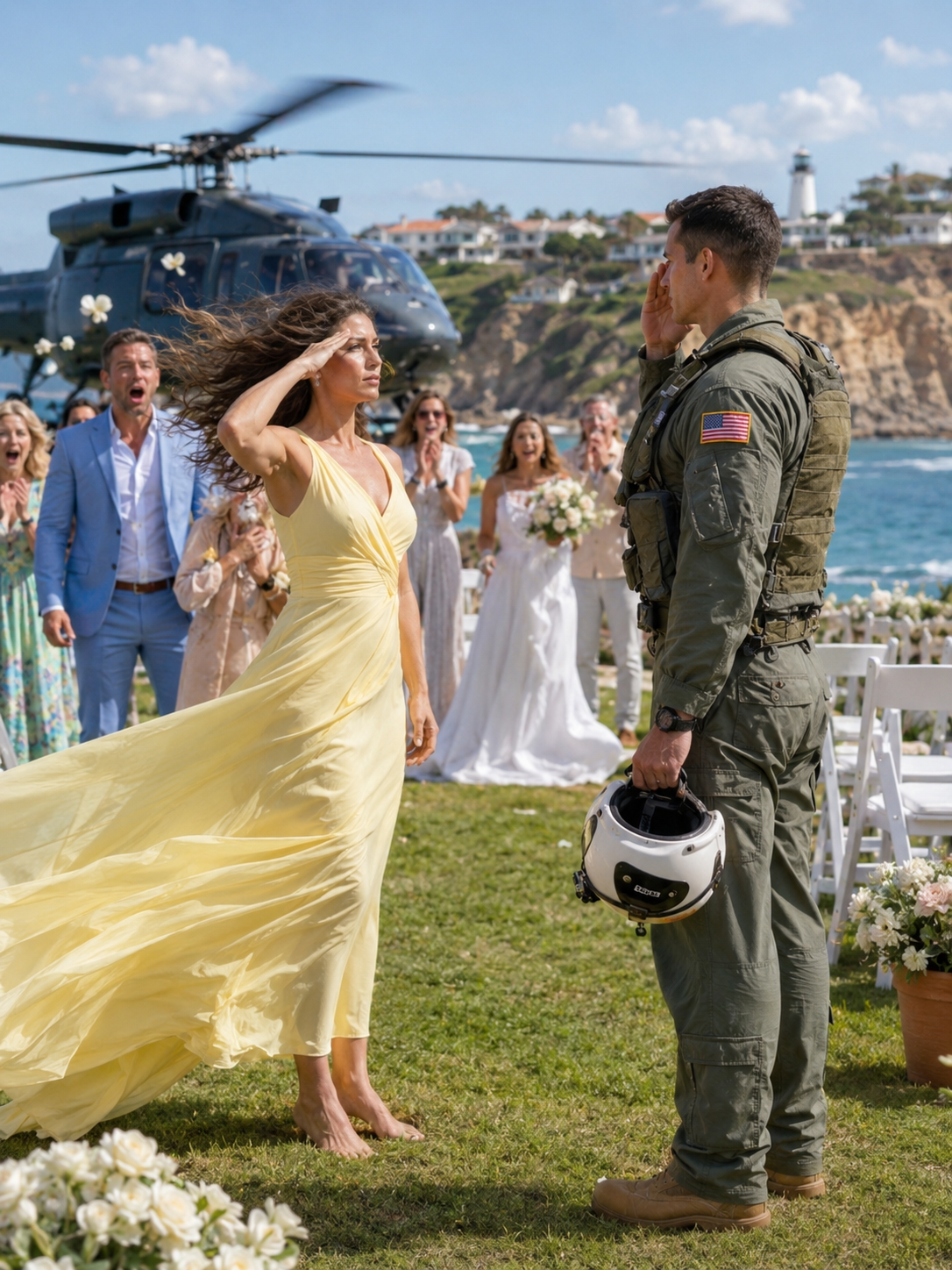
Then came the moment that shattered the veneer. As vows began, the thunder of rotors filled the vineyard air. A Black Hawk helicopter descended, scattering petals and silencing whispers. Soldiers rushed forward, bypassing every guest, every dignitary, every polished figure.
They stopped before Riley. “Captain James, we need you immediately.”
The wedding froze. Lydia’s smile vanished. Graham’s relatives, who had dismissed her as a nurse with boots, now saw the truth: Riley was not baggage. She was command. She was necessity. She was the one the Army trusted when lives hung in balance.
Analysis
This story illustrates the collision between two worlds: the polished elitism of social status and the raw authenticity of service. Riley’s silence was not weakness but discipline. Her uniform was not decoration but symbol. The helicopter’s arrival transformed perception in an instant, exposing the superficiality of judgment and the depth of true worth.
Conclusion
Riley James’s story is not about revenge or spectacle. It is about the quiet strength of identity, the resilience of composure, and the moment when truth arrives with the sound of rotors.