The waiter — a young man named Daniel, maybe twenty-two — had watched the whole thing.
He had seen the church blouse. The careful earrings. The way she checked the door every few minutes with a smile already prepared for someone who never came.
When Maria paid her bill with exact change, Daniel did something against restaurant policy. He sat down across from her.
“My abuela waited for my father once,” he said in Spanish. “He didn’t come either.”
Maria looked at him. Her eyes didn’t fill with tears. They were past that.
She showed him a photo on her cracked phone screen — a young man in a graduation gown, beaming, her arms around him, both of them squinting in the California sun.
“He worked so hard,” she said. Not bitterly. Just as fact.
Daniel posted nothing online. He told no one — except his own mother, that night, on the phone, who cried for ten minutes straight.
But someone at a nearby table had watched. A retired schoolteacher named Gloria, who wrote a small community newsletter in East LA.
Her piece ran the following Thursday. No last names. No photographs. Just the story of a woman in a church blouse, pearl earrings, and a four-hour wait.
It was shared forty thousand times in two days.
Eduardo saw it on his phone during a deposition break. He read it three times. He recognized the earrings. He recognized himself.
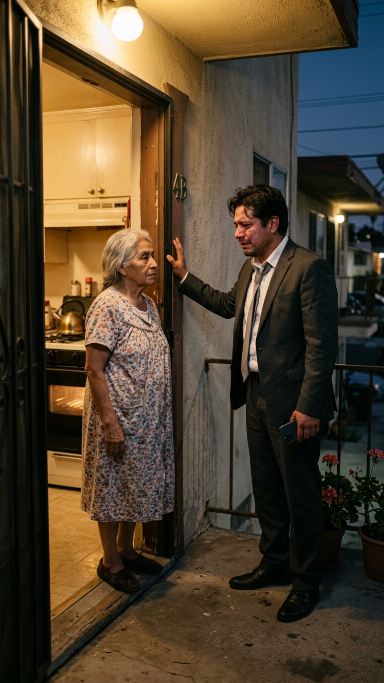
He drove to Boyle Heights that evening without calling first.
Maria opened the door in her housecoat. She looked at her son for a long moment.
She stepped aside to let him in.
She put on the kettle.
Some silences hold punishment. Hers held something older and harder — the particular mercy of a mother who never stopped keeping the door unlocked.