Introduction
Life often tests us in moments when we least expect it. For Riley, a young professional balancing deadlines and financial stress, the test arrived not in the form of a presentation or interview but in the quiet suffering of an elderly woman at a crowded café.
The Café Atmosphere
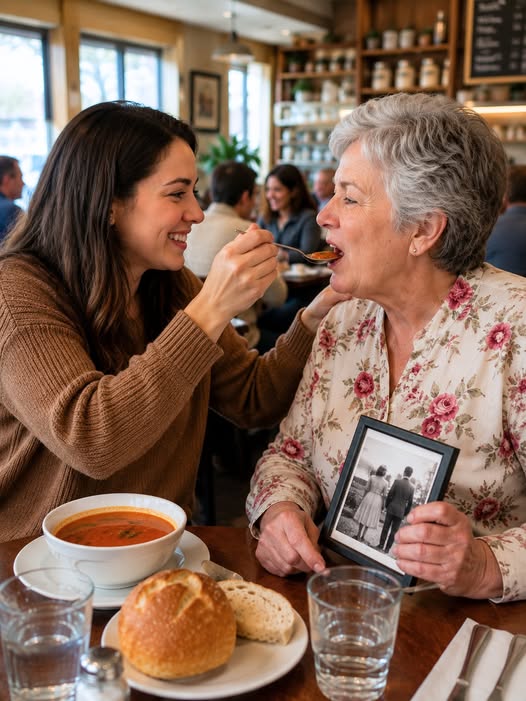
The café was noisy, filled with clinking cups, overlapping conversations, and the hiss of the espresso machine. Riley sat with a cold sandwich and open notebook, trying to prepare for an interview that could determine whether she could pay rent or end up sleeping in her car.
The Elderly Woman
Across the room sat a fragile woman in a white blouse, struggling with a bowl of tomato soup. Her trembling hands made each spoonful a battle. Soup spilled onto the table, her blouse, and her lap. Two women nearby whispered and laughed, their cruelty hidden behind polite gestures.
The elderly woman noticed. Her face flushed with embarrassment, a pain deeper than the spilled soup itself.
The Decision
Riley’s phone buzzed with the hiring manager’s name. Time was slipping away. Logic said to focus on the notes, ignore the scene, and prepare for survival. But when the woman’s eyes met Riley’s for half a second, silence replaced logic. Compassion outweighed ambition.
The Act of Kindness
Riley crossed the café and offered help. The woman whispered “Parkinson’s,” explaining that some days were harder than others. Then she revealed the deeper wound: “Today would’ve been my fifty‑fifth wedding anniversary. My husband Frank and I always came here together.”
For twenty minutes, Riley fed her carefully, spoon by spoon. Each bite was more than food — it was dignity restored, companionship offered, and grief softened.
The Silent Witness
Unbeknownst to Riley, someone nearby was watching every move. The act of kindness, performed without expectation, became a moment of profound human connection witnessed by another soul.
Analysis
This story illustrates the collision of urgency and empathy. Riley’s choice to help, despite personal risk, demonstrates the power of compassion in ordinary settings. The laughter of bystanders contrasted sharply with the quiet dignity of service. The silent witness underscores that kindness often echoes beyond the moment itself.
Conclusion
The café scene was not about soup or schedules. It was about humanity. Riley’s decision to help transformed embarrassment into grace, loneliness into companionship, and a forgotten anniversary into a remembered act of love.