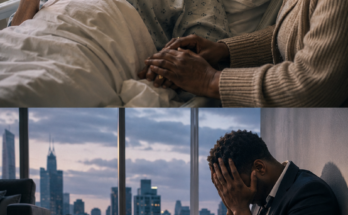
The morning Dr. Reeves told Margaret Chen she had breast cancer, the window in his office was letting in the kind of October light that makes everything look too beautiful for bad news. She remembers that specifically — the light, the dust floating in it, the way the world outside continued being golden while something inside the room rearranged itself permanently.
She was fifty-three years old. Retired schoolteacher. Grandmother of two. A woman who had spent thirty years making sure other people’s children believed in themselves, and who had spent considerably less time applying that same conviction to her own life.
Stage two. Treatable, the doctor said carefully. Difficult, but treatable.
Margaret drove home, made herself a cup of tea, sat at the kitchen table, and gave herself exactly one hour to be afraid.
She set a timer.
She cried for forty minutes. Sat in silence for fifteen. Then, with five minutes remaining, she opened a notebook — the yellow legal pad she used for grocery lists and appointment reminders — and she wrote at the top of the page in her teacher’s handwriting:
What happens next.
What happened next was not a Hollywood montage. It was not graceful or cinematic or free of despair. Chemotherapy arrived in her life like a demolition crew — necessary, brutal, indiscriminate in what it dismantled. She lost her hair on a Tuesday in December and sat on the bathroom floor for a while before deciding the bathroom floor was not where she intended to spend her Tuesday.
Her daughter Vivian drove her to every appointment. Her neighbor brought soup every Friday without being asked, for seven months, without ever once mentioning it as if it were extraordinary. Her former students — grown now, scattered across three states — sent cards that covered an entire wall of her bedroom, which she read on the hard mornings when the timer trick wasn’t enough.
There were nights she bargained with the darkness. Nights she couldn’t find the version of herself that had set the timer and written the list. Nights when fifty-three felt too young and also somehow too tired for this particular fight.
She fought anyway.
Not because she was fearless — she was frequently terrified. Not because she was exceptional — she was a retired schoolteacher from a mid-sized city who liked Earl Grey tea and crossword puzzles and her grandchildren’s voices on the phone.
She fought because the timer had run out and there were things left to do.
Fourteen months after Dr. Reeves delivered the news in the October light, Margaret sat in the same office and heard a different sentence.
No evidence of disease.
She didn’t cry this time. She looked at that same window — same light, different season — and felt something she later described to Vivian as spacious. Like a room she hadn’t been allowed into that had finally been unlocked.
She went home. Made tea. Opened the yellow legal pad to a fresh page and wrote at the top:
What happens next.
The list this time was different. Longer. A trip to Portugal she’d been postponing for a decade. A garden she’d been meaning to properly plant. More Friday soups with the neighbor, but this time she’d bring them. Letters to former students she’d never quite gotten around to writing.
She planted the garden in May. It came up riotously, almost aggressively alive, in colors she hadn’t planned for and couldn’t have imagined.
She said it suited her just fine.
To every woman sitting in an October room with bad news: set the timer. Write the list. The light outside the window is still there. So are you.