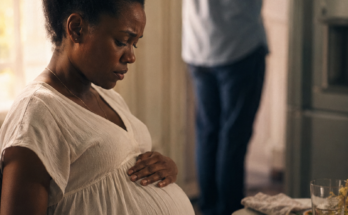
I want to start by telling you what I wore.
I know that sounds like a strange detail to lead with, but it matters for reasons that will become clear. I wore a black wrap dress I had been saving for a significant occasion — one of those dresses that requires the occasion to justify itself. I got my nails done in a soft blush pink. I curled my hair. I wore the earrings my mother gave me when I turned twenty-five, small gold drops that I only bring out when something feels important.
I did all of this because Marcus had told me he had a special surprise planned, and because we were at three years — three years of building something together, of talking about the future in the specific way that implies you both assume you’re in it together — and because the restaurant he had chosen was the kind of place that requires reservations made weeks in advance and has a sommelier who introduces himself by name.
I had told exactly no one that I thought he might propose. I want to be clear about that. I had kept it entirely inside, the way you keep something precious and fragile, because naming it out loud felt like it might break the possibility. But I had thought it. I had imagined it. I had, if I am being fully honest, rehearsed my face for it in the bathroom mirror that morning.
I arrived at the restaurant feeling like someone standing at the edge of the rest of their life.
Dinner was beautiful in the way expensive food in quiet lighting tends to be beautiful. Marcus was nervous — checking his phone repeatedly, not finishing his meal, filling conversational pauses with comments about the décor that felt like someone buying time. I interpreted all of this as proposal nerves and found it endearing. I found everything endearing that evening. I was wearing my mother’s earrings and I was in love and I was absolutely certain, in the way that certainty sometimes works against you, that I knew what was coming.
The server arrived with dessert.
It was presented with the particular ceremony of something pre-arranged — the slight formality of a staff member who has been briefed, the way he set it down and stepped back rather than lingering. A single slice of cake on a white plate. Elegant. Deliberate.
There was writing on it.
I leaned forward to read it.
Congrats on your pregnancy, babe.
I read it twice. The way you re-read something when your brain refuses to process the first pass.
Then I looked up at Marcus.
His expression was — and this is the part I have turned over a hundred times since — not the expression of a man who has made a terrible mistake. It was the expression of a man who had been working up to something and had finally arrived. Almost relieved. Expectant in his own way, waiting for my reaction to his announcement.
His announcement. Not a question. Not a ring. An announcement — about a pregnancy he believed I was concealing from him.
I need to give you the full context here because without it the story doesn’t make sense.
Six weeks earlier I had gone to my OB for a routine appointment. There had been a conversation about certain hormonal markers. My doctor had asked, as part of a standard checklist, whether there was any possibility I could be pregnant. I had said I didn’t believe so but agreed to a test as part of the workup. The test had come back with a faint, ambiguous result — the kind my doctor described as likely a hormonal fluctuation, not a reliable positive, requiring a follow-up in two weeks.
The follow-up had been conclusively negative. I was not pregnant. I had never been pregnant. The initial result was a false reading.
I had mentioned the initial appointment to Marcus in passing — not the ambiguous result specifically, just that I’d had a checkup. What I had not known was that Marcus had, without my knowledge, spoken to someone at the clinic — not my doctor, but an administrative contact he apparently knew socially — and had received a partial, misunderstood fragment of information about a pregnancy-related test being run.
He had taken this fragment, constructed an entire conclusion, decided I was hiding a pregnancy from him, and rather than simply asking me — having a direct adult conversation like a person in a three-year relationship theoretically should be capable of — he had planned a public announcement at a restaurant as a way of forcing the reveal.
He had genuinely believed I was going to look at that cake and confess to a secret I wasn’t keeping.
I sat with all of this for approximately fifteen seconds.
Then I put my napkin on the table, stood up, told him I was done, flagged the server to split the check, paid my portion in cash, and walked out of the restaurant in my wrap dress and my mother’s earrings into the night air.
He followed me to the sidewalk. He said he knew. He said I didn’t have to hide it. He said he was happy about it and that was what the dinner was for — to tell me it was okay.
I told him there was no pregnancy. That there had never been a confirmed pregnancy. That what he had done — sourcing private medical information through back channels, constructing a secret, and staging a public confrontation rather than simply talking to me — was a violation of my privacy, my trust, and my dignity, and that it revealed something about how he saw me that I could not unknow.
He said I was overreacting. That he had meant it as a good surprise.
I asked him to explain to me what part of ambushing your girlfriend with a public pregnancy announcement without her knowledge constituted a good surprise.
He didn’t have an answer for that.
I took an Uber home.
The following days were the kind that clarify things efficiently.
Marcus called repeatedly. His explanations evolved through several versions — he had been excited, he had been nervous, he had thought I would think it was romantic, he had genuinely believed the information he received. Each version revealed, underneath it, the same foundation: he had not trusted me to tell him the truth, and his response to that distrust had not been a conversation but a trap.
That pattern — the decision to surveil rather than communicate, to engineer a reveal rather than simply ask — was not, I realized during those days, a one-time aberration. It was consistent with other moments I had not fully examined: times he had checked my phone without asking, times he had verified my whereabouts through mutual friends rather than just asking me directly, times his jealousy had expressed itself as investigation rather than vulnerability.
The dress had been waiting for the right occasion.
This was not it. But it clarified what occasion I should actually be waiting for.
I ended the relationship on the fourth day. Not in anger — that had already passed — but with the quietness of someone who has looked at something clearly and made a decision based on what they actually see.
He said I was throwing away three years over a misunderstanding.
I said three years was exactly long enough to understand someone.
I wore the earrings again the day I had that final conversation. Not for him. For me. A reminder that some occasions are important even when they’re endings.
My mother would have agreed.
— As told by the woman who read the cake and finally saw everything clearly.