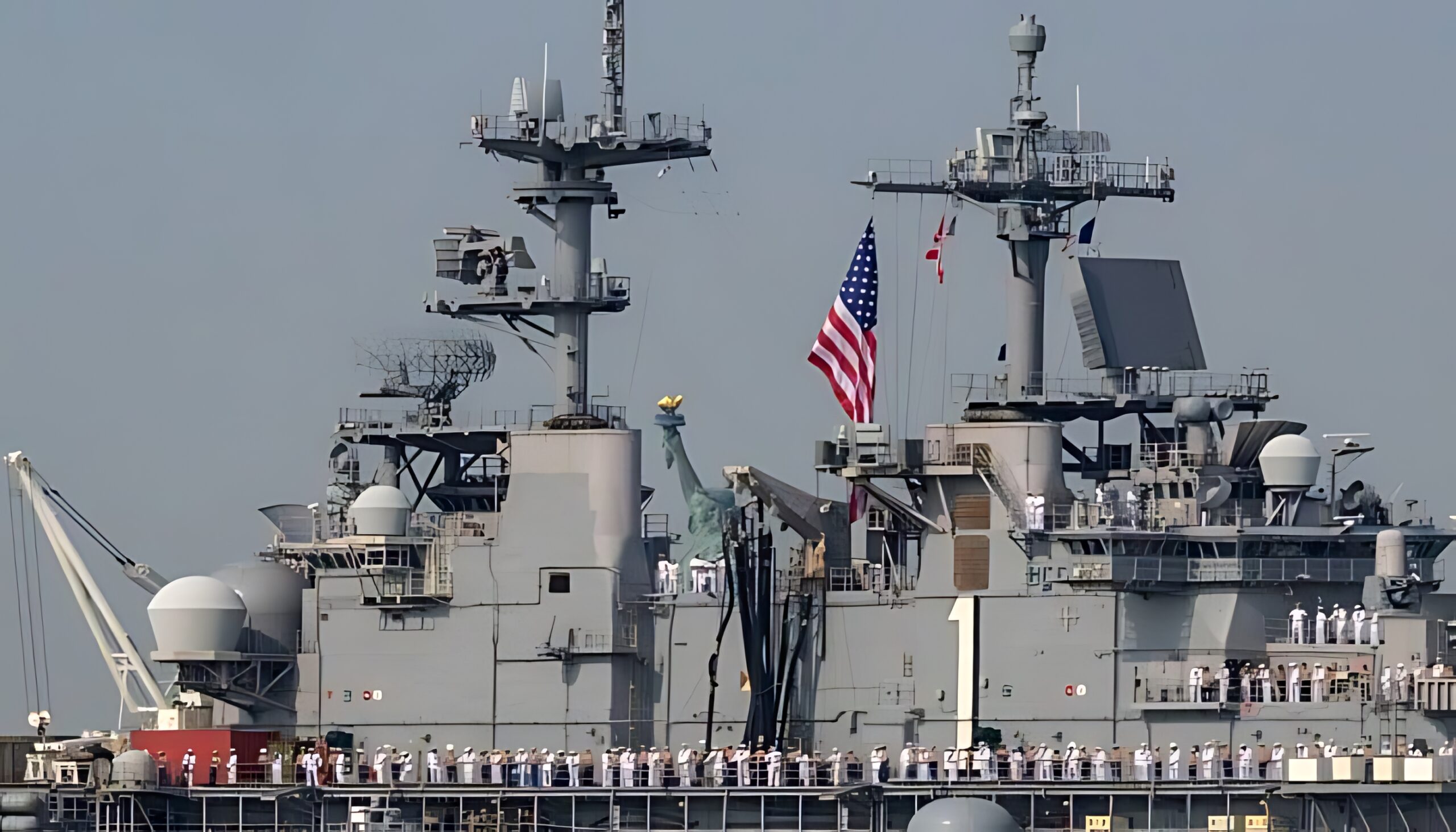
A U.S. Navy warship transited the Strait of Hormuz on Saturday, marking the first passage by an American vessel through the strategic waterway since the start of the conflict with Iran, according to defense officials.
The Pentagon confirmed the transit, describing it as a “routine and lawful maritime operation” conducted in coordination with regional partners. Officials said the ship’s movement was closely monitored but encountered no direct confrontation with Iranian forces.
The Strait of Hormuz, a narrow chokepoint between the Persian Gulf and the Gulf of Oman, has long been one of the world’s most sensitive maritime corridors. Since the outbreak of the war, U.S. naval movements in the area had been limited due to heightened security concerns and the risk of escalation.
Military analysts say the decision to resume transits may signal a shift in U.S. posture, suggesting Washington aims to reassert freedom of navigation despite ongoing tensions. The Pentagon did not specify whether additional U.S. vessels would follow.
Iranian state media acknowledged the transit but characterized it as “provocative,” while Iranian military officials said their naval units tracked the ship throughout its passage. No incidents were reported.
The move comes amid continued international efforts to prevent the conflict from expanding further into the Gulf region. Diplomats have warned that any miscalculation in the Strait of Hormuz — through which a significant share of the world’s oil supply travels — could have global economic repercussions.
U.S. officials emphasized that the transit does not represent a change in mission or an escalation but rather a return to standard maritime operations. They added that the United States remains committed to maintaining open sea lanes and supporting regional stability.
As the conflict continues, the situation in the Gulf remains fluid, with both military and diplomatic developments closely watched by governments and markets worldwide.