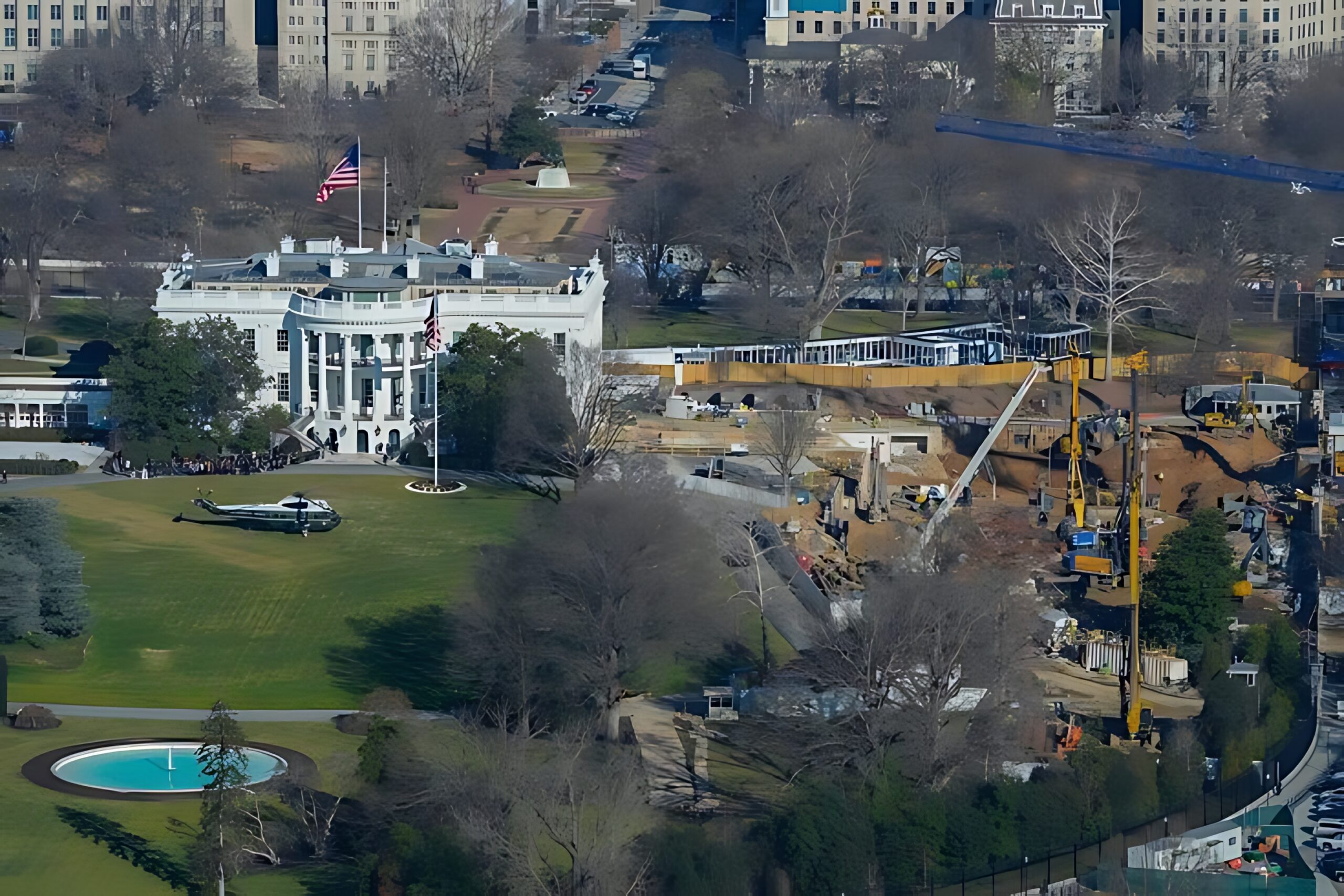
A federal appeals court has temporarily cleared the way for continued construction of President Donald Trump’s planned White House ballroom, pausing a lower court’s order that sought to halt the project over questions of presidential authority and historic preservation. The decision, issued in a 2–1 ruling by a three‑judge panel of the U.S. Court of Appeals for the D.C. Circuit, allows work to continue through April 17 while the legal battle unfolds.
A Temporary Green Light Amid Legal Uncertainty
The appeals court emphasized that it could not “fairly determine, on this hurried record,” whether stopping construction would jeopardize national security, a central argument made by the Trump administration. The case now returns to U.S. District Judge Richard Leon, who must clarify how his earlier injunction interacts with the administration’s claims that the ballroom and related underground facilities are essential for safety.
Judge Leon had previously ruled that the president lacked authority to proceed with the $400 million project without congressional approval, siding with the National Trust for Historic Preservation. However, he allowed exceptions for work deemed necessary to protect the White House and its occupants. The appeals panel has now asked him to more precisely define what qualifies under that exception.
National Security at the Center of the Dispute
The Trump administration has repeatedly argued that halting construction would “imperil” the president, his family, and staff. Court filings describe extensive security features planned for the site, including fortified materials, drone‑proof roofing, ballistic‑resistant glass, and underground bunkers and military installations. Officials contend these upgrades are inseparable from the ballroom itself.
Preservationists, however, maintain that the president must obtain congressional approval before moving forward with such a sweeping alteration to the historic White House complex. They argue that while they do not oppose necessary underground security work, the above‑ground ballroom requires proper review and public input.
What Happens Next
The appeals court’s temporary stay gives the administration time to seek review from the Supreme Court. If the high court declines to intervene, Judge Leon’s clarified ruling will determine whether construction can continue beyond April 17.
For now, cranes and crews remain active on the White House grounds, as the administration presses forward with a project it says is vital to national security — and preservation advocates continue their fight to ensure the historic integrity of the nation’s most iconic residence