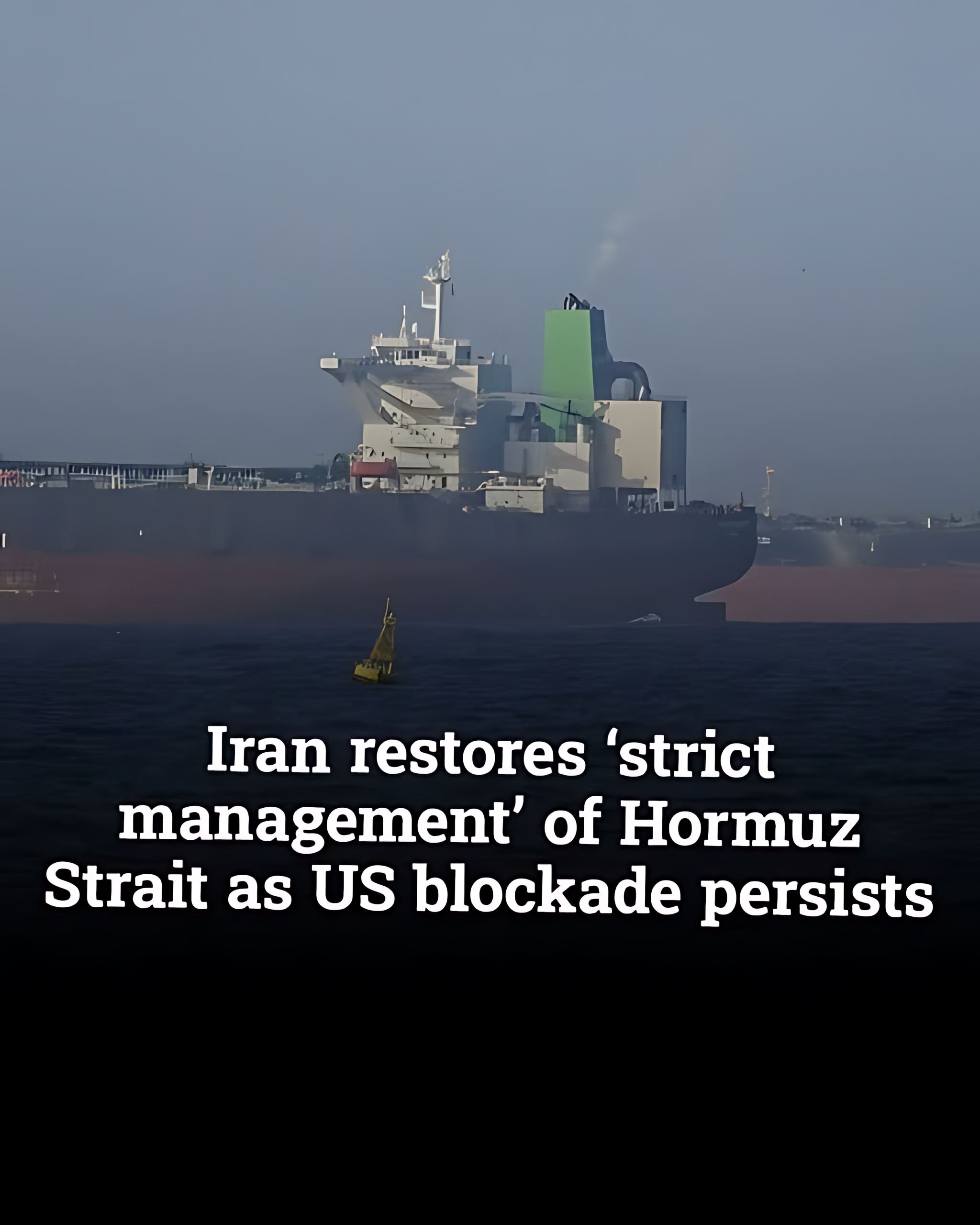
TEHRAN / WASHINGTON — Iran announced early Saturday that it is reinstating “strict” control over the Strait of Hormuz, signaling a harder line in one of the world’s most sensitive maritime corridors as the U.S. naval blockade remains in place and the fragile two‑week Israel–Lebanon ceasefire approaches its expiration.
In a statement carried by state media, Iran’s military leadership said the country would “fully reassert security authority” over the strait, which handles a significant share of global oil shipments. The move comes just days after Iran temporarily eased maritime restrictions during the regional truce.
“Given the ongoing blockade and the approaching end of the ceasefire period, Iran will resume strict control of all maritime activity in the Strait of Hormuz,” the statement said. “Our forces will ensure that no unauthorized or hostile operations occur.”
The announcement immediately raised concerns among global energy markets and diplomatic observers, who fear renewed instability in the waterway could disrupt shipping and escalate tensions with the United States.
A Strategic Waterway Under Renewed Pressure
The Strait of Hormuz has been at the center of the conflict for months, with the U.S. enforcing a blockade on Iranian ports and Iran intermittently tightening and loosening its own maritime posture.
Iran’s return to stricter control reportedly includes:
- Increased patrols by the Islamic Revolutionary Guard Corps Navy
- Expanded vessel inspections
- Heightened monitoring of foreign military ships
- Restrictions on certain commercial routes deemed “security risks”
U.S. officials said American naval operations in the region would continue unchanged.
U.S. Responds With Caution
A senior U.S. defense official said Washington was “aware” of Iran’s announcement and would continue to monitor activity in the strait closely.
The official reiterated that the U.S. blockade — aimed at restricting Iran’s military supply lines — remains in effect and that American forces “retain full freedom of navigation under international law.”
Ceasefire Clock Ticking Down
The two‑week ceasefire between Israel and Lebanon, brokered with U.S. and European involvement, is set to expire within days. Diplomats say the truce has reduced regional tensions but remains fragile, with both sides accusing the other of minor violations.
Iran’s shift in maritime posture is being interpreted by some analysts as preparation for potential instability once the ceasefire ends.
Markets React to Renewed Uncertainty
Oil prices rose modestly in early trading following Iran’s announcement, reflecting concerns that stricter control of the strait could slow tanker traffic or increase insurance costs.
Shipping companies said they were assessing the situation but had not yet altered routes.
Analysts: A Signal to Washington and the Region
Experts say Iran’s move is likely intended to send a message to both the U.S. and regional actors as negotiations over extending the ceasefire continue.
“This is Iran reminding everyone that it still holds leverage in the Gulf,” said one regional security analyst. “Control of the strait is its most powerful pressure tool.”
What Comes Next
Diplomats are working to extend the Israel–Lebanon ceasefire, but uncertainty remains high. If the truce collapses, analysts warn that maritime tensions could intensify quickly.
For now, Iran’s declaration marks a significant shift back toward confrontation in a corridor vital to global trade — and a reminder of how closely the region’s security and economic stability remain intertwined.